U.S. Telemedicine Adoption: Policy Shifts Drive 25% Growth by Mid-2026

Emerging Health Tech: U.S. Policy Shifts Expected to Boost Telemedicine Adoption by 25% by Mid-2026 (RECENT UPDATES)
Date: October 26, 2023
Author: AI Health Insights
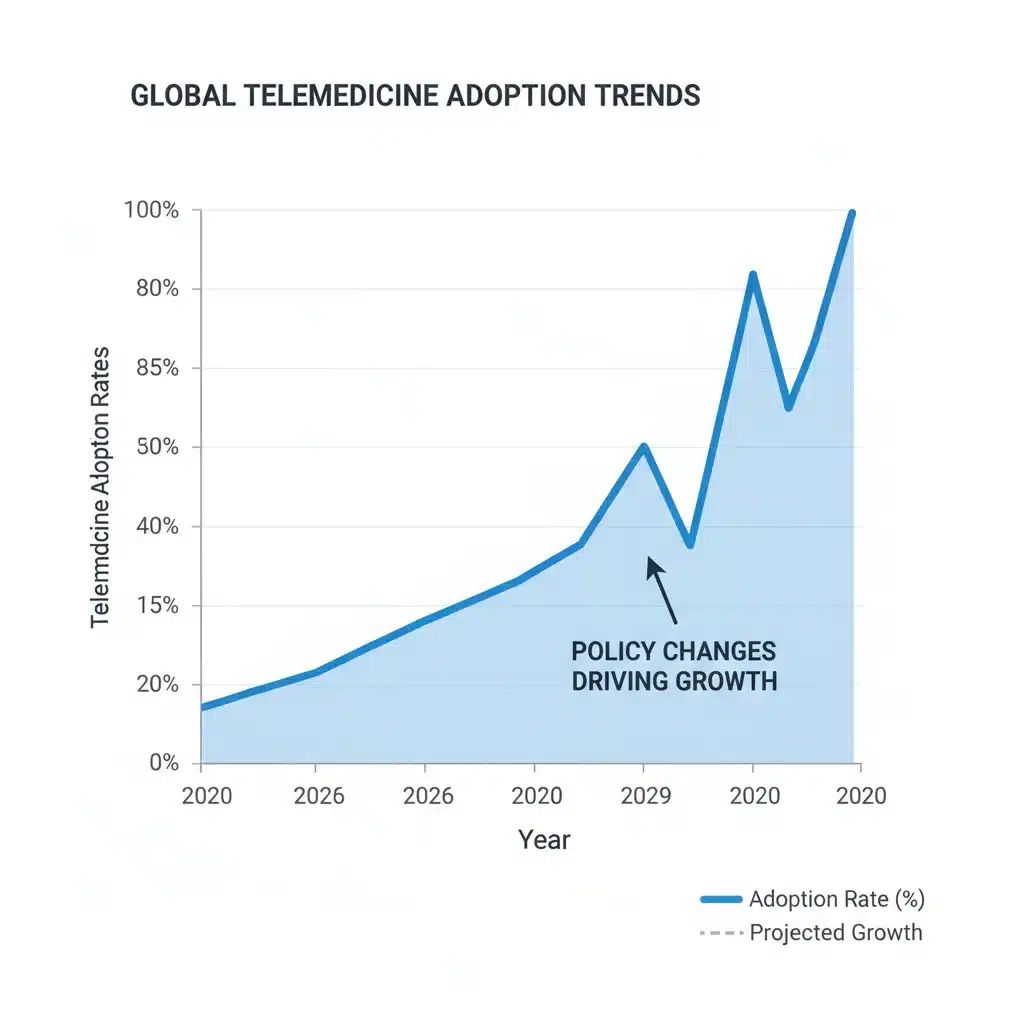
The landscape of healthcare in the United States is undergoing a profound transformation, largely driven by advancements in health technology and responsive policy changes. Among the most significant developments is the projected surge in telemedicine adoption, with experts forecasting a remarkable 25% increase by mid-2026. This isn’t merely an organic growth trend; it’s a direct consequence of strategic U.S. policy shifts designed to integrate virtual care more deeply into the nation’s healthcare infrastructure. Understanding these telemedicine policy shifts is crucial for healthcare providers, policymakers, patients, and technology innovators alike.
The Catalyst: Understanding Recent Telemedicine Policy Shifts
For years, telemedicine offered a glimpse into the future of healthcare – convenient, accessible, and often more cost-effective. However, its widespread adoption faced significant hurdles, primarily regulatory and reimbursement limitations. The COVID-19 pandemic, while tragic, acted as an unexpected accelerant, forcing a rapid re-evaluation of these barriers. Emergency measures were put in place, demonstrating telemedicine’s immense potential and resilience. Now, many of those temporary measures are being codified into permanent policy, creating a stable and supportive environment for sustained growth. These telemedicine policy shifts are not just about maintaining the status quo established during the pandemic; they are about proactively building a more robust, equitable, and efficient healthcare system for the future.
Key among these policy shifts are changes in reimbursement structures. Historically, many virtual visits were not reimbursed at the same rate as in-person visits, or not at all, making them financially unviable for many practices. Recent federal and state-level actions have moved towards parity in reimbursement for a broader range of telehealth services, incentivizing providers to offer virtual care without fear of financial penalty. This is a monumental change, directly addressing one of the most significant disincentives for telemedicine adoption. Furthermore, expanded coverage for services like mental health counseling, physical therapy, and even certain surgical follow-ups via telehealth ensures that a wider array of patient needs can be met remotely. These comprehensive changes are foundational to the projected 25% growth in telemedicine adoption.
Another critical area of policy reform involves licensing and credentialing. Before the pandemic, strict state-by-state licensing requirements often prevented providers from offering telehealth services across state lines, severely limiting access, especially for specialists or patients in rural areas. While a fully national licensure standard remains a complex endeavor, several interstate compacts and temporary waivers have become more permanent, allowing greater flexibility. This facilitates a more interconnected healthcare system, where patients can access specialized care regardless of geographical barriers, directly contributing to the upward trajectory of telemedicine adoption statistics.
Impact on Healthcare Access and Equity
The most profound impact of these telemedicine policy shifts is on healthcare access and equity. Rural communities, often underserved by healthcare facilities and specialists, stand to benefit immensely. Telemedicine can bridge geographical gaps, bringing expert medical advice directly to patients’ homes, reducing the need for long-distance travel, and mitigating the associated costs and time commitments. This is particularly vital for managing chronic conditions, where regular check-ups are essential but travel can be prohibitive.
Beyond rural areas, telemedicine enhances access for individuals with mobility issues, those lacking reliable transportation, or those who struggle to take time off work for appointments. Mental health services, in particular, have seen a significant boost through virtual platforms. The convenience and reduced stigma associated with accessing therapy from home have encouraged more individuals to seek the help they need, addressing a critical public health challenge. The projected 25% increase in telemedicine adoption is not just a number; it represents millions of individuals gaining easier, more timely access to essential care.
However, achieving true equity requires addressing the digital divide. Policy efforts are also focusing on initiatives to improve broadband access in underserved areas and provide resources for digital literacy. Without reliable internet access and the necessary technological tools, the promise of telemedicine remains out of reach for some. Therefore, integrated policy approaches that consider both the healthcare delivery model and the underlying technological infrastructure are essential for maximizing the benefits of these telemedicine policy shifts.
Technological Innovations Fueling the Surge
While policy provides the framework, technological innovation is the engine driving the enhanced capabilities of telemedicine. The projected 25% boost in telemedicine adoption is inextricably linked to the rapid evolution of digital health tools. High-definition video conferencing, secure messaging platforms, and remote patient monitoring (RPM) devices are becoming more sophisticated and user-friendly. RPM, in particular, is revolutionizing chronic disease management, allowing healthcare providers to continuously monitor vital signs, glucose levels, and other critical data from afar. This proactive approach can prevent complications, reduce hospitalizations, and empower patients to take a more active role in managing their health.
Artificial intelligence (AI) and machine learning (ML) are also beginning to play a transformative role. AI-powered diagnostic tools can assist clinicians in identifying potential issues more quickly and accurately, while ML algorithms can personalize treatment plans and predict patient outcomes. Virtual reality (VR) and augmented reality (AR) are emerging as powerful tools for medical training, surgical planning, and even therapeutic interventions, particularly in rehabilitation and pain management. These innovations, coupled with supportive telemedicine policy shifts, are creating a dynamic ecosystem where technology and healthcare converge to deliver superior patient care.
Challenges and Opportunities on the Horizon
Despite the optimistic projections, the path to fully integrated telemedicine is not without its challenges. Data security and patient privacy remain paramount concerns. As more sensitive health information is transmitted and stored digitally, robust cybersecurity measures and clear regulatory guidelines are essential to maintain patient trust. Policy makers are continually working to update HIPAA regulations and other privacy frameworks to keep pace with technological advancements and the evolving nature of virtual care delivery. Ensuring that these frameworks are both protective and practical is a delicate balance, but one that is critical for the sustained growth of telemedicine adoption.
Provider training and adaptation are also key. While many healthcare professionals have embraced telemedicine, some still require additional training and resources to effectively integrate virtual care into their practice. Medical education programs are increasingly incorporating telehealth competencies, and continuing medical education (CME) opportunities are vital for upskilling existing practitioners. The success of the 25% increase in telemedicine adoption hinges on a workforce that is not only willing but also fully equipped to leverage these new modalities.
Furthermore, the integration of telemedicine with existing electronic health record (EHR) systems is crucial for seamless care coordination. Interoperability remains a significant challenge across the healthcare system, and telemedicine platforms must be able to communicate effectively with EHRs to ensure that patient data is consistent, comprehensive, and easily accessible to all members of the care team. Policy initiatives aimed at promoting interoperability standards will be instrumental in overcoming this hurdle, further solidifying the foundations for widespread telemedicine adoption.
Specific U.S. Policy Shifts Driving Growth
Delving deeper, several specific federal and state-level actions are noteworthy. At the federal level, the Centers for Medicare & Medicaid Services (CMS) has been instrumental in expanding telehealth coverage for Medicare beneficiaries. The permanent expansion of certain telehealth services beyond the public health emergency (PHE) declaration has provided much-needed stability. This includes allowing FQHCs (Federally Qualified Health Centers) and RHCs (Rural Health Clinics) to be reimbursed for telehealth services, significantly boosting access in underserved areas. These CMS-led telemedicine policy shifts are pivotal.
State governments have also played a crucial role. Many states have passed legislation mandating private payer reimbursement parity for telehealth services, mirroring federal efforts. Additionally, states are exploring innovative models, such as hybrid care approaches that combine in-person and virtual visits, and expanding the types of providers eligible to deliver telehealth. For instance, some states are now allowing pharmacists and certain allied health professionals to utilize telehealth within their scope of practice, further broadening the reach of virtual care. These localized telemedicine policy shifts are creating a patchwork of progress that, cumulatively, drives the national trend.
The Drug Enforcement Administration (DEA) has also been involved in policy discussions regarding prescribing controlled substances via telehealth. While some temporary flexibilities from the pandemic have been extended, ongoing discussions aim to establish a permanent framework that balances access with patient safety. Clear guidelines in this area will further solidify the scope of services that can be delivered virtually, impacting the overall trajectory of telemedicine adoption.
The Economic and Societal Benefits of Increased Telemedicine Adoption
The projected 25% increase in telemedicine adoption by mid-2026 is not just a statistical milestone; it represents significant economic and societal benefits. Economically, telemedicine can lead to reduced healthcare costs by decreasing emergency room visits for non-urgent conditions, minimizing hospital readmissions through effective remote monitoring, and optimizing provider time and resources. For patients, it means saving money on travel, parking, and lost wages from taking time off work. The efficiency gains across the healthcare system can translate into substantial savings that can be reinvested in other critical areas of care or passed on to consumers through lower premiums.
Societally, improved access to care leads to better public health outcomes. Early detection and management of diseases become more feasible, potentially reducing the prevalence of chronic conditions and improving overall population health. The flexibility offered by telemedicine can also alleviate some of the burdens on primary care providers, allowing them to manage their patient panels more effectively and reduce burnout. This contributes to a healthier, more productive workforce and a more resilient healthcare system. The positive ripple effects of these telemedicine policy shifts are far-reaching.

Preparing for the Future: Recommendations for Stakeholders
To fully capitalize on the opportunities presented by these telemedicine policy shifts, various stakeholders must prepare strategically. For healthcare providers and health systems, this means investing in robust, secure telehealth platforms, training staff, and developing clear protocols for virtual care delivery. It also involves continuously monitoring policy updates to ensure compliance and leverage new reimbursement opportunities. Embracing a hybrid care model that seamlessly integrates in-person and virtual services will be key to meeting diverse patient needs and optimizing resource allocation.
Policymakers must continue to refine and stabilize the regulatory environment. This includes working towards greater interstate licensure reciprocity, establishing clear guidelines for data privacy and security, and ensuring sustainable reimbursement models. Addressing the digital divide through infrastructure investments and digital literacy programs will be crucial for ensuring equitable access. Long-term planning that anticipates future technological advancements and demographic shifts will ensure that telemedicine policy shifts remain relevant and effective.
For technology developers, the focus should be on creating intuitive, interoperable, and secure platforms that enhance the patient and provider experience. Innovations that improve diagnostics, facilitate remote monitoring, and integrate seamlessly with existing healthcare IT systems will be particularly valuable. Patient advocacy groups and consumers also have a role to play by advocating for policies that prioritize access, affordability, and quality in virtual care. The collective effort of all stakeholders will be essential to realize the full potential of a 25% increase in telemedicine adoption.
Conclusion: A New Era for U.S. Healthcare
The projection of a 25% increase in telemedicine adoption by mid-2026 is a clear indicator that U.S. healthcare is entering a new era. This transformative growth is not accidental but is a direct outcome of deliberate and forward-thinking telemedicine policy shifts. These changes are dismantling long-standing barriers, fostering innovation, and, most importantly, expanding access to quality care for millions of Americans. From enhanced reimbursement parity to more flexible licensing, the regulatory environment is now more conducive than ever to the widespread integration of virtual health services.
As we move towards mid-2026, the ongoing evolution of health technology, coupled with a supportive policy landscape, promises a healthcare system that is more resilient, accessible, and patient-centered. While challenges related to equity, data security, and interoperability persist, the momentum generated by these policy shifts provides a strong foundation for overcoming them. The future of healthcare is undeniably digital, and the U.S. is strategically positioning itself to lead this revolution, ensuring that the benefits of telemedicine reach every corner of the nation.