Neurotechnology Advances: Ethical Considerations for US Society by Mid-2026
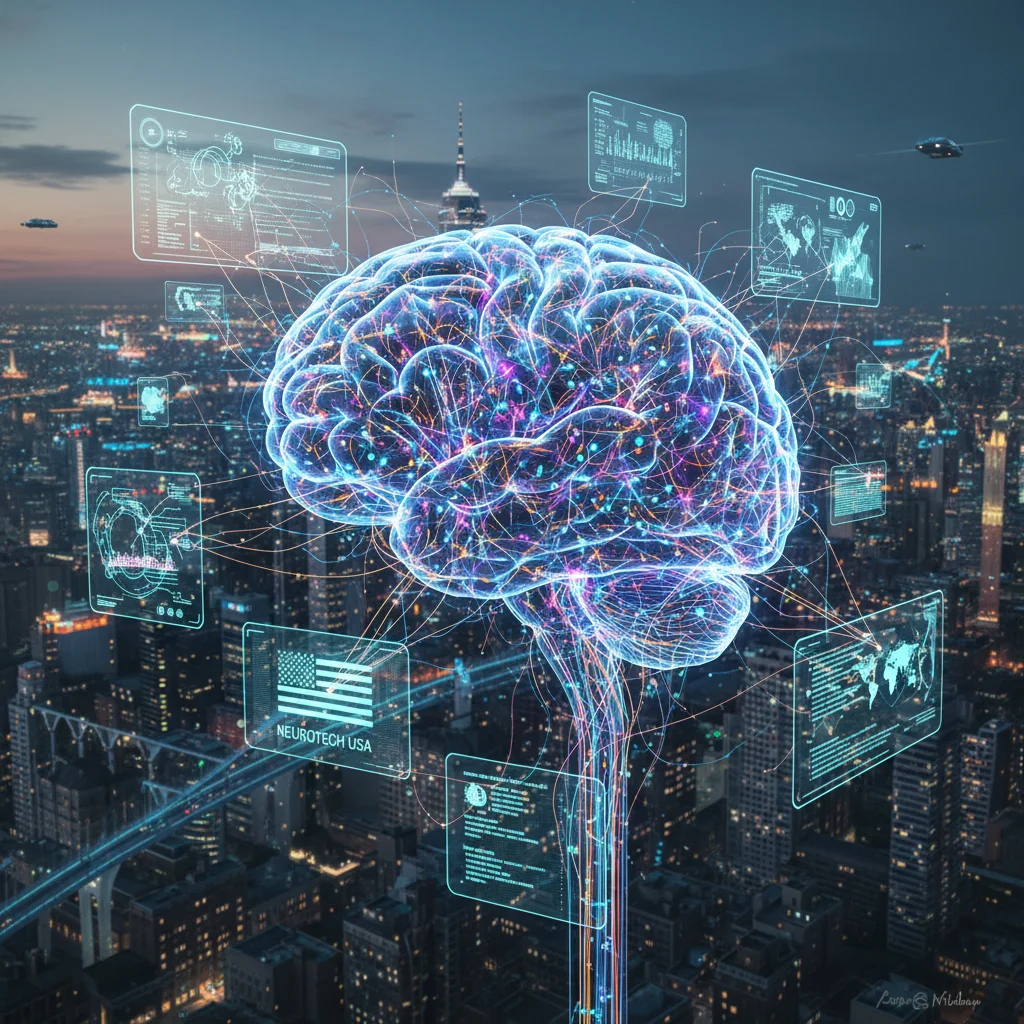
Neurotechnology, once relegated to the realms of science fiction, is rapidly transitioning into a tangible reality. The pace of innovation in this field is breathtaking, with new devices and techniques emerging that promise to revolutionize everything from healthcare to human augmentation. By mid-2026, the United States will likely be grappling with a myriad of profound neurotechnology ethical considerations that demand immediate and thoughtful attention. This article delves into these critical ethical dilemmas, exploring the potential societal impacts and the urgent need for proactive policy and public discourse.
The term neurotechnology encompasses a broad range of tools and techniques that interact directly with the nervous system, particularly the brain. This includes brain-computer interfaces (BCIs), neuroprosthetics, neurostimulation devices, and advanced neuroimaging. These technologies hold immense promise for treating neurological disorders, restoring lost functions, and even enhancing cognitive abilities. However, alongside these transformative benefits come significant ethical challenges that, if left unaddressed, could profoundly reshape the fabric of American society.
The Dawn of Neurotechnology: What’s Here and What’s Coming by Mid-2026
To understand the ethical landscape, it’s crucial to first grasp the current trajectory of neurotechnological development. We are already seeing sophisticated BCIs that allow individuals with severe paralysis to control robotic limbs or communicate through thought. Deep brain stimulation (DBS) is a well-established treatment for Parkinson’s disease and essential tremor, with ongoing research expanding its application to conditions like depression and OCD.
Current Applications and Near-Future Prospects
- Medical Breakthroughs: Neuroprosthetics are becoming more refined, offering increasingly natural control over artificial limbs. BCIs are moving beyond basic control to more nuanced interactions, potentially enabling sensory feedback and even emotional modulation.
- Cognitive Enhancement: While still largely experimental, non-invasive neurostimulation techniques (e.g., transcranial direct current stimulation, tDCS) are being explored for cognitive enhancement, raising questions about academic and professional fairness.
- Consumer Neurotech: Wearable devices that monitor brain activity for wellness, focus, or sleep improvement are gaining traction. While often less invasive, they still collect sensitive neurological data.
- Military and Security Applications: Research into neurotechnology for enhancing soldier performance, improving vigilance, or even controlling drones via thought is actively underway, presenting unique ethical considerations related to warfare and human rights.
By mid-2026, several of these technologies are expected to mature further and become more widely available. The transition from clinical settings to broader consumer markets will accelerate, bringing the neurotechnology ethical considerations to the forefront of public debate. This rapid dissemination necessitates a robust ethical framework to guide development and deployment.
Core Ethical Dilemmas: Navigating the Neurological Frontier
The advent of advanced neurotechnology brings forth a complex web of ethical dilemmas that challenge our traditional notions of self, privacy, and justice. These are not merely academic discussions; they are pressing issues that will directly impact individuals and society as a whole.
1. Privacy and Data Security: The Sanctity of Thought
Perhaps the most immediate and profound ethical concern revolves around brain data privacy. Neurotechnologies collect vast amounts of highly personal information: thoughts, intentions, emotions, memories. Unlike other forms of data, neurological data touches the very essence of who we are. The unauthorized access, misuse, or sale of this information could have catastrophic consequences.
- Neuroprivacy: How do we define and protect the privacy of our brain activity? Existing data protection laws (like HIPAA or GDPR) may not be sufficient to address the unique sensitivities of neurological data.
- Data Ownership: Who owns the data generated by a BCI or neurostimulation device? Is it the individual, the manufacturer, or the healthcare provider?
- Security Vulnerabilities: Brain implants or external devices could be vulnerable to hacking, leading to manipulation of thoughts, emotions, or even direct control over an individual’s actions.
- Commercial Exploitation: Imagine companies leveraging neurological data to create hyper-personalized advertising that bypasses conscious decision-making, or insurance companies using it to assess risk.
These scenarios highlight the urgent need for comprehensive legal and ethical frameworks specifically designed to safeguard neuroprivacy and ensure robust data security for neurotechnology. The challenge is to create protections that are both effective and adaptable to rapidly evolving technology.
2. Autonomy and Agency: Redefining Free Will
Neurotechnologies, particularly those involving direct brain intervention, raise fundamental questions about human autonomy and agency. If a device can alter mood, enhance cognitive function, or even influence decision-making, where does the individual’s free will begin and end?
- Coercion and Manipulation: Could individuals be subtly coerced or manipulated into using neurotechnologies, perhaps for employment or social acceptance?
- Identity Alteration: If brain stimulation or implants fundamentally alter an individual’s personality or sense of self, what are the implications for personal identity and legal responsibility?
- Therapeutic vs. Enhancement: The line between treating a disorder and enhancing normal function is often blurry. Is it ethical to enhance cognitive abilities in healthy individuals if it creates an unfair advantage or societal pressure?
- Decision-Making Influence: Some neurotechnologies aim to ‘correct’ maladaptive behaviors. While beneficial in some therapeutic contexts, the potential for external influence on personal choices is a significant neurotechnology ethical considerations.
Protecting mental integrity and ensuring individuals retain control over their mental processes are paramount. Policies must be developed to prevent the erosion of autonomy and to guarantee informed consent in the context of brain-interfacing technologies.

Societal Impacts: Equity, Justice, and Human Rights
Beyond individual ethics, neurotechnology also presents profound societal challenges, particularly concerning equity, justice, and the very definition of what it means to be human in an increasingly technologically augmented world.
3. Equity and Access: The Neuro-Divide
Like many advanced medical technologies, there is a significant risk that neurotechnology will exacerbate existing social inequalities. If these powerful tools are only accessible to the wealthy, it could create a new form of social stratification – a ‘neuro-divide’ – where enhanced cognitive abilities or restored functions are privileges rather than universal rights.
- Cost and Affordability: Advanced neuroprosthetics and BCIs are incredibly expensive. How can we ensure equitable access for all who could benefit, regardless of socioeconomic status?
- Global Disparities: The neuro-divide could also manifest globally, with developing nations left behind in the adoption and benefits of these technologies.
- Societal Pressure: If cognitive enhancement becomes widespread in certain sectors (e.g., education, competitive professions), those without access might face significant disadvantages, leading to pressure to undergo enhancements even if they are unwilling.
- Reinforcing Bias: If neurotechnologies are developed without diverse input, they could inadvertently reinforce existing biases or create new forms of discrimination based on neurological profiles.
Addressing these equity concerns requires proactive policy interventions, including public funding for research and development, universal healthcare coverage for neurotechnologies, and international cooperation to ensure global access and ethical standards. This is a crucial neurotechnology ethical considerations for a just society.
4. Justice and Responsibility: Who is Accountable?
The integration of neurotechnology raises complex questions of legal and moral responsibility. If a BCI-controlled prosthetic causes harm, who is liable? If a neurostimulation device alters behavior leading to a crime, how do we assign culpability?
- Legal Culpability: Current legal frameworks are ill-equipped to handle situations where human agency is blurred by technological intervention. New legal precedents and definitions may be necessary.
- Medical Malpractice: The lines of responsibility among device manufacturers, clinicians, and users become more complex with advanced neurotechnology.
- Forensic Neuroethics: The use of neuroimaging or brain data in legal proceedings (e.g., lie detection, assessment of criminal intent) presents significant challenges to due process and privacy.
- Ethical Guidelines for Development: Developers of neurotechnology have a moral responsibility to consider the societal impact of their creations and to build in ethical safeguards from the outset.
Establishing clear lines of accountability and developing robust legal and ethical guidelines are essential to ensure justice in an increasingly neuro-augmented world. The complexity of these issues demands interdisciplinary collaboration between legal experts, ethicists, scientists, and policymakers.

The Path Forward: Policy, Public Engagement, and Proactive Governance
Given the rapid pace of neurotechnological development and the profound neurotechnology ethical considerations, a reactive approach to governance will be insufficient. Proactive measures are needed to shape the future of this field in a way that maximizes benefits while mitigating risks.
1. Developing Comprehensive Regulatory Frameworks
Existing regulatory bodies like the FDA in the US are primarily focused on safety and efficacy for medical devices. While crucial, their mandate needs to expand to address the complex ethical and societal implications of neurotechnology. This could involve:
- Neuro-specific Legislation: Crafting new laws that specifically address neuroprivacy, brain data ownership, and mental integrity.
- Ethical Review Boards: Establishing specialized ethical review boards with expertise in neuroethics to guide research and development.
- International Cooperation: Neurotechnology is a global phenomenon. International collaboration is essential to establish common ethical principles and regulatory standards, preventing ‘ethics shopping’ where companies move to less regulated jurisdictions.
- Standardization: Developing technical standards for data security, interoperability, and ethical design in neurotechnological devices.
2. Fostering Public Dialogue and Education
Public awareness and engagement are critical. Many people are unaware of the rapid advances in neurotechnology and their potential implications. Open and informed public discourse can help shape societal values and expectations around these technologies.
- Educational Campaigns: Initiatives to educate the public about neurotechnology, its benefits, risks, and ethical considerations.
- Citizen Assemblies: Convening diverse groups of citizens to deliberate on neuroethical issues and provide recommendations to policymakers.
- Transparency from Developers: Encouraging companies and researchers to be transparent about their goals, methods, and the potential societal impact of their work.
3. Prioritizing Research in Neuroethics and Social Impact
Alongside technological development, there must be a parallel investment in neuroethics research and the study of neurotechnology’s social impact. This interdisciplinary research can help anticipate challenges and inform policy decisions.
- Funding for Neuroethics: Dedicated funding streams for research into the ethical, legal, and social implications (ELSI) of neurotechnology.
- Interdisciplinary Collaboration: Encouraging collaboration among neuroscientists, ethicists, philosophers, lawyers, sociologists, and policymakers.
- Anticipatory Governance: Developing frameworks that allow for flexible regulation that can adapt as the technology evolves, rather than being constantly behind the curve.
The Role of the United States in Global Neuroethics
As a global leader in scientific research and technological innovation, the United States has a unique responsibility to lead in the development of robust neuroethical frameworks. The decisions made by mid-2026 will not only shape the future of neurotechnology within its borders but will also influence global norms and standards.
The US government, academic institutions, and private industry must work collaboratively to:
- Invest in Ethical Infrastructure: Dedicate resources to building the intellectual and institutional infrastructure necessary to address neuroethical challenges.
- Champion Human Rights: Ensure that the development and deployment of neurotechnology are always aligned with fundamental human rights principles, including privacy, autonomy, and non-discrimination.
- Engage Internationally: Actively participate in and lead international discussions to establish common ethical guidelines and best practices for neurotechnology.
- Support Responsible Innovation: Create incentives for companies and researchers to develop neurotechnologies in an ethically responsible manner, integrating ethical considerations into every stage of the design and development process.
The choices made today regarding neurotechnology ethical considerations will determine whether these powerful tools become forces for unprecedented human betterment or sources of new societal divisions and threats to fundamental human values. By mid-2026, the urgency of these discussions will be undeniable.
Conclusion: A Call for Proactive Engagement
The rapid advancements in neurotechnology offer incredible promise for addressing some of humanity’s most debilitating conditions and potentially enhancing human capabilities. However, these innovations also plunge us into a complex ethical landscape that demands immediate and sustained attention. By mid-2026, the US, and indeed the world, will be at a critical juncture, facing profound neurotechnology ethical considerations that will shape our future.
Protecting mental privacy, preserving autonomy, ensuring equitable access, and establishing clear lines of responsibility are not just abstract philosophical debates; they are practical imperatives for a just and flourishing society. A concerted effort involving policymakers, scientists, ethicists, industry leaders, and the public is essential to navigate this new frontier responsibly. The time to act and establish robust ethical frameworks and governance structures is now, to ensure that neurotechnology serves humanity’s best interests and upholds its deepest values.