American Storytelling Evolution: New Media’s Impact by 2026

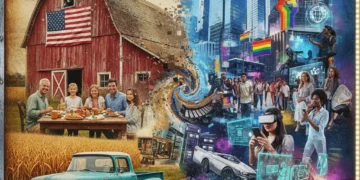
The very fabric of American culture is woven with stories. From the oral traditions of indigenous peoples to the epic narratives of Hollywood, storytelling has always been a fundamental way we understand ourselves, our history, and our future. However, the dawn of the 21st century, particularly the last decade, has ushered in an unprecedented era of transformation. The traditional gatekeepers of narrative – film studios, publishing houses, and broadcast networks – are now sharing the stage with a myriad of new media platforms. This shift is not merely about new distribution channels; it’s a fundamental re-imagining of what a story can be, who can tell it, and how audiences can experience it. We are witnessing a profound American Storytelling Evolution, a metamorphosis propelled by technology and a growing demand for immersive, personalized, and interactive experiences.
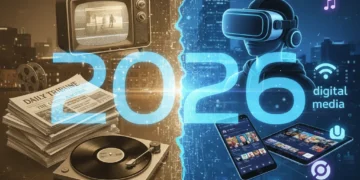
By 2026, experts predict a significant acceleration in these trends, with interactive content projected to increase by at least 20%. This isn’t just a statistic; it represents a paradigm shift where audiences are no longer passive recipients but active participants, shaping narratives, influencing outcomes, and co-creating worlds. This comprehensive exploration will delve into the forces driving this evolution, examine the diverse forms it takes, and forecast the exciting future of American storytelling.
The Digital Tsunami: How New Media Platforms Reshaped the Narrative Landscape
The internet, once a niche tool, has become the central nervous system of modern communication and, by extension, modern storytelling. Its democratizing power has dismantled traditional barriers to entry, allowing voices from all corners of society to share their perspectives. This has profoundly impacted the American Storytelling Evolution.
Social Media: The Ubiquitous Storyteller
Platforms like TikTok, Instagram, and YouTube have transformed everyday individuals into storytellers. Micro-narratives, often visual and highly personal, dominate these spaces. Users create, consume, and share stories in real-time, fostering a sense of community and immediacy. From viral challenges to personal vlogs, these platforms have cultivated new genres and narrative structures that prioritize authenticity and engagement over traditional production values. The sheer volume and diversity of stories shared daily represent a massive, decentralized narrative ecosystem, constantly evolving and reflecting the zeitgeist.
Streaming Services: Beyond the Binge-Watch
Netflix, Hulu, Amazon Prime Video, and countless others have not only changed how we consume film and television but also how stories are conceived. The serialized nature of streaming allows for deeper character development and more complex plotlines, often spanning multiple seasons. Furthermore, these platforms are experimenting with interactive episodes (e.g., Black Mirror: Bandersnatch), where viewer choices directly influence the narrative, offering a glimpse into the future of participatory storytelling. This push towards viewer agency is a critical component of the American Storytelling Evolution.
Podcasts and Audio Narratives: The Renaissance of Sound
The resurgence of audio storytelling, driven by podcasts, has created a fertile ground for narrative innovation. From investigative journalism to fictional dramas, podcasts offer an intimate and immersive experience, often leveraging the power of voice and sound design to paint vivid mental pictures. Their accessibility and the ability to consume them on the go have made them a powerful medium for long-form storytelling, fostering deep connections with listeners. This auditory revolution adds another rich layer to the evolving tapestry of American narratives.
Gaming: The Ultimate Interactive Narrative
Perhaps the most inherently interactive form of new media, video games have evolved from simple entertainment to sophisticated narrative vehicles. Modern games offer sprawling worlds, complex characters, and branching storylines where player decisions have significant consequences. Games like The Last of Us or Red Dead Redemption 2 are lauded for their cinematic qualities and emotional depth, proving that interactivity doesn’t diminish narrative power but enhances it. The lines between gaming and traditional storytelling are increasingly blurring, with many games offering experiences akin to interactive films, pushing the boundaries of the American Storytelling Evolution.
The Rise of Interactive Content: A New Era of Engagement
The prediction of a 20% increase in interactive content by 2026 is not an arbitrary figure; it reflects a fundamental shift in audience expectations. People no longer want to be merely told a story; they want to be part of it. This desire for agency is driving innovation across all media forms.
Personalized Storytelling: Narratives Tailored to You
Data analytics and AI are enabling storytellers to create personalized experiences. Imagine a news article that adapts its focus based on your previous reading habits, or a fictional story where character arcs subtly shift to resonate more deeply with your inferred preferences. While still in its nascent stages, the potential for hyper-personalized narratives is immense, promising stories that feel uniquely crafted for each individual. This bespoke approach is a hallmark of the evolving American Storytelling Evolution.
Augmented Reality (AR) and Virtual Reality (VR): Immersive Worlds
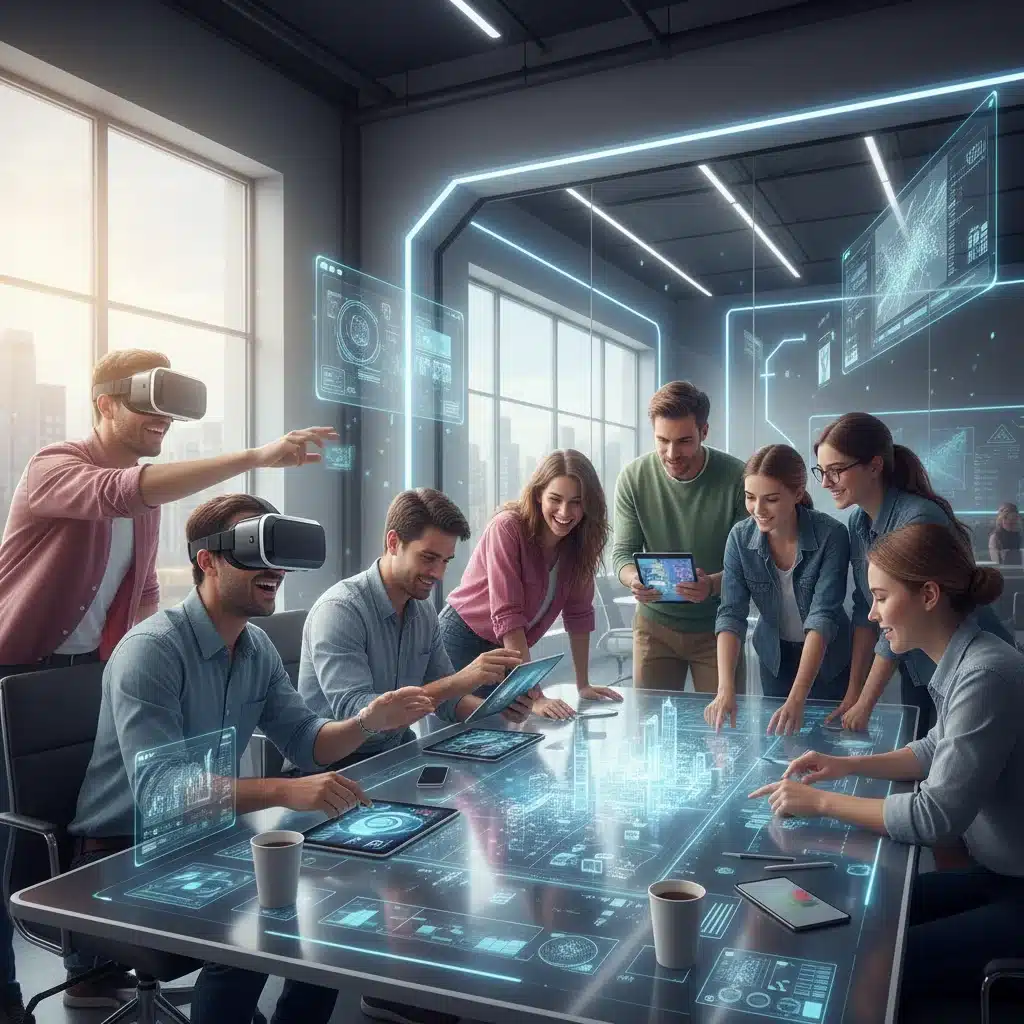
AR and VR technologies are taking interactivity to unprecedented levels. VR allows users to step directly into a story, experiencing it from a first-person perspective, fostering unparalleled empathy and immersion. AR overlays digital elements onto the real world, transforming everyday environments into narrative spaces. Imagine exploring a historical site and seeing virtual characters reenact events, or reading a book where the characters pop out of the pages. These technologies are poised to redefine what it means to experience a story, making the audience an integral part of the narrative world.
Transmedia Storytelling: Worlds Without Borders
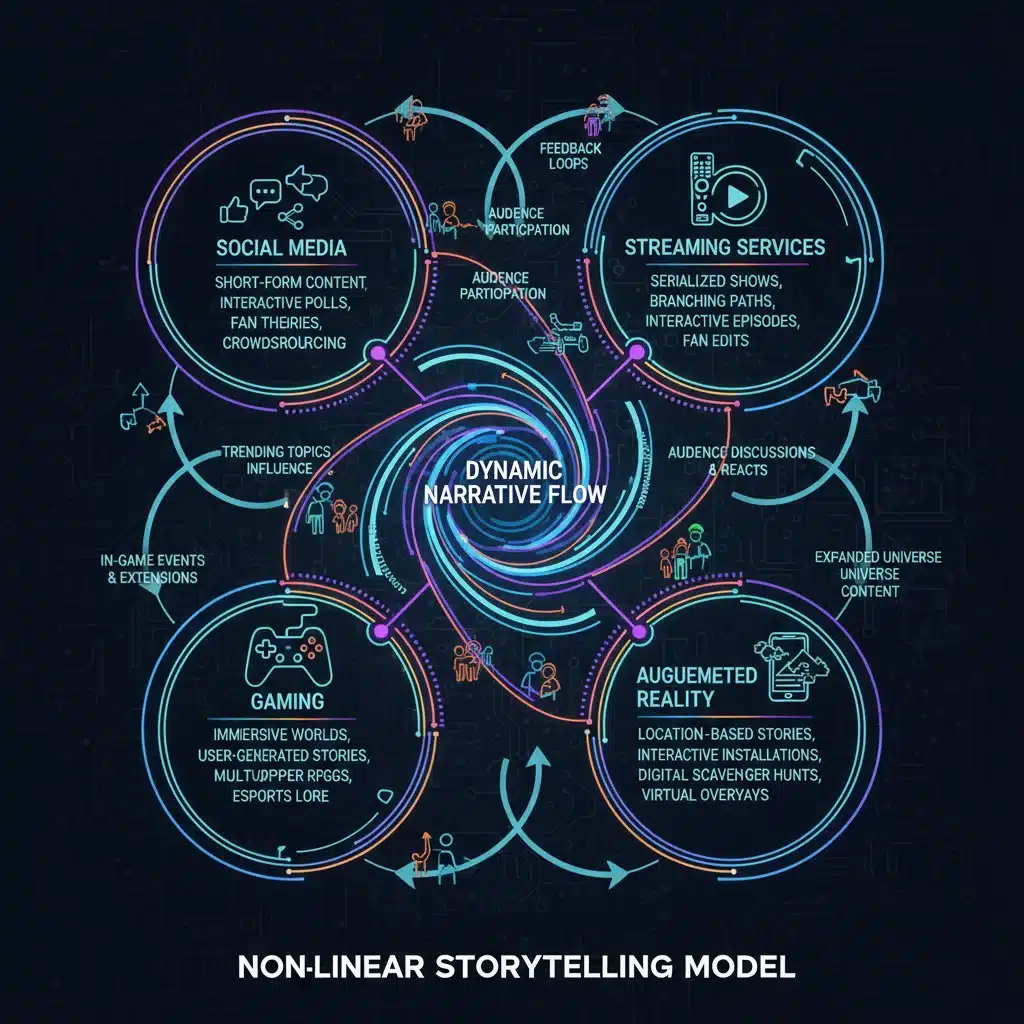
Transmedia storytelling involves telling a single story or story world across multiple platforms, with each platform contributing a unique piece to the overall narrative. For example, a film might be complemented by a web series exploring a side character, a podcast delving into the lore, and an ARG (Alternate Reality Game) where fans solve puzzles in the real world. This approach creates a rich, expansive universe that encourages deep engagement and community participation, allowing audiences to explore the narrative from various angles and at their own pace. This holistic approach is a key driver of the American Storytelling Evolution.
Challenges and Opportunities in the Evolving Narrative Landscape
While the future of American storytelling is bright with innovation, it also presents significant challenges and unique opportunities for creators, consumers, and platforms alike.
Navigating the Paradox of Choice
With an explosion of content, audiences face the paradox of choice – an overwhelming number of options can lead to decision paralysis. Curation, recommendation algorithms, and trusted voices become more crucial than ever in helping individuals discover stories that resonate with them. Storytellers must find ways to cut through the noise and capture attention in a crowded digital space.
Maintaining Quality and Depth
The democratization of storytelling can sometimes lead to a proliferation of low-quality content. The challenge for the industry is to foster an environment where diverse voices can thrive while still upholding standards of narrative craft, ethical storytelling, and artistic merit. The American Storytelling Evolution demands both accessibility and excellence.
Ethical Considerations of Personalization and AI
As storytelling becomes more personalized and AI-driven, ethical questions arise concerning data privacy, algorithmic bias, and the potential for manipulative narratives. Ensuring transparency, user control, and responsible AI development will be paramount to building trust and maintaining the integrity of storytelling.
New Economic Models for Creators
The shift from traditional media models to digital platforms necessitates new ways for creators to monetize their work. Subscription services, crowdfunding, micro-transactions, and direct fan support are all emerging models that empower independent storytellers and foster sustainable creative ecosystems. Understanding and adapting to these changing economic landscapes is vital for the continued growth of the American Storytelling Evolution.
The Impact on Cultural Identity and Representation
The American Storytelling Evolution is not just about technology; it’s deeply intertwined with cultural identity and representation. New media platforms have amplified marginalized voices, allowing for narratives that were historically underrepresented or completely absent from mainstream media to find audiences. This inclusivity enriches the overall tapestry of American stories, offering a more nuanced and multifaceted reflection of the nation’s diverse experiences.
Amplifying Diverse Voices
Independent creators, often operating outside traditional industry structures, are using platforms like YouTube, TikTok, and podcasting to share stories from unique cultural perspectives, addressing themes of identity, race, gender, and socio-economic status. This direct connection with audiences bypasses traditional gatekeepers, allowing for a more authentic and unfiltered portrayal of diverse realities. This is a crucial aspect of a truly evolving American narrative.
Challenging Dominant Narratives
The proliferation of diverse stories inherently challenges dominant cultural narratives and stereotypes. By presenting alternative viewpoints and experiences, new media fosters critical thinking and empathy, contributing to a more informed and inclusive public discourse. This dynamic interplay between traditional and emerging narratives is a hallmark of the current American Storytelling Evolution.
Community Building Around Shared Stories
New media facilitates the formation of communities around shared stories and interests. Fandoms thrive on platforms like Reddit, Discord, and Twitter, where audiences actively discuss, analyze, and even contribute to the narratives they love. This collective engagement deepens the impact of stories and creates a sense of belonging, transcending geographical boundaries. The communal aspect of storytelling is being reinvigorated in the digital age.
Forecasting the Future: What 2026 and Beyond Holds
Looking ahead to 2026 and beyond, the trajectory of the American Storytelling Evolution points towards even greater integration of technology, enhanced interactivity, and a continued emphasis on user agency. The 20% increase in interactive content is just the beginning.
AI as a Co-Creator and Personalization Engine
Artificial intelligence will play an increasingly sophisticated role, not just in recommending content, but in its creation. AI-powered tools could assist writers in generating plot ideas, character dialogues, or even entire narrative branches for interactive experiences. AI will also refine personalization, delivering stories that adapt in real-time to individual viewer responses, creating truly unique narrative journeys for every consumer.
The Metaverse and Persistent Story Worlds
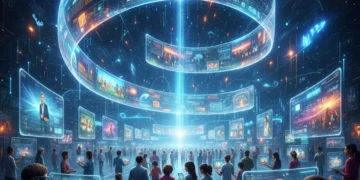
The concept of the metaverse – persistent, shared virtual spaces – promises to be a fertile ground for storytelling. Imagine entering a digital world where narratives unfold around you, characters interact with you directly, and your actions have lasting consequences within that universe. This could lead to entirely new forms of collaborative and emergent storytelling, where the lines between creator and audience blur even further.
Haptic Feedback and Multi-Sensory Storytelling
As technology advances, storytelling will become increasingly multi-sensory. Haptic feedback (touch), advanced audio, and even olfactory experiences could be integrated into narratives, creating deeply immersive and emotionally resonant experiences. Imagine feeling the rumble of a distant explosion in a VR experience or smelling the scent of a fictional forest. This expansion beyond sight and sound will profoundly deepen engagement.
The Blurring of Realities: AR, VR, and the Everyday
AR and VR will become more integrated into daily life, making storytelling a constant, ambient presence. Historical narratives could be woven into cityscapes via AR apps, personal stories could be shared through interactive digital monuments, and even advertisements could evolve into mini-narratives that engage consumers in novel ways. The world itself will become a canvas for stories.
Conclusion: The Ever-Unfolding Tapestry of American Stories
The American Storytelling Evolution is a dynamic, ongoing process, continually shaped by technological innovation, cultural shifts, and the insatiable human desire to connect through narrative. The shift towards new media and the dramatic rise of interactive content by 2026 signifies not an end to traditional storytelling, but an expansion of its possibilities. Audiences are no longer content to be passive observers; they demand agency, personalization, and immersion. Creators, in turn, are rising to the challenge, crafting intricate, engaging, and often collaborative experiences across an ever-widening array of platforms.
As we move forward, the stories we tell, and how we tell them, will continue to reflect and shape our society. The future promises a rich, diverse, and deeply interactive tapestry of American narratives, where every individual has the potential to be both storyteller and protagonist in an ever-unfolding epic. Embracing this evolution means embracing a future where stories are not just consumed, but lived.