Solid-State Batteries: The Future of U.S. Energy Storage Investment

Renewable Energy Storage: Why U.S. Investment in Solid-State Batteries Could Yield 30% Returns by 2027 (FINANCIAL IMPACT)
The global energy landscape is undergoing a profound transformation, driven by an urgent need for sustainable solutions and a desire for energy independence. At the heart of this revolution lies renewable energy, with solar and wind power leading the charge. However, the intermittent nature of these sources presents a significant challenge: how to store excess energy when it’s generated and release it reliably when demand is high. This is where energy storage, particularly advanced battery technology, plays a pivotal role. For investors, the burgeoning sector of solid-state batteries, especially within the U.S. market, represents not just a technological leap but a potentially lucrative opportunity, with projections hinting at returns as high as 30% by 2027.
The United States, with its robust innovation ecosystem, significant R&D investments, and a growing commitment to clean energy policies, is uniquely positioned to lead the charge in solid-state battery development and deployment. This article will delve into the compelling reasons behind this optimistic outlook, examining the technological advantages of solid-state batteries, the market drivers propelling their adoption, and the financial implications for savvy investors looking to capitalize on the next wave of energy innovation. Understanding the nuances of this emerging market is crucial for anyone considering solid-state battery investment.
The Imperative for Advanced Energy Storage
The transition to a renewable energy-dominant grid is impossible without efficient and scalable energy storage solutions. Traditional lithium-ion batteries, while instrumental in the initial phases of this transition, face inherent limitations in terms of safety, energy density, and lifespan, particularly for large-scale grid applications. The demand for grid-scale storage is skyrocketing as more intermittent renewable energy sources come online. According to the U.S. Energy Information Administration (EIA), utility-scale battery storage capacity in the U.S. is projected to increase significantly in the coming years, underscoring the critical need for more advanced and reliable solutions. This escalating demand creates a fertile ground for technologies that can surpass current battery performance benchmarks.
Beyond grid stability, advanced energy storage is also crucial for electric vehicles (EVs), consumer electronics, and even aerospace applications. The performance demands across these sectors are diverse, but all converge on the need for safer, more energy-dense, and faster-charging batteries. This universal demand is a powerful market driver for innovations like solid-state batteries, making solid-state battery investment a compelling proposition across multiple industries.
Understanding Solid-State Battery Technology
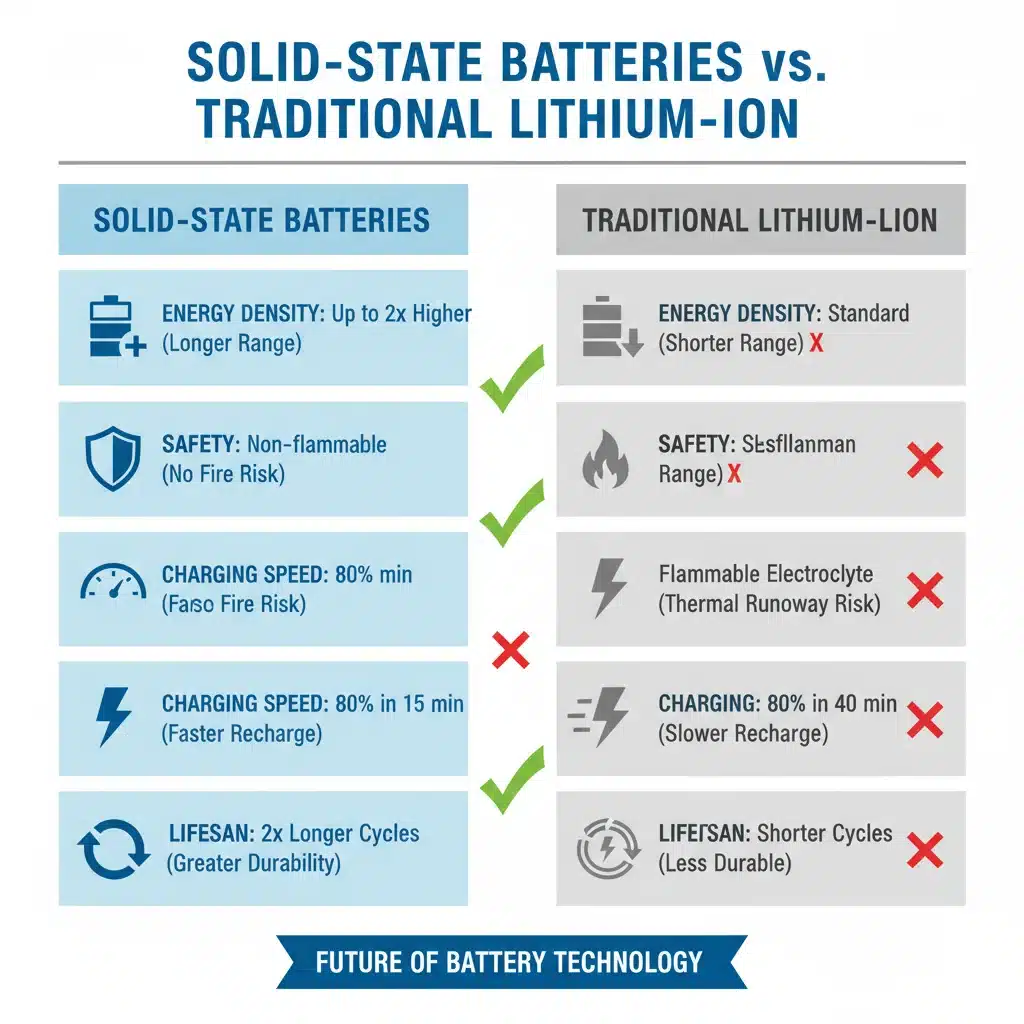
What exactly are solid-state batteries, and why are they considered a game-changer? Unlike conventional lithium-ion batteries that use liquid or gel electrolytes, solid-state batteries employ a solid electrolyte. This fundamental difference unlocks a host of advantages:
-
Enhanced Safety:
Liquid electrolytes are often flammable and can lead to thermal runaway, posing significant safety risks. Solid electrolytes eliminate this risk, making solid-state batteries inherently safer and more stable. This is a critical factor for large-scale deployments and consumer confidence.
-
Higher Energy Density:
Solid electrolytes allow for the use of lithium metal anodes, which have a significantly higher energy density than the graphite anodes used in conventional lithium-ion batteries. This translates to more power in a smaller, lighter package, crucial for EVs and portable electronics.
-
Longer Lifespan:
The solid structure can withstand more charge-discharge cycles without degradation, leading to a longer operational lifespan. This reduces replacement costs and improves the overall economics of energy storage systems.
-
Faster Charging Capabilities:
Some solid-state battery designs show promise for ultra-fast charging, a key feature for electric vehicles to overcome range anxiety and improve user experience.
-
Wider Operating Temperature Range:
Solid-state batteries can often operate more efficiently across a broader range of temperatures, making them suitable for diverse environmental conditions without significant performance loss.
These advantages are not merely incremental improvements; they represent a paradigm shift in battery technology, capable of addressing many of the limitations that currently hinder the widespread adoption of renewable energy and electric vehicles. The potential for solid-state battery investment stems directly from these transformative technological attributes.
The U.S. Advantage: Innovation and Investment Landscape
The United States is a hotbed of innovation in solid-state battery research and development. Leading universities, national laboratories, and private companies are pouring resources into overcoming the remaining challenges, such as manufacturing scalability and cost reduction. The U.S. government, through initiatives like the Department of Energy’s (DOE) Battery 500 Consortium and various tax incentives, is actively fostering this growth. This strategic support creates a robust environment for technological advancement and commercialization.
Furthermore, the U.S. has a significant advantage in attracting venture capital and private equity investment. The allure of groundbreaking technology combined with substantial market potential makes solid-state battery startups particularly attractive to investors. This influx of capital is critical for transitioning from laboratory prototypes to large-scale manufacturing. The competitive landscape among U.S. companies is also driving rapid progress, with several firms nearing commercial production. This robust ecosystem makes solid-state battery investment in the U.S. particularly appealing.
Market Drivers and Growth Projections
Several powerful market drivers are fueling the projected growth of the solid-state battery market:
-
Electric Vehicle (EV) Revolution:
EV manufacturers are aggressively seeking batteries that offer longer range, faster charging, and enhanced safety. Solid-state batteries are seen as the holy grail for EVs, promising to unlock the next generation of electric mobility. Major automotive players are already investing heavily in solid-state battery startups and R&D.
-
Grid Modernization and Renewable Energy Integration:
The increasing penetration of solar and wind power necessitates robust and reliable grid-scale energy storage. Solid-state batteries, with their safety and longevity, are ideal for these applications, helping to stabilize the grid and ensure a consistent power supply.
-
Consumer Electronics:
While the focus is often on EVs and grid storage, solid-state batteries also hold immense potential for smaller devices, offering thinner, lighter, and more powerful batteries for smartphones, wearables, and other portable electronics.
-
Government Policies and Incentives:
U.S. government policies aimed at promoting clean energy and reducing carbon emissions are creating a favorable regulatory and economic environment for advanced energy storage technologies. Tax credits, grants, and infrastructure investments are accelerating deployment.
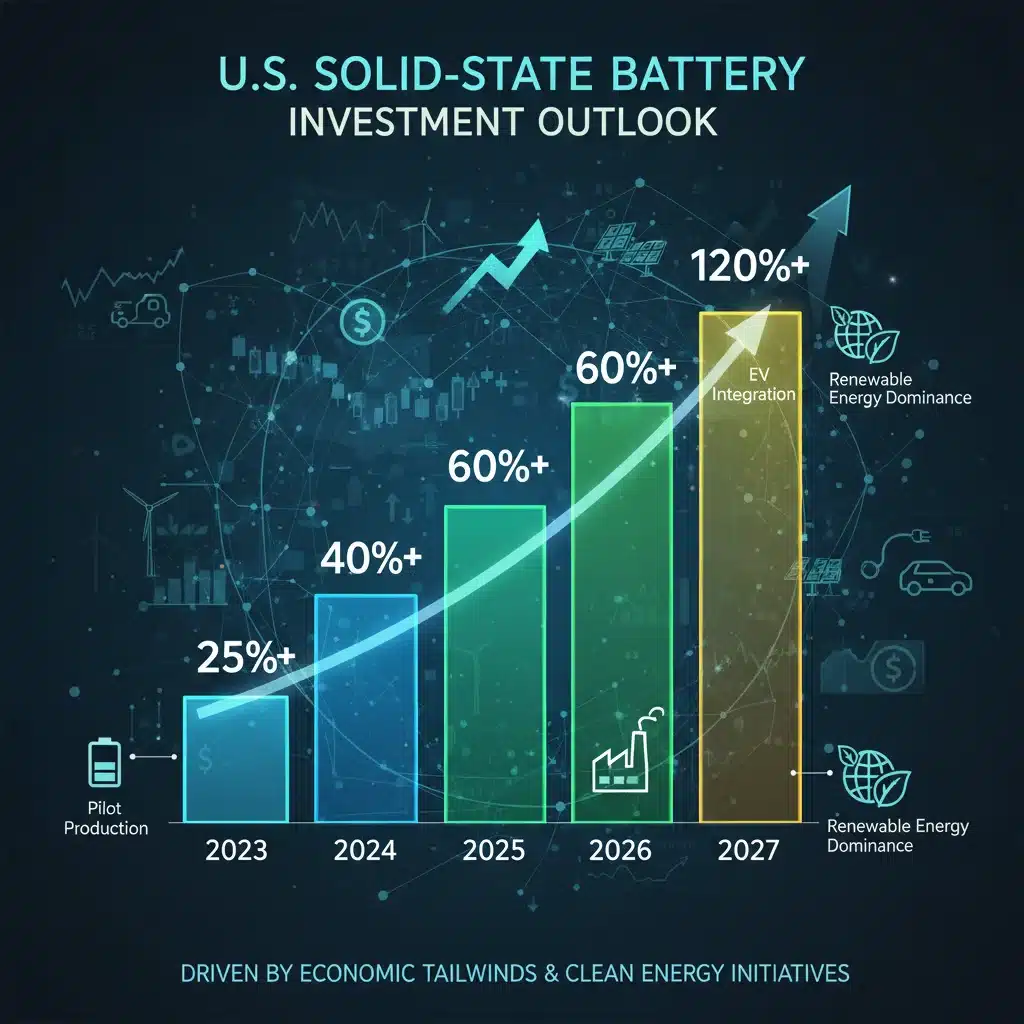
Industry reports project that the global solid-state battery market could grow at a compound annual growth rate (CAGR) exceeding 50% in the coming years. Within this global expansion, the U.S. market is expected to capture a significant share, driven by domestic innovation and strategic investments. This explosive growth underpins the optimistic financial projections for solid-state battery investment.
Financial Impact: Why 30% Returns by 2027?
The projection of 30% returns by 2027 for U.S. investment in solid-state batteries is rooted in a confluence of factors:
-
Early-Mover Advantage and Technological Leadership:
U.S. companies are at the forefront of solid-state battery development. Early investors stand to benefit significantly as these technologies mature and gain widespread adoption. The ability to patent and commercialize proprietary solid-state battery designs gives U.S. firms a competitive edge.
-
Massive Market Adoption Potential:
As solid-state batteries overcome their manufacturing hurdles and become cost-competitive, their superior performance will drive rapid adoption across multiple trillion-dollar industries (EVs, grid storage). This widespread adoption will translate into substantial revenue growth for companies in the sector.
-
Scalability and Cost Reduction:
While initial manufacturing costs may be high, the history of battery technology suggests that economies of scale and continuous innovation will lead to significant cost reductions over time. As production scales up, profit margins will expand, benefiting investors.
-
Strategic National Importance:
Energy independence and technological leadership are national priorities. This ensures sustained government support, funding, and a favorable regulatory environment for solid-state battery companies, de-risking investments to some extent.
-
Diversification from Traditional Energy:
For investors looking to diversify their portfolios away from fossil fuels and into sustainable technologies, solid-state batteries offer a compelling opportunity with high growth potential, aligning with ESG (Environmental, Social, and Governance) investment principles.
The 30% return projection is not merely speculative; it reflects the anticipated growth trajectory of a disruptive technology poised to redefine multiple industries. However, it’s crucial to acknowledge that such high returns come with inherent risks, primarily related to the challenges of scaling production and achieving cost parity with existing technologies. Nevertheless, the underlying fundamentals of the solid-state battery investment market are exceptionally strong.
Key Players and Investment Avenues
Investors interested in the solid-state battery space have several avenues to explore:
-
Publicly Traded Companies:
A few companies focused on solid-state battery technology are already publicly traded, offering direct exposure to this sector. These often include established battery manufacturers or automotive companies with significant R&D arms dedicated to solid-state tech.
-
Venture Capital and Private Equity:
For accredited investors, investing in private solid-state battery startups through venture capital funds or direct equity participation can offer higher potential returns, albeit with higher risk and longer investment horizons. This is where much of the early-stage innovation is happening.
-
ETFs and Mutual Funds:
As the market matures, more exchange-traded funds (ETFs) and mutual funds focused on clean energy, battery technology, or advanced materials will emerge, offering diversified exposure to the sector.
-
Strategic Partnerships and Joint Ventures:
Some larger industrial companies are forming strategic partnerships or joint ventures with solid-state battery developers, which can also present indirect investment opportunities.
Due diligence is paramount. Investors should carefully research the technological readiness, manufacturing capabilities, intellectual property portfolio, and management team of any company they consider for solid-state battery investment.
Challenges and Risks
While the outlook is promising, it’s important to address the challenges and risks associated with solid-state battery technology and investment:
-
Manufacturing Scalability:
Scaling up production from lab-scale prototypes to mass manufacturing remains a significant hurdle. Developing cost-effective and efficient manufacturing processes is key to commercial success.
-
Cost Parity:
Currently, solid-state batteries are generally more expensive to produce than traditional lithium-ion batteries. Achieving cost parity or even superiority will be crucial for widespread adoption.
-
Technological Maturity:
While significant progress has been made, the technology is still evolving. Different material combinations and architectures are being explored, and a clear industry standard has yet to emerge.
-
Competition:
The battery market is highly competitive, with ongoing advancements in lithium-ion and other next-generation battery chemistries. Solid-state batteries must continuously demonstrate a clear performance and cost advantage.
-
Supply Chain Issues:
Ensuring a stable and ethical supply chain for critical raw materials, such as lithium, nickel, and cobalt (though solid-state batteries aim to reduce reliance on some of these), will be essential.
Despite these challenges, the immense potential benefits and the concentrated efforts of researchers and engineers worldwide suggest that these hurdles are surmountable. The risks are acknowledged, but the potential rewards for solid-state battery investment are compelling enough to attract significant capital.
The Role of Government and Policy in Accelerating Adoption
Government policies play a crucial role in accelerating the adoption and commercialization of solid-state battery technology. In the U.S., various initiatives are designed to bolster domestic battery production and research:
-
Infrastructure Investment and Jobs Act:
This act includes significant funding for battery manufacturing and recycling, supporting the entire supply chain from raw materials to finished products.
-
Inflation Reduction Act (IRA):
The IRA offers substantial tax credits and incentives for clean energy technologies, including battery storage, which directly benefits solid-state battery developers and manufacturers. These incentives reduce the cost of deployment and make projects more financially attractive.
-
Department of Energy (DOE) Funding:
The DOE provides grants and research funding to universities and companies working on advanced battery technologies, helping to de-risk early-stage R&D and accelerate breakthroughs.
-
Strategic Partnerships:
The government is also fostering partnerships between industry, academia, and national labs to create a collaborative environment for innovation and technology transfer.
These policies not only provide financial support but also signal a long-term commitment to the clean energy transition, creating a stable and predictable market for solid-state battery investment. This governmental backing significantly enhances the attractiveness of the U.S. market for both domestic and international investors.
Looking Ahead: The Future of Energy Storage and Investment
By 2027, the landscape of energy storage is expected to be significantly reshaped by solid-state battery technology. While some challenges remain, the pace of innovation, coupled with robust market demand and strategic U.S. investment, points towards a future where solid-state batteries are not just a niche solution but a mainstream component of our energy infrastructure. The projected 30% returns are a testament to the transformative power of this technology and the potential for substantial financial gains for those who invest wisely and strategically.
The shift towards renewable energy is not just an environmental imperative; it’s an economic opportunity of unprecedented scale. Solid-state batteries are at the vanguard of this shift, promising safer, more efficient, and more sustainable energy storage. For investors, understanding this technological revolution and its financial implications is key to unlocking the potential for significant returns in the coming years. The time for solid-state battery investment is now, as the U.S. solidifies its position as a global leader in this critical technology.
Conclusion
The convergence of technological breakthroughs, escalating demand for renewable energy storage, and strong governmental support positions U.S. investment in solid-state batteries as one of the most compelling opportunities in the clean energy sector. With projections of up to 30% returns by 2027, this emerging market offers a rare combination of innovation, sustainability, and substantial financial upside. While risks are inherent in any cutting-edge technology, the fundamental advantages of solid-state batteries – enhanced safety, higher energy density, and longer lifespan – make them an indispensable component of the future energy landscape.
For investors, the opportunity to be part of this transformative journey is clear. By strategically allocating capital to companies and initiatives at the forefront of solid-state battery development and manufacturing, one can not only contribute to a more sustainable future but also realize significant financial gains. The U.S. is poised to lead this revolution, making solid-state battery investment a critical consideration for any forward-looking portfolio.