The Future of Remote Work: Analyzing 2026’s Hybrid Model Evolution in U.S. Corporations
The corporate landscape of the United States is undergoing a profound transformation, driven by technological advancements, shifting employee expectations, and the lingering effects of global events. At the heart of this evolution is the concept of remote work, which has rapidly matured into sophisticated hybrid models. As we look towards 2026, understanding the nuances of this hybrid work evolution becomes paramount for U.S. corporations aiming to maintain competitiveness, foster innovation, and attract top talent.
The initial rush to remote work during the pandemic demonstrated both its viability and its challenges. What started as a necessity has now solidified into a strategic imperative for many organizations. The question is no longer if hybrid work will be adopted, but how it will be implemented, optimized, and sustained. This comprehensive analysis will delve into the anticipated trends, compare different hybrid models, identify key challenges, and explore the opportunities that lie ahead for U.S. corporations in 2026.
Defining the Hybrid Work Landscape in 2026
By 2026, the term ‘hybrid work’ will encompass a spectrum of arrangements, moving far beyond the simplistic notion of working from home a few days a week. It will be characterized by greater intentionality, technological sophistication, and a deep understanding of organizational culture and employee well-being. The hybrid work evolution is not a one-size-fits-all solution; rather, it’s a customizable framework that organizations will adapt to their specific needs.
We anticipate a move towards more dynamic and fluid models. Companies will increasingly define their approach based on job roles, team requirements, and individual preferences, rather than blanket policies. This flexibility will be a major differentiator in the talent market.
The Rise of the ‘Intentional Office’
One significant aspect of the 2026 hybrid model will be the concept of the ‘intentional office.’ No longer just a default location, the physical office will transform into a purpose-driven hub for collaboration, innovation, mentorship, and social connection. Employees won’t come to the office simply to perform tasks they could do at home; they’ll come for specific activities that benefit from in-person interaction. This shift requires a re-evaluation of office design, moving away from rows of cubicles towards flexible, activity-based workspaces.
This intentionality also extends to how teams schedule their in-office days. Instead of random attendance, many companies will coordinate specific ‘anchor days’ where entire teams or departments come together to maximize collaborative output and strengthen team cohesion. This structured flexibility aims to capture the best of both worlds: the focused work possible remotely and the spontaneous innovation fostered in person.
Technological Underpinnings of Hybrid Success
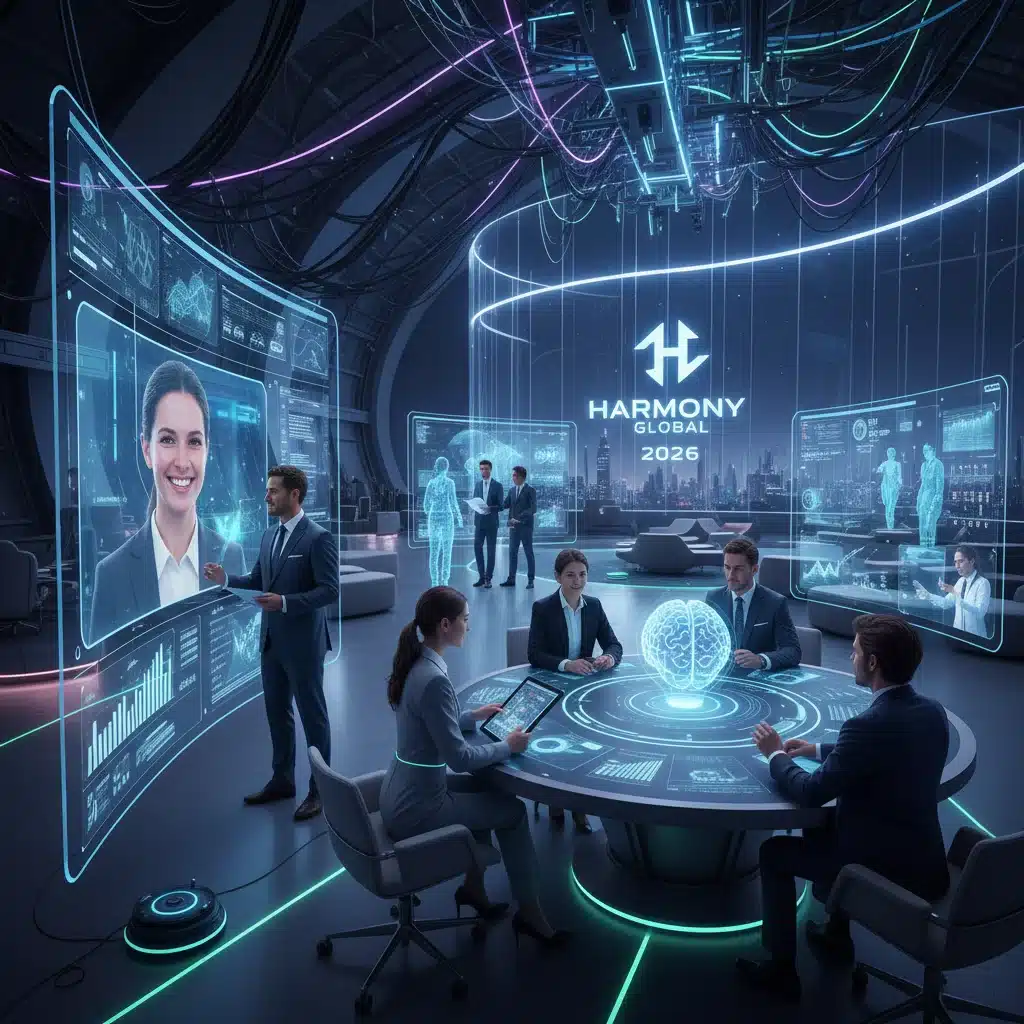
The success of the hybrid work evolution in 2026 will be inextricably linked to technological advancements. Robust and seamless digital infrastructure will be non-negotiable. This includes not just high-speed internet and reliable VPNs, but also sophisticated collaboration platforms that bridge the gap between physical and virtual participants. Expect to see greater adoption of:
- AI-powered meeting tools: Offering real-time transcription, translation, and intelligent summaries to ensure equitable participation regardless of location.
- Immersive collaboration spaces: Virtual reality (VR) and augmented reality (AR) starting to play a niche but growing role in highly specialized collaborative tasks, reducing the need for physical travel for certain meetings or design reviews.
- Advanced project management software: Tools that provide transparent workflows, clear accountability, and asynchronous communication capabilities, minimizing reliance on synchronous meetings.
- Enhanced cybersecurity measures: As work environments become more distributed, robust security protocols and employee training will be critical to protect corporate data.
These technologies are not merely tools; they are enablers of a truly integrated hybrid experience, ensuring that remote employees are not second-class citizens but fully engaged and productive members of the team.
Comparing Hybrid Models: What U.S. Corporations Will Adopt
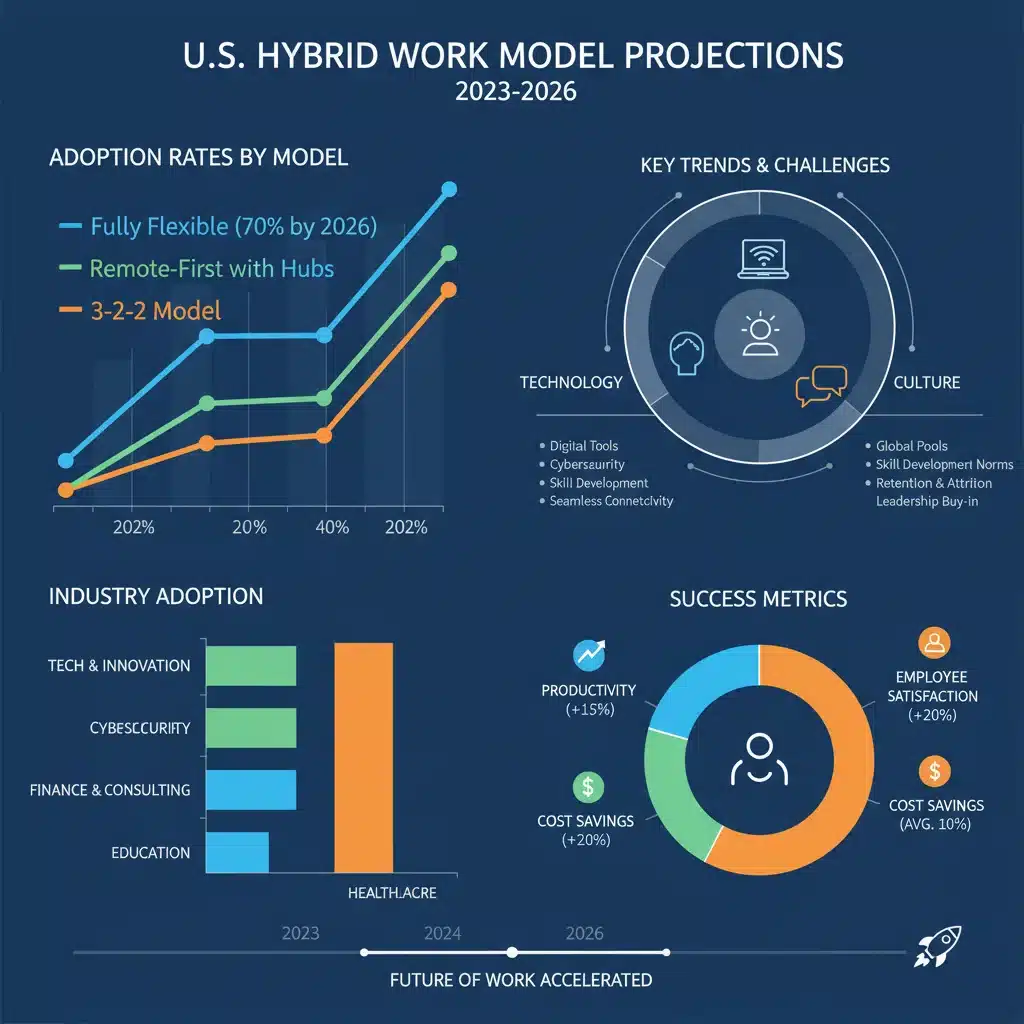
By 2026, U.S. corporations will have refined their hybrid strategies, moving away from experimental phases to more formalized structures. Several distinct models are expected to dominate, each with its own advantages and challenges.
1. The Structured Hybrid (e.g., 3-2 Model)
This model, where employees are required to be in the office for a fixed number of days (e.g., three days in, two days remote), offers predictability and a sense of routine. It’s often favored by larger, more traditional organizations or those with significant in-person collaboration needs. The structure allows for easier planning of team meetings and fosters a consistent office culture.
- Pros: Predictability, easier team coordination, stronger in-person culture, clearer boundaries between work and home for some employees.
- Cons: Less flexibility for employees, potential for ‘two-tier’ systems (in-office vs. remote), challenges for employees with long commutes.
2. The Flexible Hybrid (Employee-Choice Model)
In this model, employees have significant autonomy in deciding when and how often they come to the office, often within broad guidelines set by their teams or managers. The focus is on outcomes rather than presence. This model champions trust and individual agency, appealing to companies that prioritize employee empowerment and work-life balance.
- Pros: High employee satisfaction, greater autonomy, broader talent pool, reduced office space costs.
- Cons: Potential for inconsistent team presence, challenges in fostering a cohesive culture, increased need for asynchronous communication, potential for ‘free rider’ issues if not managed well.
3. Remote-First with Office Hubs
Some companies will declare themselves ‘remote-first,’ meaning remote work is the default, and the physical office serves as an optional hub for specific events, collaboration sessions, or for employees who prefer an office environment. This model is particularly attractive to tech companies and those with geographically dispersed teams, allowing access to a global talent pool.
- Pros: Maximum flexibility, access to global talent, significant cost savings on real estate, strong focus on asynchronous communication.
- Cons: Greater effort required to build culture and connection, potential for isolation among some employees, challenges in spontaneous collaboration.
4. Activity-Based Working (ABW) Hybrid
This advanced model focuses on matching the work activity to the most suitable environment. Employees choose where to work based on the task at hand – a quiet space for focused work, a collaborative zone for brainstorming, or remotely for deep concentration. The office is designed with diverse zones to support different types of work, and employees are empowered to move between them.
- Pros: Optimized productivity for different tasks, efficient use of office space, high employee satisfaction, fosters a dynamic work environment.
- Cons: Requires significant investment in office redesign, complex management of space utilization, requires a high degree of employee self-management.
The choice of model will depend heavily on industry, company size, culture, and strategic objectives. However, the common thread across all successful models will be a commitment to flexibility, equity, and employee well-being.
Challenges and Opportunities in the 2026 Hybrid Work Environment
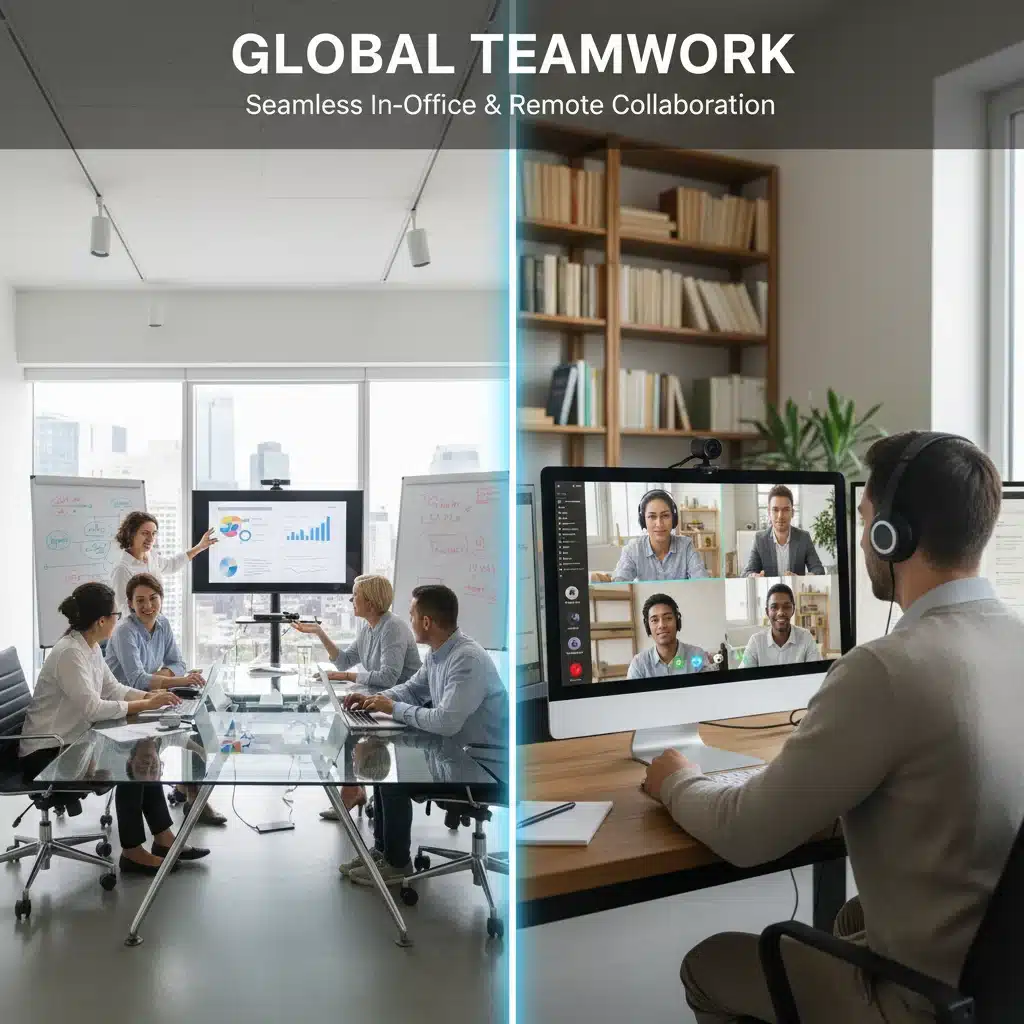
The hybrid work evolution is not without its hurdles, but these challenges also present significant opportunities for growth and innovation.
Key Challenges:
- Maintaining Company Culture and Connection: As teams become more distributed, preserving a strong, cohesive company culture becomes harder. Companies must invest in intentional strategies for virtual team building, in-person events, and clear communication of values.
- Ensuring Equity and Inclusion: The risk of a ‘two-tier system’ where remote employees feel overlooked for promotions or excluded from informal networking is real. Leaders must actively work to ensure equitable opportunities, visibility, and access for all employees, regardless of their location.
- Effective Leadership and Management: Managing hybrid teams requires a different skill set. Leaders need to be proficient in asynchronous communication, empathetic to diverse working conditions, and focused on outcomes rather than hours spent. Training for managers will be critical.
- Cybersecurity and Data Privacy: With employees accessing company data from various locations and devices, the attack surface for cyber threats expands. Robust security protocols, employee training, and advanced threat detection systems will be essential.
- Real Estate Optimization: Companies will grapple with how to right-size their office footprint. While some may downsize, others might reconfigure their spaces to be more collaborative and less desk-centric, requiring significant capital investment.
- Employee Well-being and Burnout: The blurring lines between work and home can lead to increased stress and burnout. Companies must prioritize mental health support, encourage boundaries, and foster a culture that respects personal time.
Significant Opportunities:
- Expanded Talent Pool: Hybrid models allow companies to recruit talent from anywhere, breaking geographical barriers and increasing diversity. This access to a broader talent pool can lead to stronger, more innovative teams.
- Increased Employee Satisfaction and Retention: Flexibility is a top demand for modern employees. Offering hybrid options can significantly boost job satisfaction, reduce turnover, and enhance an organization’s employer brand.
- Cost Efficiencies: While not always the primary driver, reduced office space and associated operational costs can lead to significant savings for some organizations, which can then be reinvested into technology or employee benefits.
- Enhanced Productivity and Focus: Many employees report increased productivity for certain tasks when working remotely, free from office distractions. Hybrid models allow individuals to choose the environment best suited for their current task.
- Greater Resilience and Business Continuity: A distributed workforce inherently builds resilience. Companies with established hybrid models are better equipped to handle disruptions, whether local emergencies or broader crises.
- Innovation in Workplace Design and Technology: The shift to hybrid work is driving unprecedented innovation in office design, collaboration tools, and HR technologies, creating more dynamic and efficient work environments.
Strategic Imperatives for U.S. Corporations in 2026
To navigate the complexities and capitalize on the opportunities presented by the hybrid work evolution, U.S. corporations must focus on several strategic imperatives.
1. Invest in Leadership Development for Hybrid Environments
Managers are the lynchpin of successful hybrid teams. Corporations must invest heavily in training programs that equip leaders with skills in remote team management, empathetic communication, performance management without proximity bias, and fostering inclusion across distributed teams. This is not just about managing tasks, but about leading people in a fundamentally different way.
2. Re-evaluate and Redesign Physical Workspaces
The office of 2026 will be less about individual workstations and more about collaborative hubs, innovation labs, and social spaces. Companies need to conduct thorough analyses of how their employees use the office and redesign accordingly. This might involve more flexible seating, advanced meeting room technology, and amenities that encourage intentional visits.
3. Prioritize Technology and Digital Infrastructure
Seamless connectivity, robust cybersecurity, and intuitive collaboration tools are non-negotiable. Corporations must continuously evaluate and upgrade their digital ecosystems to support a fluid hybrid workforce. This includes investing in cloud-based solutions, secure access management, and tools that promote asynchronous communication.
4. Foster a Culture of Trust, Flexibility, and Psychological Safety
Successful hybrid models are built on trust. Companies must empower employees with autonomy while clearly communicating expectations and outcomes. Creating a culture where employees feel psychologically safe to contribute, regardless of their location, is paramount. This involves transparent communication, active listening, and a focus on well-being.
5. Develop Clear Hybrid Work Policies and Guidelines
While flexibility is key, ambiguity can be detrimental. Corporations need to establish clear, well-communicated policies regarding hybrid work, including expectations for in-office attendance, communication protocols, performance metrics, and support for remote setups. These policies should be reviewed and adapted regularly based on feedback and evolving needs.
6. Measure and Adapt Continuously
The hybrid work model is not static. Corporations must implement robust feedback mechanisms, conduct regular surveys, and analyze data on productivity, engagement, and well-being. This data-driven approach will enable continuous refinement and adaptation of their hybrid strategies to ensure they remain effective and aligned with business goals and employee needs.
Understanding employee sentiment, monitoring key performance indicators (KPIs) related to both individual and team productivity, and tracking retention rates will provide valuable insights into the efficacy of the chosen hybrid model. This iterative process of measurement and adaptation is crucial for long-term success in the dynamic hybrid landscape.
The Human Element: Employee Experience in a Hybrid World
Beyond policies and technology, the success of the hybrid work evolution hinges on the employee experience. By 2026, progressive U.S. corporations will prioritize creating an equitable and engaging environment for all, regardless of their primary work location.
Ensuring Equitable Access and Opportunity
One of the most critical aspects of the hybrid model is ensuring that remote employees have the same opportunities for career advancement, visibility, and mentorship as their in-office counterparts. This requires conscious effort from leadership to:
- Inclusive Meeting Practices: Implementing practices where all participants, remote or in-person, have an equal voice. This might mean “remote-first” meeting norms even when some are in the office, using shared digital whiteboards, and ensuring high-quality audio/visual setups.
- Fair Performance Reviews: Training managers to assess performance based on outcomes and contributions, rather than perceived presence or face time.
- Mentorship and Sponsorship Programs: Actively connecting remote employees with mentors and sponsors who can advocate for their career growth.
- Professional Development: Ensuring remote employees have equal access to training, workshops, and development opportunities.
Combatting Isolation and Fostering Connection
While remote work offers flexibility, it can also lead to feelings of isolation. Corporations in 2026 will actively combat this through:
- Virtual Social Events: Creative online social gatherings, from virtual coffee breaks to game nights, to maintain informal connections.
- Intentional In-Person Gatherings: Organizing regular, purpose-driven team offsites or company-wide events that bring distributed teams together for collaboration and camaraderie.
- Digital Water Coolers: Creating dedicated channels or platforms for non-work-related chat and informal interactions.
- Well-being Initiatives: Providing access to mental health resources, promoting digital detoxes, and encouraging work-life balance to prevent burnout.
Empowering Employee Autonomy and Flexibility
The core appeal of hybrid work is flexibility. Companies that empower employees to make choices about where and when they work, within reasonable boundaries, will see higher engagement and retention. This autonomy, however, must come with clear communication of expectations and a focus on results.
The Impact on U.S. Economic and Urban Landscapes
The hybrid work evolution extends its influence beyond individual corporations, impacting broader economic and urban landscapes in the U.S.
Shifting Real Estate Dynamics
The demand for large, centralized office spaces in major urban centers is likely to continue to decline or shift significantly. We may see a rise in smaller, satellite offices or co-working spaces in suburban areas, catering to employees who want a third space between home and a distant main office. This could revitalize suburban economies and reduce commuter traffic into city centers.
Redefining Commuting and Infrastructure
Reduced daily commutes for a significant portion of the workforce will impact public transportation systems, road usage, and even environmental footprints. Urban planners will need to adapt to these changes, potentially reallocating resources from traditional commuter infrastructure to local amenities and community spaces.
Geographic Redistribution of Talent and Wealth
With less reliance on physical presence, employees have greater freedom to live where they choose. This could lead to a redistribution of talent and wealth away from traditionally expensive urban hubs to more affordable regions, fostering economic growth in new areas and potentially easing housing pressures in major cities. This decentralization presents both opportunities for regional development and challenges for established urban economies.
Conclusion: The Enduring Legacy of Hybrid Work
By 2026, the hybrid work model will be firmly entrenched as the dominant mode of operation for a significant portion of U.S. corporations. It represents not just a temporary adjustment but a fundamental shift in how work is conceived, organized, and executed. The hybrid work evolution is a testament to human adaptability, technological progress, and a growing recognition of employee needs.
Success in this new era will belong to organizations that are agile, empathetic, and strategically invested in their people and their digital infrastructure. Those that can effectively blend the benefits of remote flexibility with the power of in-person collaboration, while fostering an inclusive and supportive culture, will not only survive but thrive. The journey to 2026 is one of continuous learning, adaptation, and innovation, shaping a future of work that is more resilient, equitable, and ultimately, more human.
The proactive embrace of these changes will define the leaders of tomorrow’s corporate world, setting new benchmarks for productivity, employee engagement, and sustainable growth in a perpetually evolving global economy.