Future of Work 2026: Hybrid Models & Automation Trends in US Employment
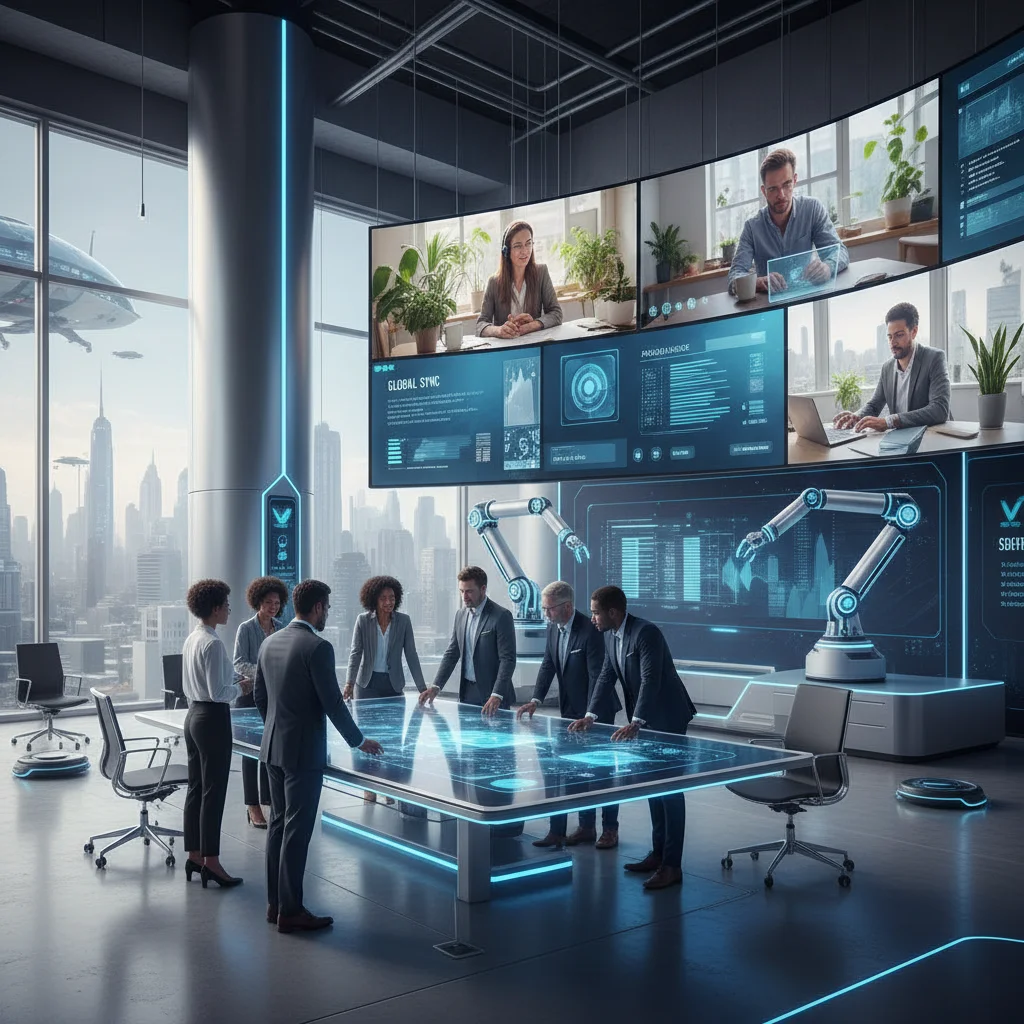
The Future of Work: 7 Hybrid Models and Automation Trends Dominating US Employment in 2026
The landscape of employment is in constant flux, but rarely has it seen such a rapid and profound transformation as in recent years. As we look ahead to 2026, the future work 2026 environment in the United States is poised to be dominated by sophisticated hybrid work models and an accelerating integration of automation. This isn’t merely a shift; it’s a fundamental redefinition of how, where, and by whom work is performed. Understanding these evolving dynamics is crucial for businesses aiming to remain competitive and for individuals seeking to thrive in the jobs of tomorrow.
The COVID-19 pandemic acted as an unprecedented catalyst, forcing organizations to rethink traditional office-centric paradigms. What began as a necessity quickly evolved into a realization of new efficiencies, greater flexibility, and enhanced employee well-being. Coupled with this, advancements in artificial intelligence (AI), machine learning (ML), and robotics are not just augmenting human capabilities but are also automating routine tasks, creating new job categories, and demanding a re-evaluation of skill sets. This comprehensive guide will delve into the 7 most impactful hybrid work models emerging and the critical automation trends that will shape US employment by 2026, offering insights into navigating this exciting, yet challenging, new era.
The Ascent of Hybrid Work Models: Redefining Workplace Norms for Future Work 2026
Hybrid work is no longer a temporary solution but a strategic imperative for many organizations. It represents a flexible approach that allows employees to split their time between working in the office and working remotely, offering a blend of in-person collaboration and remote autonomy. The beauty of hybrid models lies in their adaptability, enabling companies to tailor their approach to their specific needs, culture, and industry. By 2026, several distinct hybrid models will have solidified their prominence, each with its own advantages and challenges.
1. The "Anchor Days" Model: Structured Collaboration
This model, often favored by larger organizations and those with significant team-based projects, designates specific days for in-office work. For example, all employees might be required to be in the office on Tuesdays and Thursdays for meetings, collaborative sessions, and team-building activities, while Monday, Wednesday, and Friday are remote workdays. The benefit here is predictable in-person interaction, fostering a sense of team cohesion and facilitating spontaneous collaboration, which can be harder to replicate remotely. For the future work 2026, this model provides a balance between structure and flexibility, making it a popular choice for maintaining corporate culture while offering employees the benefits of remote work.
2. The "Flex-Choice" Model: Employee Autonomy
In contrast to the structured Anchor Days, the Flex-Choice model grants employees significant autonomy over when and where they work. While there might be general guidelines or team-level coordination, individuals largely decide their in-office days based on personal preference, project needs, and team availability. This model prioritizes employee empowerment and trust, leading to higher job satisfaction and potentially increased productivity as individuals optimize their work environment. Companies embracing this model for the future work 2026 must invest heavily in robust communication tools and performance metrics to ensure accountability and seamless team collaboration.
3. The "Remote-First with Office Hubs" Model: Distributed by Design
This model represents a significant departure from traditional setups. Here, remote work is the default, and the company operates as a distributed organization. Physical offices exist not as primary workspaces but as optional hubs for occasional meetings, team events, or for employees who prefer an office environment for focused work or social interaction. This model opens up talent pools globally, reduces real estate costs, and fosters a culture of asynchronous communication. As the future work 2026 continues to globalize, this model will become increasingly attractive for tech companies and knowledge-based industries.
4. The "Hybrid by Team/Department" Model: Tailored Approaches
Recognizing that different departments have different needs, this model allows each team or department to define its own hybrid approach. A sales team might require more in-person client meetings, while a software development team might thrive with more remote time. This granular approach ensures that the hybrid model aligns perfectly with the operational requirements and collaborative dynamics of specific functions within an organization. It requires strong leadership within each department to establish effective guidelines and maintain consistency where necessary for the overall company culture.
5. The "Week-on/Week-off" or "Rotation" Model: Scheduled Presence
This model involves employees or teams rotating their time in the office on a scheduled basis, perhaps one week in the office and one week remote, or alternating days. This approach ensures fair access to office resources and face-to-face interaction while still providing substantial remote work time. It can be particularly useful for organizations with limited office space or those seeking to manage occupancy rates. The predictability of the schedule can also be a benefit for employees planning their personal and professional lives.
6. The "Activity-Based Working (ABW) Hybrid" Model: Purpose-Built Spaces
ABW is an office design philosophy where the physical space is configured to support various work activities rather than assigned desks. In a hybrid ABW model, employees come into the office for specific purposes – collaboration in breakout areas, focused work in quiet zones, or client meetings in dedicated rooms. Remote work covers tasks that don’t require specific office resources. This model optimizes office utilization and encourages employees to choose the environment best suited for their current task, whether at home or in the office. This approach is highly relevant for the future work 2026, emphasizing efficiency and intentional use of physical space.
7. The "Fully Remote with Quarterly On-Sites" Model: Strategic Gatherings
While leaning heavily towards fully remote, this model incorporates mandatory, usually multi-day, in-person gatherings on a periodic basis (e.g., quarterly or semi-annually). These on-sites are crucial for strategic planning, intensive team-building, cultural reinforcement, and celebrating achievements. They provide concentrated bursts of in-person interaction that compensate for the day-to-day lack of physical presence. This model allows companies to tap into a global talent pool while still preserving a strong sense of organizational culture and community.

Automation Trends Dominating US Employment for Future Work 2026
Beyond hybrid work, the relentless march of automation, powered by artificial intelligence, is arguably the most transformative force shaping the future work 2026 landscape. It’s not just about robots on assembly lines anymore; automation is permeating every sector, from customer service to data analysis, legal services, and even creative fields. This evolution is leading to the automation of tasks, not necessarily entire jobs, often augmenting human capabilities rather than replacing them outright. However, understanding the key trends is vital for workforce planning and individual career development.
1. Hyperautomation and Intelligent Process Automation (IPA)
Hyperautomation is a business-driven, disciplined approach that organizations use to rapidly identify, vet, and automate as many business and IT processes as possible. It extends beyond traditional Robotic Process Automation (RPA) by combining it with AI technologies like machine learning (ML), natural language processing (NLP), and intelligent character recognition (ICR). By 2026, IPA will be commonplace, automating complex, end-to-end business processes that previously required significant human intervention. This means jobs involving repetitive data entry, routine customer inquiries, and standardized report generation will increasingly be handled by intelligent systems, freeing human workers for more strategic and creative tasks.
2. AI-Powered Data Analysis and Business Intelligence
The sheer volume of data generated daily is staggering, and extracting meaningful insights from it is a critical business need. AI and ML are revolutionizing data analysis, enabling companies to process vast datasets, identify patterns, predict trends, and make data-driven decisions with unprecedented speed and accuracy. Tools that automate data cleaning, anomaly detection, and predictive modeling will become standard. While this won’t eliminate data analysts, it will shift their roles from manual data manipulation to interpreting AI-generated insights, asking better questions, and focusing on strategic recommendations. The demand for professionals skilled in AI ethics and data governance will also surge.
3. Conversational AI and Advanced Chatbots
Customer service and support functions are prime areas for automation. Conversational AI, through advanced chatbots and virtual assistants, is becoming incredibly sophisticated, capable of understanding complex queries, providing personalized responses, and even resolving issues without human intervention. By 2026, these systems will handle a significant portion of customer interactions, particularly for routine requests. This trend will necessitate a re-skilling of customer service professionals towards handling more complex, empathetic, or exceptional cases that require human judgment and emotional intelligence. New roles in chatbot training, maintenance, and AI conversation design will also emerge.
4. Automated Content Generation and Personalization
AI is increasingly capable of generating various forms of content, from marketing copy and news articles to code snippets and design elements. While not replacing human creativity, these tools can automate routine content creation, personalize marketing messages at scale, and assist in drafting initial versions of documents. For the future work 2026, this means marketing professionals, journalists, and content creators will leverage AI as a powerful assistant, focusing their efforts on strategic storytelling, brand voice development, and creative oversight, rather than purely generative tasks. The demand for prompt engineers and AI content strategists will grow.
5. Autonomous Systems and Robotics in Operations
Beyond manufacturing, autonomous systems and robotics are expanding into logistics, healthcare, agriculture, and even service industries. Drones for delivery, autonomous vehicles for transportation, robotic assistants in hospitals, and automated farming equipment are becoming more prevalent. This trend will lead to a decrease in demand for manual labor in certain sectors but will create new jobs in robotics maintenance, AI supervision, system integration, and ethical AI development. The human-robot collaboration will be a defining characteristic of many operational environments.
6. AI in Human Resources and Talent Management
AI is transforming HR functions, from recruiting and onboarding to performance management and employee development. AI-powered tools can screen resumes, analyze candidate data, predict employee churn, personalize learning paths, and even help identify skills gaps within an organization. By 2026, AI will streamline many administrative HR tasks, allowing HR professionals to focus more on strategic talent development, employee engagement, and fostering an inclusive workplace culture. The ethical implications of AI in hiring and performance evaluation will also be a critical area of focus.
7. Low-Code/No-Code Development Platforms
The rise of low-code and no-code development platforms is democratizing software creation, allowing business users with little to no coding experience to build applications and automate workflows. This trend empowers departmental teams to create tailored solutions quickly, reducing reliance on overburdened IT departments. While not eliminating professional developers, it shifts their focus to more complex architectural challenges, security, and the development of core platforms. For the future work 2026, this means a broader range of employees will be able to contribute to technological innovation within their organizations, fostering a more tech-savvy workforce across all roles.
Navigating the Future Work 2026: Implications for Businesses and Individuals
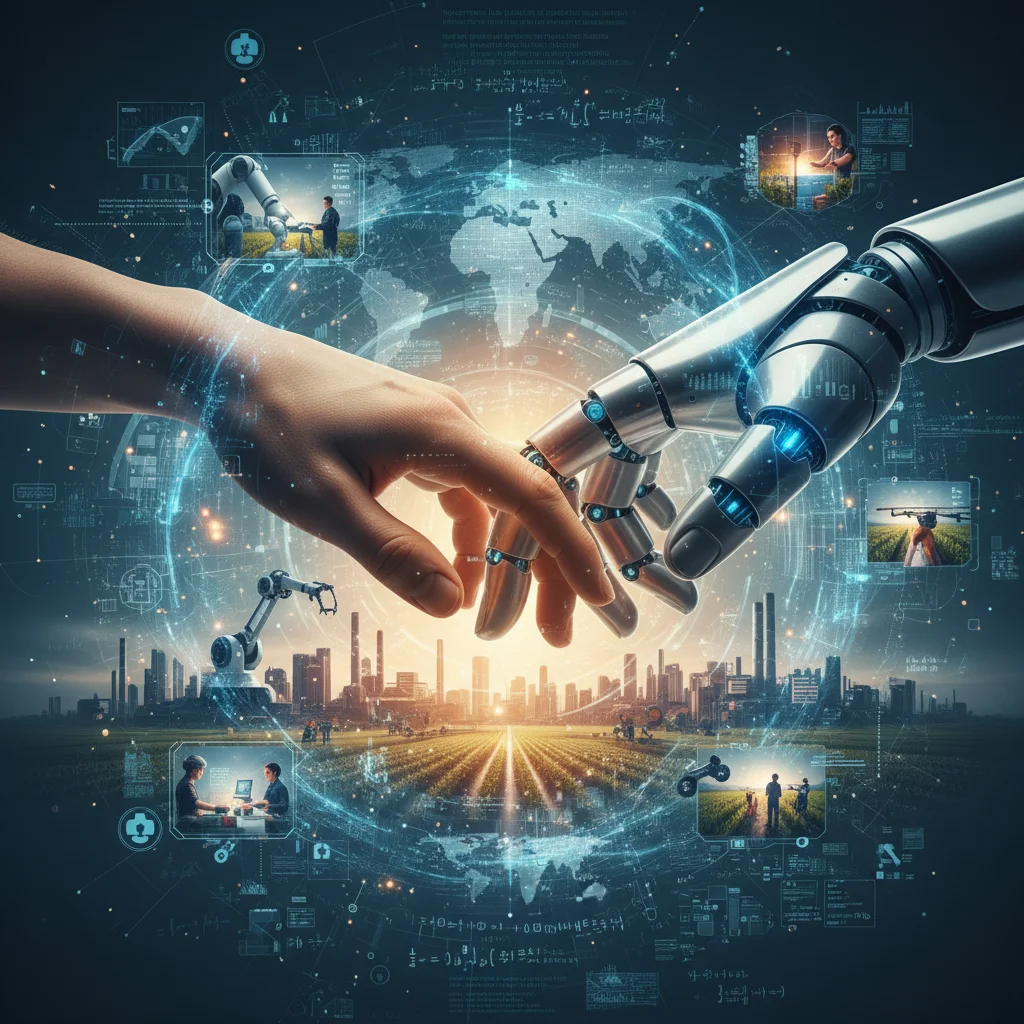
The dual forces of hybrid work and automation present both immense opportunities and significant challenges for the future work 2026. Organizations and individuals must proactively adapt to thrive in this evolving landscape.
For Businesses: Strategic Imperatives
1. Redesigning the Employee Experience (EX)
In a hybrid and automated world, the employee experience becomes paramount. Companies must invest in digital tools that facilitate seamless collaboration, communication, and knowledge sharing across distributed teams. This includes robust video conferencing, project management platforms, and virtual whiteboards. Furthermore, the physical office space needs to be reimagined as a destination for collaboration, innovation, and connection, rather than just a place to perform individual tasks. This requires flexible layouts, advanced technology, and amenities that support diverse work styles.
2. Upskilling and Reskilling the Workforce
The accelerating pace of automation means that many existing job roles will change, and new ones will emerge. Businesses must implement comprehensive upskilling and reskilling programs to equip their employees with the digital literacy, AI fluency, critical thinking, problem-solving, and emotional intelligence skills necessary for the future work 2026. Investing in continuous learning is not just an HR initiative; it’s a strategic business imperative to maintain a competitive workforce.
3. Fostering a Culture of Trust and Autonomy
Hybrid work models, especially those offering greater flexibility, require a shift from a "presenteeism" culture to one based on trust, outcomes, and accountability. Leaders must be trained to manage remote and hybrid teams effectively, focusing on clear objectives, regular communication, and empowering employees to take ownership of their work. This cultural transformation is critical for the success of any hybrid strategy.
4. Embracing Ethical AI and Automation Practices
As automation becomes more pervasive, businesses must prioritize ethical considerations. This includes ensuring fairness and transparency in AI algorithms, protecting data privacy, and clearly communicating how automation impacts employees. Responsible implementation of AI builds trust with both employees and customers and mitigates potential risks.
5. Optimizing Technology Infrastructure
A robust and secure IT infrastructure is the backbone of successful hybrid work and automation strategies. This includes cloud-based solutions, secure remote access, advanced cybersecurity measures, and scalable tools that can support a distributed workforce and intelligent automation systems. The IT department will play an even more critical role in enabling the future work 2026.
For Individuals: Career Resilience and Growth
1. Developing "Human-Centric" Skills
While AI excels at routine and analytical tasks, skills that are uniquely human will become even more valuable. These include creativity, critical thinking, complex problem-solving, emotional intelligence, communication, collaboration, and ethical reasoning. Investing in these "soft skills" will make individuals more adaptable and indispensable in the future work 2026.
2. Embracing Digital Literacy and AI Fluency
Understanding how AI and automation tools work, even at a basic level, will be crucial for nearly every profession. This doesn’t mean everyone needs to be a data scientist, but familiarity with AI applications, data interpretation, and digital collaboration tools will be essential. Proactively learning new software, platforms, and AI-powered assistants will provide a significant advantage.
3. Cultivating Adaptability and a Growth Mindset
The only constant in the future work 2026 is change. Individuals must cultivate an adaptable mindset, being open to learning new skills, taking on new roles, and embracing continuous professional development. A growth mindset, which views challenges as opportunities for learning, will be a key differentiator.
4. Building a Strong Professional Network
In a more distributed and automated world, professional networks become even more vital. Connecting with peers, mentors, and industry leaders, both online and in hybrid settings, can open doors to new opportunities, facilitate knowledge sharing, and provide crucial support for career progression.
5. Focusing on "Augmentation" not "Replacement"
Instead of viewing automation as a threat, individuals should see it as an opportunity to augment their capabilities. Learning to work alongside AI, leveraging its power to automate mundane tasks, and focusing on higher-value activities will be the path to career success. Understanding how to prompt AI effectively, interpret its outputs, and integrate it into workflows will be a critical skill.
Conclusion: The Dynamic Evolution of Future Work 2026
The future work 2026 in the US is undeniably hybrid and increasingly automated. The 7 hybrid models discussed – from Anchor Days to Remote-First with Office Hubs – offer organizations a spectrum of choices to balance flexibility with collaboration. Simultaneously, automation trends like hyperautomation, AI-powered data analysis, and conversational AI are reshaping job functions across industries, demanding new skill sets and fostering an environment of continuous learning.
For businesses, the imperative is clear: invest in technology, redesign the employee experience, and cultivate a culture of trust and continuous learning. For individuals, the focus must be on developing uniquely human skills, embracing digital literacy, and adopting a proactive, adaptable mindset. The transition will not be without its challenges, but by thoughtfully embracing these shifts, organizations can build more resilient, agile, and innovative workforces, and individuals can forge fulfilling and future-proof careers. The era of the dynamic workplace is here, and understanding its contours is the first step toward thriving within it.