Creative Tech Innovations 2026: Transform Your Art by Year-End
The year 2026 is rapidly unfolding, bringing with it a wave of creative tech innovations that promise to fundamentally reshape the landscape of artistic expression. For artists, designers, musicians, writers, and indeed, any creative individual, these advancements aren’t just incremental improvements; they are paradigm shifts. By the end of this year, the tools and methodologies available to you will have expanded in ways that were once confined to the realm of science fiction. This comprehensive guide will delve into the most impactful creative tech innovations, offering insights into how you can harness their power to elevate your art, connect with new audiences, and perhaps, even redefine what it means to be a creative in the 21st century.
The convergence of artificial intelligence, extended reality (XR), and decentralized technologies like blockchain is creating an unprecedented fertile ground for artistic exploration. Forget the days of rigid software and limited palettes; 2026 is about intelligent co-creation, immersive experiences, and verifiable digital ownership. Understanding these shifts is not merely about staying current; it’s about seizing the opportunity to be at the forefront of a new artistic renaissance. Whether you’re a seasoned professional or an aspiring artist, the time to integrate these creative tech innovations into your practice is now.
This article will provide a detailed roadmap, exploring each major technological frontier and illustrating its potential applications in various creative fields. We’ll look at how AI is moving beyond simple generation to become a genuine creative partner, how AR and VR are dissolving the boundaries between the physical and digital, and how blockchain is empowering artists with new models of ownership and monetization. Prepare to embark on a journey through the cutting-edge of creative technology, and discover how these innovations can transform your artistic vision by the close of 2026.
Artificial Intelligence as a Creative Collaborator: Beyond the Prompt
While AI art generators have been a topic of much discussion in recent years, 2026 marks a significant evolution. The focus is shifting from AI as a mere image or text generator to AI as a nuanced creative collaborator. These advanced AI models are no longer just producing outputs based on prompts; they are learning, adapting, and even initiating creative directions, offering artists a dynamic partner in their creative process. This is one of the most exciting creative tech innovations we’re witnessing.
Generative Adversarial Networks (GANs) and Diffusion Models: A New Level of Sophistication
GANs and diffusion models continue to be at the forefront of AI-driven art. However, the sophistication has reached new heights. Artists can now train custom GANs on their own datasets, allowing the AI to generate works in their unique style, but with novel variations and interpretations. Imagine feeding years of your sketches and paintings into an AI, and having it generate an endless stream of new concepts that are distinctly ‘you,’ yet entirely fresh. Diffusion models, too, are offering finer-grained control over the generative process, enabling artists to guide the AI with unprecedented precision, from initial concept to final rendering.
AI in Music Composition and Sound Design
For musicians, AI is becoming an invaluable tool for composition, arrangement, and sound design. AI-powered platforms can analyze existing musical pieces and generate new melodies, harmonies, and rhythms that adhere to specific stylistic parameters. Beyond composition, AI is revolutionizing sound design, allowing for the creation of complex, evolving soundscapes that would be impossible to craft manually. Artists are using AI to generate ambient textures for interactive installations, develop dynamic soundtracks for games that adapt to player actions, and even create entirely new sonic palettes for experimental music. These creative tech innovations are opening up new auditory dimensions.
Intelligent Content Generation for Writers and Storytellers
Writers and storytellers are finding AI to be a powerful assistant, not a replacement. AI can now assist with world-building, character development, plot generation, and even stylistic refinement. Advanced natural language processing (NLP) models can analyze narrative arcs, identify thematic inconsistencies, and suggest alternative story directions. For screenwriters, AI can help in generating dialogue that feels authentic to specific characters or even draft multiple versions of a scene to explore different emotional impacts. The goal is to augment human creativity, providing a brainstorming partner that can instantly generate countless permutations of ideas, freeing the artist to focus on the overarching vision and emotional core of their work.
AI-Powered Design Assistants
In the realm of graphic design and product design, AI assistants are streamlining workflows and expanding creative possibilities. AI can generate multiple design variations based on initial parameters, optimize layouts for different platforms, and even suggest color palettes and typography that align with a brand’s identity. For product designers, AI can iterate through thousands of design possibilities for a physical object, considering factors like material properties, manufacturing constraints, and ergonomic principles, all in a fraction of the time a human designer would take. This allows designers to spend more time on conceptualization and refinement, knowing that the grunt work of iteration is handled by intelligent algorithms. These creative tech innovations are making design more efficient and innovative.
Extended Reality (XR): Immersive Art and Interactive Experiences
Extended Reality (XR), encompassing Virtual Reality (VR), Augmented Reality (AR), and Mixed Reality (MR), is no longer a niche technology; it’s a mainstream platform for artistic expression. The creative tech innovations in XR hardware and software in 2026 are making immersive art more accessible, interactive, and impactful than ever before. Artists are stepping beyond traditional canvases and stages to create entire worlds and experiences that audiences can inhabit and influence.
Virtual Reality: Creating Entire Worlds
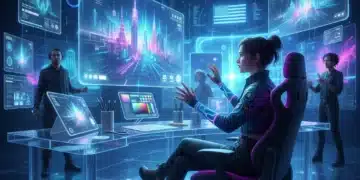
VR headsets in 2026 are lighter, more comfortable, and offer significantly higher fidelity and wider fields of view. This technological leap allows artists to create incredibly detailed and believable virtual environments. Imagine sculpting a colossal statue in a zero-gravity environment, painting a landscape that stretches to an infinite horizon, or composing a symphony where each note is a shimmering visual element you can touch and manipulate. VR art is moving beyond passive viewing to deeply interactive experiences, where users can not only explore but also contribute to the evolving artwork. Collaborative VR art spaces are becoming common, allowing artists from around the globe to co-create in real-time, blurring geographical boundaries.
Augmented Reality: Blending Digital and Physical
AR is bringing digital art into our physical world in seamless and compelling ways. Mobile AR applications are more robust, and dedicated AR glasses are becoming more sophisticated, allowing for realistic overlays of digital content onto our surroundings. Artists are using AR to create dynamic public art installations that respond to passersby, interactive exhibitions that transform everyday objects, and even AR filters that turn personal spaces into fantastical realms. Imagine walking through a city park and seeing digital sculptures appear on trees, or pointing your phone at a historical building to reveal its past inhabitants through a holographic projection. These creative tech innovations are making art omnipresent.
Haptic Feedback and Full-Body Tracking: Enhanced Immersion
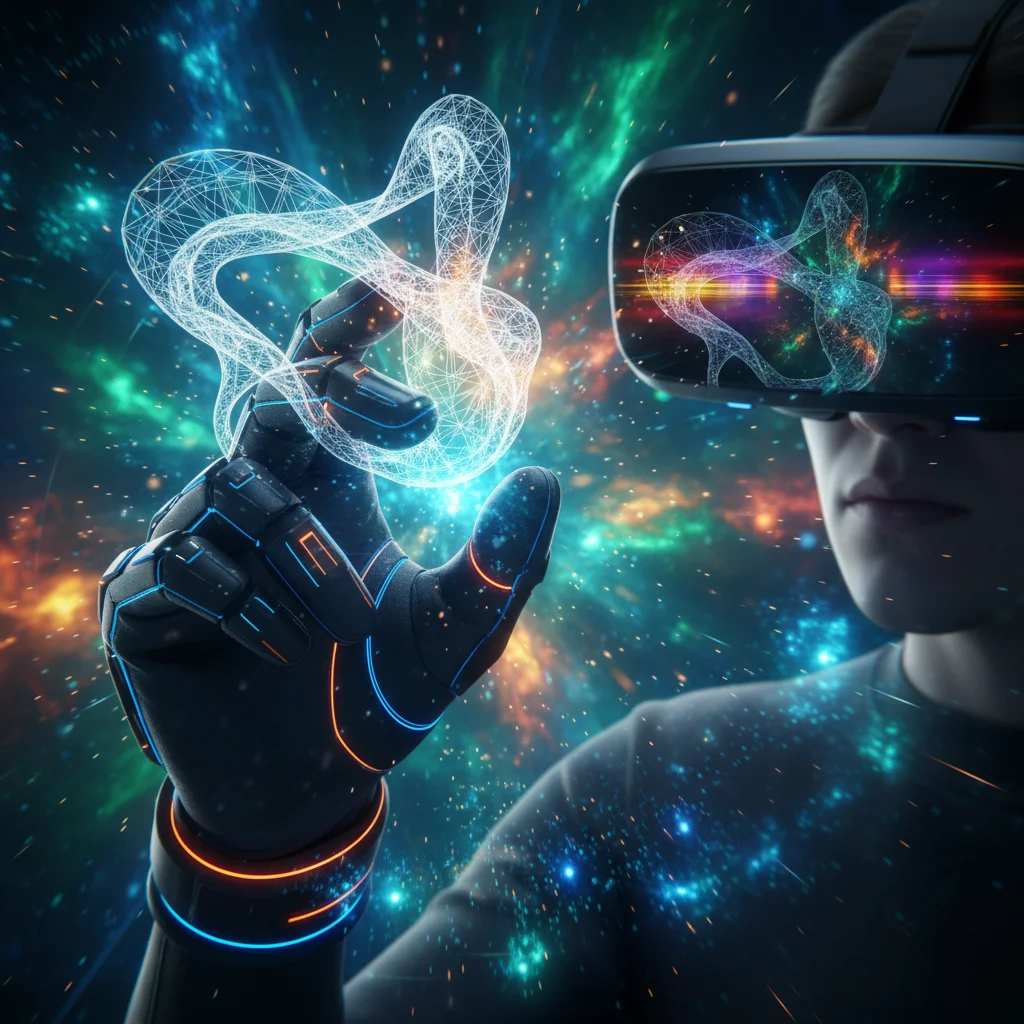
A crucial advancement in XR is the integration of advanced haptic feedback and full-body tracking. Haptic gloves and suits are becoming more common, allowing artists and audiences to ‘feel’ virtual objects and environments. This adds a profound layer of immersion, making virtual sculpting feel like working with clay, or experiencing a virtual rainstorm with tactile sensations. Full-body tracking, often enabled by sophisticated sensors or even AI analysis of video feeds, allows for more natural and expressive interaction within XR environments. Dancers can perform in virtual spaces, their movements translated with perfect fidelity, creating new forms of digital performance art. These creative tech innovations are making digital experiences feel truly tangible.
Blockchain and NFTs: Redefining Ownership and Monetization
The conversation around blockchain and Non-Fungible Tokens (NFTs) has evolved significantly since their initial boom. In 2026, these technologies are moving beyond speculative assets to fundamental infrastructure for digital art, offering artists unprecedented control over ownership, provenance, and monetization. These creative tech innovations are empowering artists in new economic models.
Verifiable Digital Ownership and Provenance
Blockchain technology provides an immutable ledger that records the ownership and transaction history of digital assets. For artists, this means verifiable digital ownership of their work, solving the long-standing problem of how to prove originality and scarcity in a world of infinitely reproducible digital files. Each NFT represents a unique digital certificate of authenticity, linking directly to the artwork. This provenance is transparent and undeniable, providing a secure record of an artwork’s journey from creation to collector. This is particularly vital for digital artists who previously struggled with the perceived lack of inherent value in their easily copied creations.
Smart Contracts for Royalties and Licensing
One of the most revolutionary aspects of blockchain for creatives is the power of smart contracts. These self-executing agreements are programmed directly onto the blockchain, automatically enforcing terms and conditions without the need for intermediaries. For artists, this means that royalties on secondary sales can be automatically distributed to them every time their NFT artwork changes hands on a marketplace. Beyond royalties, smart contracts can be used for licensing digital assets, ensuring that artists are compensated fairly and automatically for the use of their work in various contexts, from video games to advertising. This fundamentally shifts the power dynamic, putting more control and revenue directly in the hands of the creators.
Decentralized Autonomous Organizations (DAOs) for Creative Communities
DAOs are emerging as powerful structures for creative communities. These blockchain-governed organizations allow groups of artists, collectors, and patrons to collectively manage projects, fund new initiatives, and make decisions about shared resources. Imagine a DAO that collectively owns a virtual gallery, curates exhibitions, and allocates funds to support emerging artists, all governed by the transparent and immutable rules encoded in smart contracts. This fosters a new era of collaborative creativity and community-driven artistic patronage, bypassing traditional gatekeepers and empowering a more inclusive art world. These creative tech innovations are fostering new ecosystems for art.
Fractional Ownership and Micro-Patronage
Blockchain also enables fractional ownership of high-value digital artworks, allowing multiple individuals to own a share of a single NFT. This democratizes access to collecting and investing in art, making it more accessible to a wider audience. Furthermore, micro-patronage models are flourishing, where artists can receive small, consistent contributions directly from their fans through blockchain-based platforms, bypassing traditional crowdfunding sites and their associated fees. This direct connection between artist and patron fosters a more sustainable and equitable ecosystem for creators.
The Rise of Bio-Integrated and Sustainable Creative Technologies
Beyond the digital realm, 2026 is also seeing significant creative tech innovations in bio-integrated and sustainable technologies. Artists are increasingly engaging with biological processes and eco-conscious materials, pushing the boundaries of what art can be and how it interacts with the environment.
Bio-Art and Living Installations
Bio-art, which incorporates living organisms and biological processes into artistic creations, is gaining significant traction. Artists are working with genetic engineering, synthetic biology, and microbiology to create living sculptures, dynamic installations that evolve over time, and even artworks that respond to environmental conditions. Imagine a sculpture grown from mycelium that slowly decomposes and nourishes new plant life, or a bacterial colony engineered to create intricate, ever-changing patterns. This field challenges traditional notions of permanence and authorship, embracing the ephemeral and the collaborative nature of biological systems. These creative tech innovations redefine the medium of art itself.
Sustainable Materials and Upcycling in Art
With a growing global emphasis on sustainability, artists are at the forefront of exploring innovative, eco-friendly materials and upcycling techniques. New biodegradable polymers, recycled composite materials, and plant-based dyes are becoming standard in many artistic practices. Artists are transforming waste into beauty, creating powerful statements about consumption and environmental impact. This isn’t just about using recycled materials; it’s about designing art with its entire lifecycle in mind, from sourcing to decomposition, minimizing its ecological footprint. These creative tech innovations are aligning art with environmental stewardship.
Energy-Harvesting Art and Interactive Environments
Artists are also experimenting with energy-harvesting technologies to create self-sustaining artworks and interactive environments. Imagine sculptures that generate their own power from solar or wind energy, or installations that respond to human movement by converting kinetic energy into light or sound. This not only makes art more environmentally friendly but also opens up new possibilities for dynamic, responsive installations that are truly integrated with their surroundings, blurring the lines between art, technology, and nature.
Ethical Considerations and the Future of Creative Work
As with all rapid technological advancements, the creative tech innovations of 2026 bring with them important ethical considerations that artists and society must grapple with. These are not merely technical challenges but profound questions about authorship, compensation, access, and the very definition of creativity.
Authorship in the Age of AI Co-Creation
When AI becomes a sophisticated creative collaborator, the question of authorship becomes complex. Who holds the copyright? The human artist, the AI, or a combination? Legal frameworks are still catching up to these realities, and artists are exploring new models of attribution and intellectual property. Some advocate for ‘co-authorship’ models, while others emphasize the human’s role in guiding and curating the AI’s output as the primary creative act. This ongoing dialogue is crucial for shaping the future of creative rights.
Bias in AI and Algorithmic Fairness
AI models are trained on vast datasets, and if these datasets contain biases (e.g., racial, gender, cultural), the AI’s output will reflect and even amplify those biases. This poses a significant ethical challenge for artists using AI. Ensuring algorithmic fairness and actively working to de-bias training data is paramount to prevent AI from perpetuating harmful stereotypes or limiting the diversity of creative expression. Artists have a role to play in advocating for and developing more inclusive AI tools.
Accessibility and Digital Divide
While creative tech innovations offer immense opportunities, there’s a risk of exacerbating the digital divide. Access to advanced hardware, software, and high-speed internet is not universal. Ensuring that these powerful tools are accessible to artists from all socioeconomic backgrounds and geographic locations is crucial for fostering an equitable creative landscape. Initiatives to provide affordable access, training, and open-source alternatives are vital to prevent these innovations from becoming exclusive to a privileged few.
Integrating Creative Tech Innovations into Your Practice by Year-End 2026
The sheer pace of technological change can feel overwhelming, but integrating these creative tech innovations into your artistic practice doesn’t require you to become a full-stack developer overnight. The key is strategic adoption and a willingness to experiment. Here’s how you can start transforming your art by the end of 2026:
Start Small and Experiment
Don’t feel pressured to master every new technology simultaneously. Pick one area that genuinely excites you – whether it’s an AI art generator, an AR development kit, or exploring NFT marketplaces – and start experimenting. Many tools offer free trials or beginner-friendly interfaces. The most valuable learning comes from hands-on exploration and playful iteration. Consider joining online communities where artists share their experiments and offer advice.
Invest in Learning and Skill Development
The creative landscape of 2026 demands continuous learning. Dedicate time to understanding the fundamentals of these new technologies. Online courses, tutorials, workshops, and even YouTube channels are abundant resources. Focus on conceptual understanding as much as practical application. Knowing *why* a technology works will empower you to use it more creatively and adapt to future changes.
Collaborate with Technologists
If coding or complex technical setups aren’t your forte, seek out collaborations. Many artists are partnering with programmers, data scientists, and XR developers to bring their visions to life. These interdisciplinary collaborations often lead to the most groundbreaking and innovative projects, blending artistic vision with technical expertise. Look for platforms that connect artists with tech collaborators, or attend hackathons and creative technology meetups.
Embrace the Community and Share Your Work
The creative tech space is vibrant and collaborative. Share your experiments, ask questions, and engage with other artists who are exploring these new frontiers. Platforms dedicated to AI art, XR experiences, and NFT art are excellent places to connect, get feedback, and discover new opportunities. The collective knowledge and support of a community can accelerate your learning and inspire new directions for your work. Don’t be afraid to put your experimental pieces out there; the feedback loop is invaluable.
Think Beyond Traditional Mediums
These creative tech innovations encourage artists to think beyond the limitations of traditional mediums. Instead of just creating a painting, consider an interactive VR experience. Rather than writing a static story, think about an AI-generated narrative that adapts to the reader. Embrace the fluidity and dynamism that these technologies offer. The most impactful art of the future will likely be that which fully leverages the unique capabilities of these new tools, creating experiences that were previously impossible.
Stay Informed and Adaptable
The pace of technological change shows no signs of slowing down. Stay informed about new developments by following tech news, subscribing to relevant newsletters, and engaging with thought leaders in the creative technology space. Cultivate an adaptable mindset, viewing change not as a threat but as an endless source of new creative possibilities. The artists who thrive in 2026 and beyond will be those who are curious, open-minded, and willing to continuously evolve their practice.
Conclusion: The Creative Renaissance of 2026
The creative tech innovations of 2026 are not just tools; they are catalysts for a new artistic renaissance. From AI becoming a true creative co-pilot to XR dissolving the boundaries of reality, and blockchain redefining ownership and value, the opportunities for artists are boundless. By the end of this year, the landscape of art will have been irrevocably transformed, offering avenues for expression, connection, and monetization that were unimaginable just a few years ago.
Embracing these technologies means more than just adopting new software; it means cultivating a mindset of innovation, collaboration, and continuous learning. It means asking new questions about authorship, interaction, and the very essence of creativity. The artists who lean into these creative tech innovations, who experiment boldly and think expansively, will be the ones shaping the aesthetic and cultural narratives of the coming decade.
Whether you’re crafting digital masterpieces with AI, building immersive worlds in VR, or securing your unique creations on the blockchain, the future of art is here, and it’s incredibly exciting. Don’t just observe these changes; become an active participant. Your artistic journey in 2026 is poised for an unprecedented transformation. Seize the moment, explore the possibilities, and let these creative tech innovations elevate your art to extraordinary new heights.