NFT Art Market 2026: Navigating Volatility for 25% ROI
The NFT Art Market in 2026: Navigating Volatility for a 25% Return on Investment
The world of digital assets has seen unprecedented growth and transformation over the past few years, with Non-Fungible Tokens (NFTs) emerging as a groundbreaking innovation, particularly within the art sector. What began as a niche interest has blossomed into a multi-billion-dollar industry, attracting artists, collectors, and investors alike. As we peer into 2026, the NFT Art Investment landscape continues to mature, presenting both exhilarating opportunities and formidable challenges. This comprehensive guide aims to dissect the intricacies of the NFT art market, offering insights and strategies to navigate its inherent volatility and, crucially, target a robust 25% return on investment (ROI).
Understanding the trajectory of the NFT art market requires a nuanced perspective. It’s a realm where artistic expression converges with cutting-edge technology, where community engagement can dictate value, and where scarcity plays a pivotal role. The speculative fervor of earlier years has somewhat subsided, giving way to a more discerning market – one that values intrinsic artistic merit, technological innovation, and long-term utility. For those looking to make a significant NFT Art Investment, 2026 promises to be a year of consolidation and strategic growth, demanding a well-informed approach.
The Evolution of the NFT Art Market: A Look Back and Forward
To comprehend where the NFT art market is headed, it’s essential to understand its journey. The initial boom, characterized by record-breaking sales and widespread media attention, was largely driven by novelty and speculation. Digital artist Beeple’s “Everydays: The First 5000 Days” selling for $69 million in 2021 became a watershed moment, thrusting NFTs into the global spotlight. This period saw a rapid influx of capital, with many early adopters realizing astronomical gains.
However, like any nascent market, the NFT space experienced its share of corrections and periods of consolidation. The “NFT winter” of 2022-2023 served as a crucial stress test, weeding out projects lacking substance and highlighting the importance of fundamental value. This period, while challenging for many, laid the groundwork for a more resilient and sustainable ecosystem. Projects that survived and thrived during this downturn often possessed strong communities, clear roadmaps, and genuine artistic or utilitarian value.
Looking ahead to 2026, the market is expected to exhibit increased maturity. Regulatory frameworks, though still evolving, will likely provide greater clarity and stability, attracting institutional investors and fostering broader adoption. Technological advancements, particularly in scalability solutions and user experience, will make NFTs more accessible to a mainstream audience. The integration of NFTs into metaverses, gaming, and real-world assets will further expand their utility and perceived value, solidifying their place as a legitimate asset class for NFT Art Investment.
Understanding Volatility: The Double-Edged Sword of NFT Art Investment
Volatility is an inherent characteristic of emerging markets, and the NFT art space is no exception. While it presents opportunities for rapid gains, it also carries significant risks. Several factors contribute to this volatility:
- Market Sentiment: The NFT market is heavily influenced by public sentiment, often driven by social media trends, celebrity endorsements, and news cycles. Favorable news can trigger price surges, while negative sentiment can lead to swift corrections.
- Liquidity: Unlike traditional financial markets, the NFT art market can sometimes suffer from lower liquidity, especially for unique, high-value pieces. Selling an NFT at a desired price can take time, impacting an investor’s ability to exit positions quickly.
- Technological Risk: The underlying blockchain technology, while robust, is still evolving. Smart contract vulnerabilities, platform hacks, and network congestion can all impact the security and value of NFTs.
- Regulatory Uncertainty: The lack of clear and consistent global regulations introduces an element of uncertainty. Future regulations could impact how NFTs are taxed, traded, or even classified, potentially affecting their market value.
- Artistic Subjectivity: Unlike traditional investments that can be valued purely on financial metrics, art – digital or physical – inherently involves subjective taste and cultural relevance. This makes objective valuation challenging and can contribute to price swings based on evolving trends and critical reception.
Navigating this volatility requires a strategic mindset. It’s not about avoiding risk entirely, but rather understanding, mitigating, and leveraging it. For those aiming for a 25% ROI in NFT Art Investment, a robust risk management strategy is paramount.
Strategies for Achieving a 25% ROI in NFT Art Investment by 2026
Achieving a 25% ROI in the dynamic NFT art market by 2026 is an ambitious yet attainable goal with the right approach. Here are key strategies to consider:
1. Deep Dive into Research and Due Diligence
The “surf and pray” approach to NFT investing is a relic of the past. Success in 2026 hinges on meticulous research. This involves:
- Artist & Project Analysis: Investigate the artist’s background, their past works, their reputation within the art world (both traditional and digital), and their long-term vision. For generative art or collection projects, scrutinize the team behind it, their roadmap, and their ability to execute.
- Community Engagement: A strong, active, and engaged community is often a key indicator of a project’s potential longevity and value. Monitor Discord channels, Twitter activity, and other social platforms to gauge community health and sentiment.
- Scarcity and Rarity: Understand the supply dynamics. Is it a 1/1 piece, a limited edition, or part of a larger collection? Within collections, identify rare traits or attributes that could command a premium.
- Utility and Roadmap: Does the NFT offer any utility beyond being a digital artwork? This could include access to exclusive communities, events, metaverse land, gaming benefits, or future airdrops. A clear and ambitious roadmap indicates a project’s commitment to long-term value creation.
- Market Trends: Stay abreast of emerging trends in the broader art world and the NFT space. Are certain artistic styles gaining traction? Are new technological integrations opening up new avenues for value?
This comprehensive due diligence forms the bedrock of a successful NFT Art Investment strategy.
2. Diversification Across Categories and Risk Profiles
Putting all your eggs in one basket is never advisable, especially in a volatile market. Diversify your NFT art portfolio across different categories:
- Blue-Chip NFTs: These are established projects with a proven track record, high liquidity, and strong brand recognition (e.g., CryptoPunks, Bored Ape Yacht Club – though these are often beyond a 25% ROI target from current prices, they represent stability). While their growth potential might be lower, they offer a degree of stability.
- Emerging Artists/Projects: Allocate a portion of your portfolio to promising new artists or projects with significant growth potential. This is where higher returns are possible, but also where risk is elevated.
- Generative Art: Explore algorithmic art that creates unique pieces based on a set of parameters. This sub-genre has a dedicated following and can offer strong returns.
- Photography & Other Media: Don’t limit yourself to traditional digital paintings or 3D renders. The NFT space is expanding to include photography, music, poetry, and interactive experiences.
Consider diversifying not just by category, but also by blockchain. While Ethereum remains dominant, other chains like Solana, Polygon, and Tezos are gaining traction with lower transaction fees and faster speeds, offering different market dynamics for NFT Art Investment.
3. Embracing “Art-conomics”: Valuation Beyond Hype
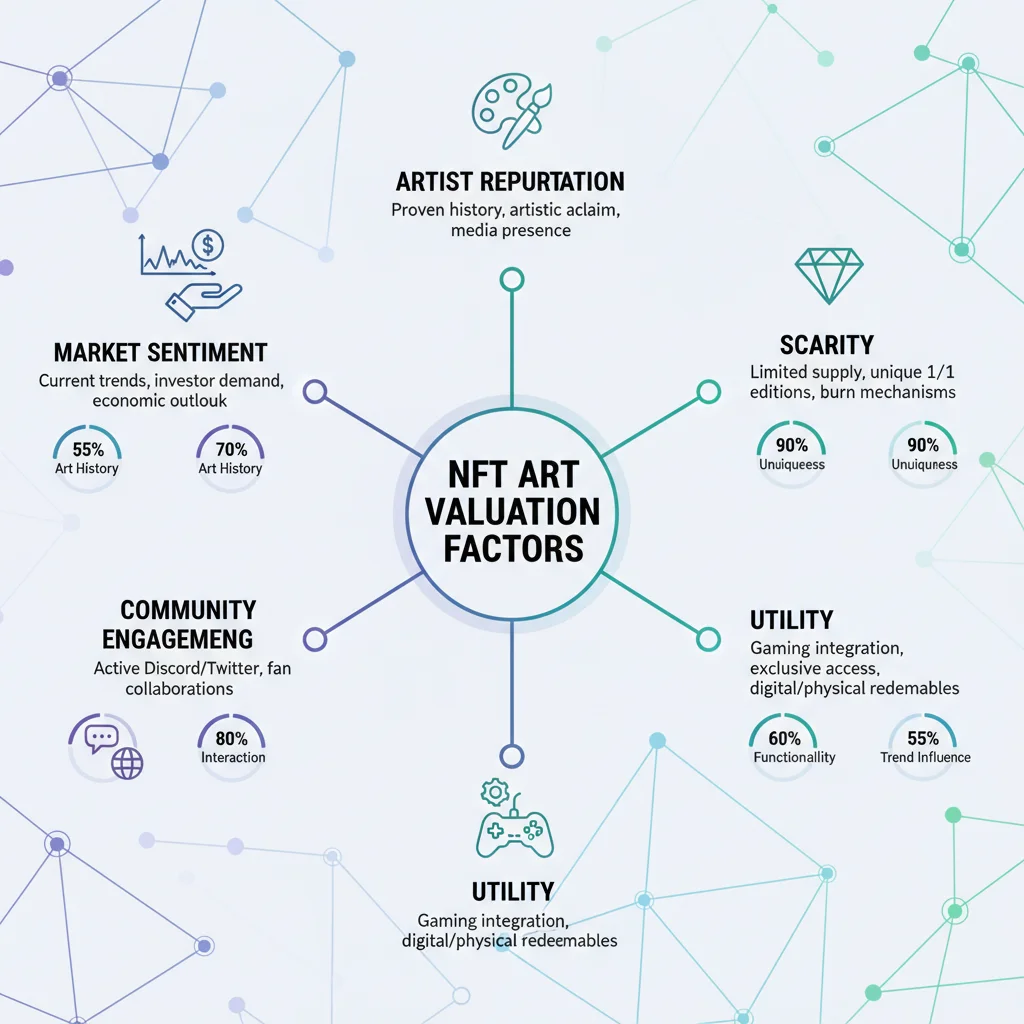
Moving beyond speculative hype, successful NFT Art Investment in 2026 will require a deeper understanding of “art-conomics” – the intersection of art valuation and economic principles. While there’s no single definitive formula, consider these factors:
- Artist’s Provenance and Recognition: Is the artist established in the traditional art world? Have their physical works sold for significant amounts? Does their digital work align with their overall artistic vision?
- Historical Sales Data: Analyze past sales volumes and prices for similar works by the artist or within the project. Look for consistent upward trends, not just isolated spikes.
- Floor Price and Rarity Multipliers: For collections, understand the “floor price” (lowest available price) and how rarity traits impact value. Tools exist to help analyze these multipliers.
- Cultural Significance: Does the artwork or project contribute to a broader cultural narrative? Does it push boundaries, challenge norms, or reflect important societal themes?
- Technological Innovation: Is the NFT leveraging novel blockchain features, smart contract functionalities, or interactive elements that enhance its artistic or utilitarian value?
Developing an informed valuation framework helps you identify undervalued assets and avoid overpaying for hype-driven pieces, crucial for a 25% ROI.
4. Strategic Entry and Exit Points
Timing is critical in any investment, and even more so in the volatile NFT market. While predicting exact market bottoms or tops is impossible, strategic approaches can significantly improve your ROI:
- Dollar-Cost Averaging (DCA): Instead of investing a lump sum, spread your NFT Art Investment over time. This helps mitigate the risk of buying at a market peak and averages out your entry price.
- Setting Price Targets: Before investing, define your target ROI (e.g., 25%) and potential exit points. Stick to your plan to avoid emotional decisions during market fluctuations.
- Monitoring Market Indicators: Pay attention to broader crypto market trends, NFT trading volumes, and sentiment indicators. Sharp declines in trading volume or widespread negative sentiment might signal a good time to accumulate, while frenzied buying could indicate a market top.
- Partial Sales: For highly successful investments, consider selling a portion of your NFT to recoup your initial capital and secure profits, allowing the remaining portion to grow risk-free.
5. Leveraging Marketplaces and Analytics Tools
The ecosystem of NFT marketplaces and analytical tools has matured significantly, providing investors with powerful resources:
- Major Marketplaces: OpenSea, SuperRare, Nifty Gateway, Foundation, and X2Y2 are prominent platforms. Each has its own strengths, fee structures, and curated collections. Familiarize yourself with their interfaces and offerings.
- Analytics Platforms: Tools like DappRadar, Nansen, Dune Analytics, and NFTGo provide invaluable data on sales volumes, floor prices, rarity rankings, whale movements, and active wallets. Utilizing these tools for trend analysis and project comparisons is essential for informed NFT Art Investment decisions.
- Aggregators: Platforms that aggregate listings from multiple marketplaces can help you find the best deals and gain a broader view of the market.
Mastering these tools will give you a competitive edge in identifying opportunities and making data-driven investment choices.
Risk Management: Protecting Your NFT Art Investment
While aiming for a 25% ROI, it’s equally important to protect your capital. Effective risk management is non-negotiable:
- Only Invest What You Can Afford to Lose: This golden rule of investing is especially pertinent in the high-risk, high-reward NFT space.
- Security Practices: Use hardware wallets (Ledger, Trezor) for storing high-value NFTs. Be wary of phishing scams, suspicious links, and unverified smart contracts. Enable two-factor authentication wherever possible.
- Understanding Gas Fees: Ethereum gas fees can be significant, impacting profitability, especially for smaller transactions. Factor these into your calculations.
- Intellectual Property Rights: Understand what rights you acquire when you purchase an NFT. Often, you own the token and the right to display the art, but not necessarily the underlying copyright or commercial rights, unless explicitly stated.
- Staying Informed about Regulation: Keep an eye on global regulatory developments that could impact the legality, taxation, or trading of NFTs in your jurisdiction.
The Future Landscape of NFT Art in 2026
Beyond investment returns, it’s worth considering the broader impact and future trajectory of NFT art. By 2026, we can anticipate several key developments:
- Enhanced Interoperability: NFTs will become more fluid across different blockchains and metaverses, increasing their utility and reach.
- Dynamic NFTs: NFTs that can change based on external data inputs (e.g., weather, real-world events, owner interaction) will become more prevalent, offering novel artistic experiences.
- Fractionalization: The ability to own a fraction of a high-value NFT will open up access to a wider range of investors, democratizing access to blue-chip art.
- Phygital Art: The convergence of physical and digital art, where an NFT represents ownership of a physical piece or vice-versa, will blur the lines between traditional and digital art markets.
- AI-Generated Art: The rise of AI tools in art creation will likely lead to new categories and debates within the NFT space, offering both opportunities and challenges for valuation and authenticity.
- Institutional Adoption: More traditional art institutions, galleries, and auction houses will fully embrace NFTs, further legitimizing the asset class and attracting a new wave of collectors.
These trends will not only shape the artistic landscape but also influence the market dynamics for NFT Art Investment, providing new avenues for growth and innovation.

Conclusion: A Strategic Path to 25% ROI
The NFT art market in 2026 is poised for continued evolution, moving past its initial speculative phase towards a more mature and value-driven ecosystem. While volatility remains a constant, it is precisely this dynamism that offers opportunities for significant returns. Achieving a 25% ROI in NFT Art Investment is not a matter of luck, but rather a result of diligent research, strategic diversification, informed valuation, and robust risk management.
Investors who commit to understanding the underlying technology, the artistic merit, the community dynamics, and the broader market trends will be best positioned to capitalize on the growth potential. As the digital art world continues to expand and integrate with other aspects of Web3, NFTs will increasingly represent not just speculative assets, but cultural artifacts and access passes to emerging digital economies.
Approach the market with a long-term perspective, remain adaptable to change, and continuously educate yourself. By doing so, the vision of a 25% return on your NFT Art Investment by 2026 becomes a tangible and achievable reality, transforming digital art from a mere curiosity into a powerful component of a diversified investment portfolio.