Overcoming Procrastination: Your 7-Step Action Plan for 2026 Success

In the fast-paced world of today, where demands on our time and attention are constantly escalating, the insidious habit of procrastination often rears its head, hindering our progress and stifling our potential. For many, the year 2026 might seem like a distant horizon, yet the habits we cultivate today will inevitably shape our successes and failures in the coming years. If you find yourself consistently delaying important tasks, feeling overwhelmed by your to-do list, or struggling to kickstart ambitious projects, then you are not alone. Procrastination is a universal challenge, but it is not an insurmountable one. This comprehensive guide is designed to equip you with a robust, actionable 7-step plan for overcoming procrastination plan, ensuring that 2026 becomes a year defined by achievement, productivity, and personal growth.
The journey to conquer procrastination isn’t about finding a magic bullet; it’s about understanding its roots, adopting effective strategies, and consistently applying them. It’s about shifting from a cycle of delay and regret to one of proactive engagement and accomplishment. We will delve into practical techniques, psychological insights, and sustainable habits that will empower you to tackle tasks head-on, manage your time more effectively, and ultimately, realize your aspirations. By the end of this article, you will possess a clear roadmap to transform your approach to work and life, setting the stage for unparalleled success in 2026 and beyond.
Understanding the Enemy: What Exactly is Procrastination?
Before we can effectively implement an overcoming procrastination plan, it’s crucial to understand what procrastination truly is. It’s often mistakenly perceived as laziness, but it’s far more complex. Psychologically, procrastination is often an emotional regulation problem, not a time management one. It’s the voluntary delay of an intended course of action despite foreseeing potential negative consequences. We procrastinate to avoid negative emotions associated with a task, such as anxiety, boredom, insecurity, or frustration. This short-term mood repair comes at the cost of long-term goals and well-being.
The Common Triggers of Procrastination:
- Fear of Failure or Success: The pressure to perform perfectly can be paralyzing.
- Perfectionism: Waiting for the ‘perfect’ moment or the ‘perfect’ idea leads to inaction.
- Lack of Motivation or Interest: Tasks that seem dull or irrelevant are easily postponed.
- Overwhelm: Large, complex tasks can feel daunting, leading us to avoid starting.
- Lack of Clarity: Not knowing where to start or what the next step is can cause paralysis.
- Distractions: The constant pull of digital devices and other immediate gratifications.
- Poor Time Management: Underestimating task duration or overestimating future availability.
Recognizing these triggers is the first step in developing an effective overcoming procrastination plan. Once you identify what specifically causes you to delay, you can begin to address those underlying issues directly.
Step 1: Define Your ‘Why’ and Set Clear, Achievable Goals
The foundation of any successful overcoming procrastination plan lies in clarity and purpose. Without a compelling ‘why,’ even the most meticulously planned tasks can fall by the wayside. Ask yourself: Why is this goal important to me? What are the long-term benefits of completing this task? How does it align with my values and aspirations for 2026?
SMART Goals for 2026:
To make your goals truly actionable and less susceptible to procrastination, ensure they are SMART:
- Specific: Clearly define what you want to achieve. Instead of “I want to be healthier,” try “I want to run a 5k by June 2026.”
- Measurable: How will you track your progress? “Run three times a week for 30 minutes.”
- Achievable: Is the goal realistic given your resources and time?
- Relevant: Does this goal align with your broader objectives and values for 2026?
- Time-bound: Set a clear deadline. “By June 30, 2026.”
Breaking down large, intimidating goals into smaller, manageable steps is also crucial. A large project can feel overwhelming, but a series of small, well-defined tasks appears much less daunting. This approach helps to build momentum and reduces the likelihood of avoidance.
Step 2: Break Down Tasks and Prioritize Effectively
One of the most powerful strategies in an overcoming procrastination plan is the ability to break down overwhelming tasks into bite-sized, actionable steps. This makes the starting point less intimidating and allows you to build momentum with small wins.
The “Salami Slicing” Technique:
Imagine a large salami; you wouldn’t try to eat it whole. Instead, you slice it into manageable pieces. Apply this to your tasks. For instance, writing a research paper can be broken down into:
- Choose a topic.
- Conduct preliminary research.
- Create an outline.
- Write the introduction.
- Write body paragraph 1.
- …and so on.
Each small step becomes an achievable mini-goal, reducing the psychological barrier to starting.
Prioritization with the Eisenhower Matrix:
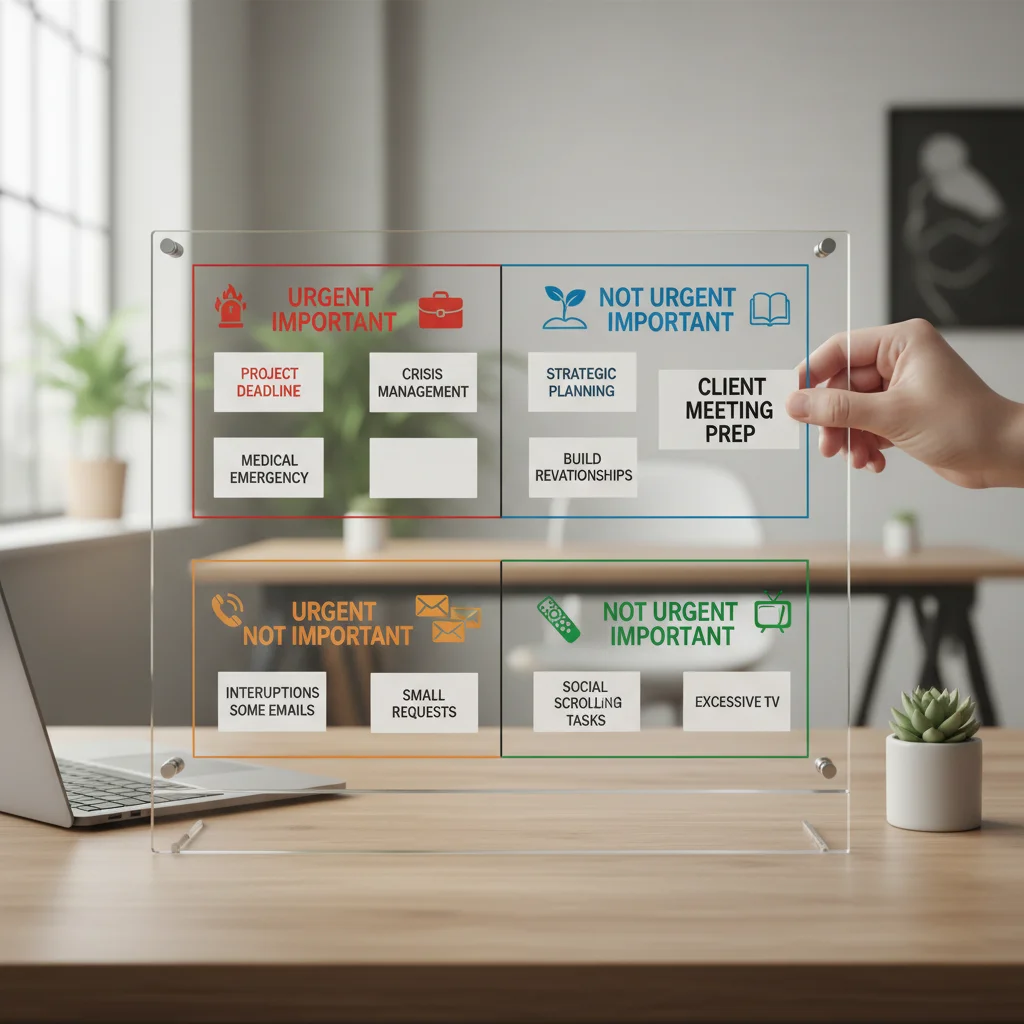
Not all tasks are created equal. The Eisenhower Matrix helps you categorize tasks based on urgency and importance, guiding your focus and improving your overcoming procrastination plan.
- Urgent & Important (Do First): Crises, deadlines, pressing problems.
- Not Urgent & Important (Schedule): Planning, relationship building, new opportunities, prevention. This quadrant is key for long-term success and often where procrastination hits hardest.
- Urgent & Not Important (Delegate): Interruptions, some meetings, popular activities.
- Not Urgent & Not Important (Eliminate): Time wasters, some emails, pleasant activities.
By focusing on the “Not Urgent & Important” tasks, you prevent them from becoming urgent crises, proactively managing your workload and reducing stress.
Step 3: Implement Time Management Techniques
Effective time management is a cornerstone of any successful overcoming procrastination plan. It’s not about working more hours, but about working smarter and making the most of your available time.
The Pomodoro Technique:
This popular method involves working in focused 25-minute intervals, separated by short 5-minute breaks. After four “Pomodoros,” take a longer break (15-30 minutes). This technique helps maintain focus, prevents burnout, and makes starting tasks less intimidating because you only commit to 25 minutes at a time. It’s an excellent tool for breaking the cycle of avoidance and building consistency.
Time Blocking:
Schedule specific blocks of time for specific tasks on your calendar. Treat these blocks like non-negotiable appointments. This creates a structured environment that minimizes decision fatigue and ensures that important tasks get dedicated attention. For example, block out 9:00 AM – 10:30 AM for “Deep Work: Project X” and commit to it.
The “Two-Minute Rule”:
If a task takes less than two minutes to complete, do it immediately. This simple rule can dramatically reduce your mental load and prevent small tasks from piling up and becoming overwhelming. Answering a quick email, putting away dishes, or making a phone call – just do it now.
Step 4: Create an Optimal Environment and Minimize Distractions
Your environment plays a significant role in your ability to focus and avoid procrastination. A cluttered, distracting space can be a breeding ground for delay. Optimizing your surroundings is a critical element of an effective overcoming procrastination plan.
Design Your Workspace:
- Declutter: A clean and organized workspace can reduce mental clutter and improve focus.
- Comfort: Ensure your chair, desk, and lighting are ergonomic and comfortable to prevent physical discomfort that can lead to breaks.
- Personalize: Add elements that inspire you, but avoid excessive decorations that might distract.
Digital Detox:
Our digital devices are perhaps the biggest source of modern procrastination. Implement strategies to minimize their impact:
- Turn off Notifications: Silence all non-essential notifications on your phone and computer.
- Use Website Blockers: Install browser extensions that temporarily block access to distracting websites during work periods.
- Designate “No-Phone Zones”: Create specific times or areas where your phone is put away and out of reach.
- Log Out of Social Media: The friction of logging back in can deter impulsive checking.
By intentionally crafting an environment conducive to focus, you remove many of the external cues that often lead to procrastination.
Step 5: Cultivate Self-Compassion and Mindset Shifts
Procrastination is often fueled by negative self-talk, perfectionism, and fear. A truly effective overcoming procrastination plan must address these internal barriers with self-compassion and deliberate mindset shifts.
Practice Self-Compassion:
Instead of beating yourself up for procrastinating, acknowledge the feeling without judgment. Understand that it’s a common human experience. Self-compassion can reduce the anxiety and self-criticism that often perpetuate the procrastination cycle. Remind yourself that everyone struggles, and one missed deadline doesn’t define your worth.
Challenge Perfectionism:
The pursuit of perfection is a common culprit behind procrastination. Embrace the concept of “good enough.” Remind yourself that done is better than perfect, especially for initial drafts or less critical tasks. Set realistic expectations and allow yourself to make mistakes; they are part of the learning process.
Shift Your Language:
Instead of saying “I have to” do something, try “I choose to” do something. This simple linguistic shift can transform a feeling of obligation into one of agency and control, making tasks feel less burdensome and more aligned with your personal goals. Frame challenges as opportunities for growth rather than insurmountable obstacles.
Visualize Success, Not Failure:
Spend a few moments visualizing yourself successfully completing the task and enjoying the positive outcomes. This positive reinforcement can increase motivation and reduce the fear of starting. Focus on the feeling of accomplishment rather than the difficulty of the task.
Step 6: Leverage Accountability and Rewards
External motivators and positive reinforcement can significantly boost your overcoming procrastination plan, especially when internal motivation wanes.
Find an Accountability Partner:
Share your goals and progress with a friend, colleague, or mentor. Knowing someone is expecting an update can provide the extra push you need to get started and stay on track. Regular check-ins create a sense of responsibility beyond your own internal commitment.
Public Commitment:
Announce your goals publicly, perhaps on social media or to a group of peers. The social pressure (in a positive way) can be a powerful motivator to follow through and avoid procrastination.
Implement a Reward System:
After completing a challenging task or a significant chunk of work, reward yourself. The reward doesn’t have to be grand; it could be a short break, a favorite snack, watching an episode of a show, or a walk outside. The key is to make the reward immediate and truly enjoyable. This positive reinforcement trains your brain to associate completing tasks with positive outcomes, strengthening your resolve to overcome procrastination.

Step 7: Reflect, Adjust, and Sustain Your Progress
The journey of overcoming procrastination plan is not a linear one; it requires continuous self-assessment and adaptation. What works today might need tweaking tomorrow. This final step is about creating a sustainable system for long-term success.
Regular Reflection:
- Daily Review: At the end of each day, take a few minutes to review what you accomplished and what you procrastinated on. Why did you delay certain tasks? What went well?
- Weekly Check-in: Dedicate time each week to assess your progress towards your larger 2026 goals. Identify patterns in your procrastination and celebrate your successes.
Adjust Your Strategies:
Based on your reflections, be willing to adjust your approach. If the Pomodoro Technique isn’t working, try longer or shorter work intervals. If a particular task consistently causes you to procrastinate, try breaking it down further or tackling it at a different time of day when your energy levels are higher. Flexibility is key to finding what truly works for you.
Build Consistency, Not Perfection:
Don’t aim for perfection in eliminating procrastination. Instead, aim for consistency in applying your strategies. Some days will be better than others, and that’s perfectly normal. The goal is to consistently make progress, even if it’s small, and to get back on track quickly after a setback.
Maintain a Growth Mindset:
View challenges and setbacks as opportunities for learning and improvement, rather than failures. Believe in your ability to grow and develop new habits. This mindset is crucial for sustaining your overcoming procrastination plan over the long haul and ensures that 2026 is a year of continuous progress.
Advanced Strategies for Long-Term Procrastination Control
While the 7-step plan provides a solid framework, some advanced strategies can further cement your control over procrastination, particularly as you look towards sustained success in 2026 and beyond.
Understanding Your Procrastination Style:
Are you a perfectionist procrastinator, an overwhelmed procrastinator, a thrill-seeker procrastinator, or a defiant procrastinator? Each type benefits from slightly different approaches. For instance, perfectionists might benefit from “rough draft first” mentality, while overwhelmed types need more aggressive task breakdown.
Pre-Commitment Strategies:
Make decisions in advance that limit your future options. For example, if you need to wake up early to work out, lay out your gym clothes the night before. If you need to finish a report, tell your boss you’ll have it by a certain time (even if it’s earlier than strictly necessary). This creates an artificial deadline and reduces the temptation to procrastinate when the moment arrives.
The “Future Self” Technique:
Consider the impact of your current procrastination on your future self. Would your future self thank you for delaying this task, or would they be frustrated and burdened? By fostering empathy for your future self, you can make choices today that benefit your long-term well-being and productivity. Imagine the sense of relief and accomplishment your future self will feel if you start now.
Energy Management, Not Just Time Management:
Recognize that your energy levels fluctuate throughout the day. Schedule your most demanding tasks during your peak energy times and relegate less intensive work to periods when your energy dips. This optimizes your productivity and makes starting difficult tasks less taxing, thereby supporting your overcoming procrastination plan.
Mindfulness and Presence:
Often, procrastination stems from a desire to escape the present moment or the discomfort of a task. Practicing mindfulness can help you stay grounded, acknowledge uncomfortable feelings without judgment, and gently redirect your focus back to the task at hand. Short meditation breaks or simply focusing on your breath can be powerful tools.
Conclusion: Your Proactive Path to 2026 Success
Overcoming procrastination plan is a continuous journey of self-awareness, strategic action, and consistent effort. It’s not about eradicating procrastination entirely – that’s an unrealistic goal – but about minimizing its impact and developing robust mechanisms to manage it effectively. By implementing this 7-step action plan, you are not just fighting procrastination; you are actively building a more productive, fulfilling, and successful life for yourself.
As you look towards 2026, remember that every small step you take today contributes to the larger picture of your future achievements. Embrace the power of clear goals, effective prioritization, focused work, and a supportive mindset. Celebrate your progress, learn from your setbacks, and remain committed to your growth. The ability to act decisively, even in the face of daunting challenges, is a superpower that you can cultivate. Start today, and make 2026 a year where procrastination takes a backseat to your unstoppable drive for success. Your future self will thank you for taking these crucial steps now.