Mastering Habit Formation: Your 2026 Guide to Lasting Change

Mastering Habit Formation: Your 2026 Guide to Lasting Change
Are you ready to truly transform your life in 2026? The desire for change often sparks with the turn of a new year, but sustaining that change is where many of us falter. The secret isn’t willpower alone; it’s understanding the science of habit formation guide. Habits are the invisible architects of our lives, shaping our daily routines, our productivity, and ultimately, our destiny. In this comprehensive guide, we’ll delve deep into the mechanisms of habit creation, offering you a roadmap to build positive, lasting behaviors that will help you achieve your goals and live a more fulfilling life.
The journey to a new you in 2026 begins not with grand declarations, but with small, consistent actions. We’ll explore why some habits stick while others fade, debunk common myths, and provide actionable strategies rooted in behavioral psychology. Whether you aim to exercise more, read daily, improve your diet, or master a new skill, mastering habit formation guide principles is your key to success.
The Science Behind Habit Formation Guide: Understanding the Loop
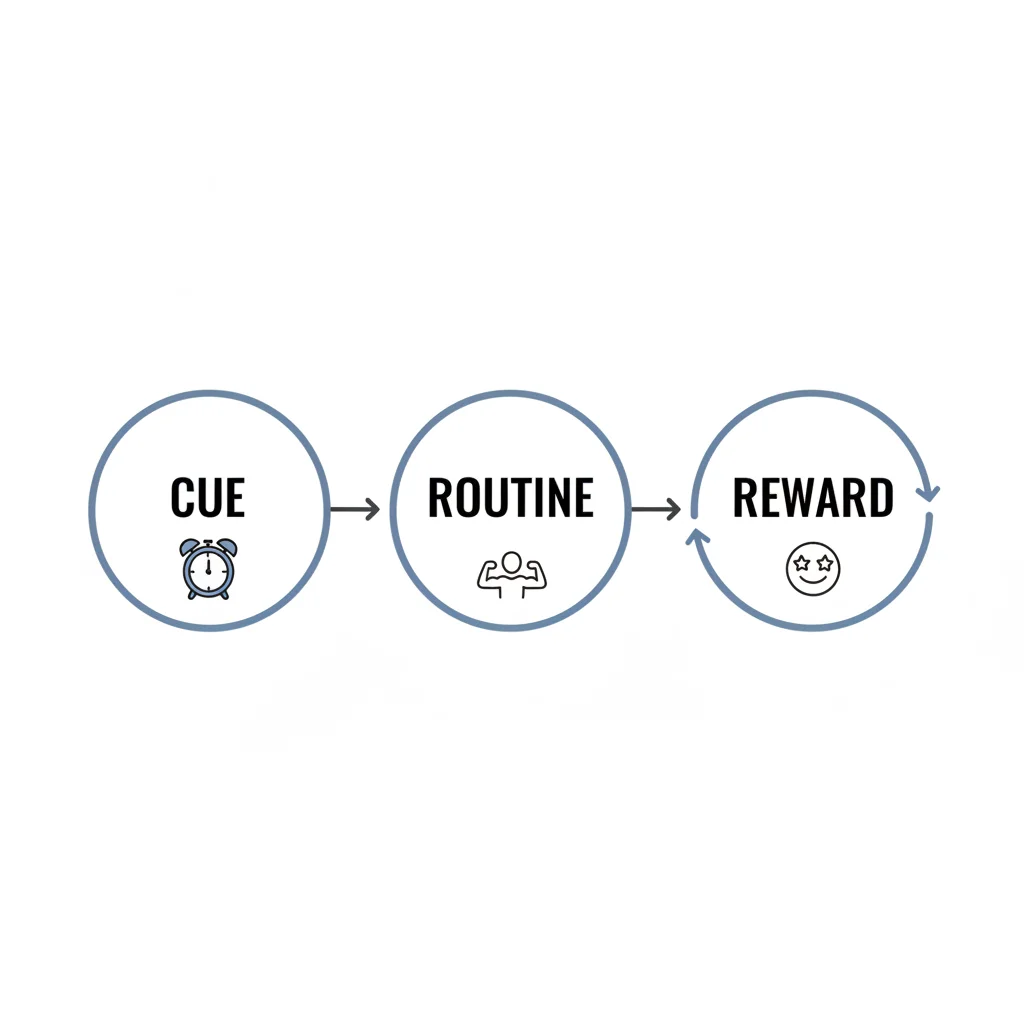
At the core of every habit lies a neurological loop, a three-part process that the brain follows to automate actions. This ‘habit loop,’ famously described by Charles Duhigg in ‘The Power of Habit,’ consists of a Cue, a Routine, and a Reward. Understanding this loop is fundamental to any effective habit formation guide.
1. The Cue: The Trigger for Action
A cue is an external or internal trigger that tells your brain to go into automatic mode and which habit to use. Cues can be anything from a specific time of day, a particular location, an emotional state, the presence of certain people, or even the preceding action in a sequence. For instance, seeing your running shoes by the door (cue) might trigger your morning run (routine). Feeling stressed (cue) might lead you to scroll through social media (routine).
Identifying your cues is the first critical step in both breaking bad habits and building good ones. Without recognizing the trigger, it’s incredibly difficult to intercept the routine. A good habit formation guide emphasizes the importance of awareness here. Pay attention to what precedes your desired or undesired actions. What time is it? Where are you? How are you feeling? Who are you with? What just happened?
2. The Routine: The Behavior Itself
The routine is the behavior you perform – the habit itself. This can be physical, mental, or emotional. It’s what you do in response to the cue. If the cue is the alarm clock, the routine might be hitting the snooze button, or it might be getting out of bed and going for a run. The routine is the most visible part of the habit loop, but it’s often the hardest to change without addressing the cue and the reward.
When you’re trying to establish a new habit, the routine needs to be as clear and as simple as possible, especially in the initial stages. Overcomplicating the routine can lead to resistance and failure. A core principle of any successful habit formation guide is to make the desired routine easy to start and execute.
3. The Reward: The Benefit Your Brain Craves
The reward is the positive outcome that reinforces the routine, making your brain want to repeat the behavior in the future. Rewards satisfy a craving. This could be a feeling of accomplishment, a burst of pleasure, stress relief, social recognition, or even a tangible treat. The brain learns to associate the routine with this reward, strengthening the habit loop.
Without a reward, the brain has no incentive to repeat the routine, and the habit will not stick. The reward doesn’t have to be grand; often, simple internal rewards like a sense of progress or satisfaction are powerful enough. Understanding what rewards your brain truly craves is crucial for effective habit formation guide strategies. If you want to replace a bad habit, you need to provide a new routine that delivers a similar or better reward.
The "21-Day Myth" vs. Reality of Habit Formation
You’ve likely heard the common adage that it takes 21 days to form a new habit. While this idea offers a comforting timeline, it’s largely a myth. Research, particularly a study by Phillippa Lally and her team at University College London, indicates that the actual time frame is far more variable. Their findings suggest that it can take anywhere from 18 to 254 days for a new behavior to become automatic, with the average being around 66 days.
This variability depends on several factors: the complexity of the habit, the individual’s personality, and the consistency of practice. Simple habits like drinking a glass of water daily might take less time, while more complex ones like starting a consistent exercise regimen could take significantly longer. The key takeaway from this research for any habit formation guide is patience and persistence. Don’t get discouraged if your new habit isn’t ingrained in three weeks. Focus on consistency over speed.
Practical Strategies for Effective Habit Formation in 2026
Now that we understand the science, let’s explore practical strategies to build robust habits for 2026. These techniques are designed to leverage the habit loop and make positive behaviors easier to start and maintain.
1. Start Small: The Power of Atomic Habits
One of the most profound insights in modern habit formation guide literature comes from James Clear’s ‘Atomic Habits’: the power of starting incredibly small. Instead of aiming for a monumental change, break your desired habit down into its smallest, most manageable component. Want to read more? Don’t commit to an hour a day; commit to reading one page. Want to exercise? Start with five minutes of stretching. The goal here is to make the habit so easy that you can’t say no.
The benefits of starting small are twofold: it reduces resistance and builds momentum. When a task is tiny, your brain is less likely to procrastinate. Successfully completing even a minuscule version of your habit builds confidence and provides a small reward (the feeling of accomplishment), reinforcing the loop. This ‘micro-habit’ approach is a cornerstone of any effective habit formation guide.
2. Habit Stacking: Leveraging Existing Routines
Habit stacking is a powerful strategy where you link a new habit to an existing one. The structure is simple: ‘After [CURRENT HABIT], I will [NEW HABIT].’ For example, if you want to start meditating, you might stack it after your morning coffee: ‘After I pour my morning coffee, I will meditate for five minutes.’ If you want to take a daily supplement: ‘After I brush my teeth, I will take my vitamins.’
This technique works because your existing habits already have established cues. By attaching a new habit to an old one, you’re essentially borrowing the cue, making it easier for your brain to remember and initiate the new behavior. This is a highly recommended strategy in any comprehensive habit formation guide.
3. Design Your Environment for Success
Your environment plays a colossal role in shaping your habits. Make good habits obvious and easy, and bad habits invisible and difficult. If you want to eat healthier, keep healthy snacks visible and unhealthy ones out of sight. If you want to exercise, lay out your workout clothes the night before. If you want to read, keep a book on your bedside table instead of your phone.
Conversely, if you want to break a bad habit, remove the cues. If you spend too much time on social media, delete the apps from your phone or move them to a hard-to-find folder. Designing your environment is a passive yet incredibly effective way to influence your behavior, and it’s a critical component of a robust habit formation guide.

4. Make it Attractive: The Allure of Rewards
As we discussed, rewards are crucial for reinforcing habits. To make a new habit stick, make the reward immediate and satisfying. This is where temptation bundling comes in. Pair an action you need to do with an action you want to do. For instance, only allow yourself to watch your favorite show (want) while you are on the treadmill (need). Or listen to your favorite podcast (want) while doing chores (need).
The reward doesn’t always have to be external. Sometimes, tracking your progress can be a powerful intrinsic reward. Seeing your streak grow on a habit tracker app or marking off a calendar day can provide a sense of accomplishment that reinforces the behavior. A smart habit formation guide incorporates both external and internal reward systems.
5. Make it Satisfying: Tracking and Accountability
The ‘satisfaction’ aspect of habit formation is often overlooked. We are more likely to repeat a behavior when the experience is satisfying. Tracking your habits provides immediate visual feedback of your progress, which is inherently satisfying. Don’t break the chain! Seeing a long streak of completed habits can be a powerful motivator.
Accountability also significantly boosts your chances of success. Tell a friend or family member about your new habit. Join a group that shares your goal. Having someone to report to, even if it’s just a check-in, adds an extra layer of motivation and commitment. This social reinforcement is an invaluable tool in any comprehensive habit formation guide.
Overcoming Common Challenges in Habit Formation
Even with the best strategies, challenges will arise. Here’s how to navigate them effectively.
1. The "Missed Day" Dilemma
It’s inevitable: you will miss a day. The crucial rule is: never miss twice. One missed day is an anomaly; two missed days start a new, undesirable pattern. If you miss a workout, make sure you get back to it the very next day. If you skip reading one evening, pick up the book the following night. This quick recovery mechanism is vital for maintaining momentum and is a key piece of advice in any effective habit formation guide.
2. Dealing with Setbacks and Plateaus
Progress isn’t always linear. You’ll encounter plateaus where you feel like you’re not making progress, or setbacks where old habits resurface. During these times, it’s important to revisit your ‘why.’ Remind yourself of the long-term benefits and the person you aspire to become. Adjust your strategies if needed. Perhaps the habit is too big, or the cue isn’t strong enough. Be flexible and forgiving with yourself.
3. The Role of Identity in Habit Formation
Instead of focusing on what you want to achieve, focus on who you want to become. This is known as identity-based habits. For example, instead of saying, ‘I want to read a book,’ say, ‘I am a reader.’ Instead of, ‘I want to exercise,’ say, ‘I am an athlete/a healthy person.’ When your habits align with your identity, they become less about obligation and more about expressing who you are. This deep connection makes habits incredibly resilient and is a powerful aspect discussed in advanced habit formation guide principles.
Building a Personalized Habit Formation Plan for 2026
To make 2026 your year of lasting change, let’s outline a step-by-step approach to creating your personalized habit formation guide.
Step 1: Identify Your Desired Habits
Start by clearly defining 1-3 habits you want to establish. Be specific. Instead of ‘eat healthier,’ try ‘eat a serving of vegetables with dinner.’ Instead of ‘exercise more,’ try ‘go for a 20-minute walk after work.’
Step 2: Define Your Cues
For each desired habit, identify a clear cue. This could be a time, a place, an event, or another existing habit. Make it as specific as possible. For example, ‘When I finish my last work task of the day (cue), I will put on my running shoes (new habit).’
Step 3: Simplify the Routine (Atomic Habits)
Break down your desired habit into its smallest, most manageable form. Can you do it in less than two minutes? If not, make it smaller. The goal is to make starting effortless. ‘Read one sentence,’ ‘do one push-up,’ ‘drink one glass of water.’ This minimalist approach is key to successful habit formation guide implementation.
Step 4: Choose Your Reward
What satisfaction will you get from completing this habit? It could be intrinsic (feeling of accomplishment, progress) or extrinsic (a small treat, listening to a favorite song). Ensure the reward is immediate and positive to reinforce the behavior.
Step 5: Design Your Environment
Set up your physical and digital spaces to support your new habits. Remove obstacles and make the desired action the path of least resistance. This proactive step significantly increases your chances of success, as emphasized in any practical habit formation guide.
Step 6: Plan for Obstacles (If-Then Planning)
Anticipate potential challenges and plan your response. This is called ‘if-then’ planning. ‘If I feel too tired to exercise, then I will at least do 5 minutes of stretching.’ ‘If I’m offered unhealthy food, then I will politely decline and grab my healthy snack.’ This pre-planning reduces decision fatigue and helps you stay on track.
Step 7: Track Your Progress
Use a habit tracker app, a bullet journal, or a simple calendar to mark off each day you successfully perform your habit. This visual feedback is incredibly motivating and helps solidify the habit loop. Seeing your progress is a powerful reward in itself, a crucial element of any robust habit formation guide.
Step 8: Be Patient and Persistent
Remember the reality of habit formation: it takes time. Don’t expect instant results. Celebrate small wins, learn from setbacks, and keep showing up. Consistency, not perfection, is the goal. Embrace the process, and trust that with consistent effort, these behaviors will become automatic.
The Long-Term Benefits of Mastering Habit Formation
The effort you put into mastering habit formation guide principles will pay dividends far beyond 2026. Once positive habits are ingrained, they free up mental energy, allowing you to focus on more complex tasks and creative endeavors. They build self-efficacy and confidence, knowing that you have the power to shape your life. They lead to compounding growth, where small daily improvements accumulate into massive results over time.
Imagine a life where healthy eating, regular exercise, continuous learning, and mindful practices are not chores but automatic parts of your day. This is the promise of effective habit formation. It’s about creating systems that work for you, rather than relying solely on fleeting motivation. By diligently applying the strategies in this habit formation guide, you are not just building habits; you are building a better, more intentional future.
Conclusion: Your Journey to a Habit-Driven 2026
The year 2026 holds immense potential for personal growth and transformation. By understanding the science of the habit loop – the cue, routine, and reward – and by applying practical strategies like starting small, habit stacking, environmental design, and effective tracking, you can systematically build the habits that will propel you towards your goals. Remember that patience, consistency, and self-compassion are your most valuable allies on this journey.
Don’t be discouraged by the occasional slip-up; simply get back on track. Embrace the identity of the person you wish to become, and let your daily actions reflect that identity. This comprehensive habit formation guide has provided you with the tools and knowledge. Now, it’s up to you to take consistent action, day by day, to sculpt the life you envision. Here’s to a habit-driven, successful, and fulfilling 2026!