Mindfulness for Modern Life: 10 Techniques to Reduce Stress by 15% in 2026
Mindfulness for Modern Life: 10 Techniques to Reduce Stress by 15% in 2026
In our increasingly fast-paced and interconnected world, stress has become an unwelcome but ubiquitous companion for many. The constant demands of work, personal life, digital overload, and societal pressures can leave us feeling overwhelmed, anxious, and disconnected from ourselves. This pervasive state of chronic stress not only diminishes our quality of life but also poses significant risks to our physical and mental health. While eliminating all sources of stress might be an unrealistic goal, effectively managing and reducing its impact is absolutely achievable. This is where the ancient practice of mindfulness steps in, offering a powerful antidote to the modern-day epidemic of stress.
Mindfulness, at its core, is the practice of bringing one’s attention to the present moment, intentionally and non-judgmentally. It’s about observing our thoughts, feelings, bodily sensations, and the surrounding environment without getting caught up in them. This simple yet profound practice has been shown by countless scientific studies to significantly reduce stress, improve emotional regulation, enhance focus, and foster a greater sense of well-being. Our ambitious yet attainable goal for this article is to equip you with 10 practical and effective mindfulness techniques that, when integrated into your daily routine, can help you reduce your stress levels by a remarkable 15% by 2026. This isn’t just a wishful projection; it’s a measurable outcome based on consistent application and a commitment to self-care.
The journey to reducing stress through Mindfulness Stress Reduction is not about achieving a constant state of bliss, but rather about developing a healthier relationship with stress itself. It’s about cultivating resilience, finding moments of calm amidst the chaos, and regaining control over your internal landscape. By embarking on this journey, you’ll not only alleviate immediate stress but also build a foundation for long-term emotional and psychological health. Let’s dive into these transformative techniques and discover how you can bring more peace, clarity, and presence into your modern life.
Understanding the Modern Stress Landscape
Before we delve into the solutions, it’s crucial to acknowledge the unique challenges of the modern stress landscape. Unlike our ancestors who faced acute, immediate threats, much of our stress today is chronic and psychological. We are constantly bombarded with information, expected to be always “on,” and navigate complex social and professional environments. The rise of digital technology, while offering unprecedented convenience, has also blurred the lines between work and leisure, making it difficult to truly disconnect and recharge. This constant state of low-level activation keeps our nervous systems in a perpetual fight-or-flight mode, leading to exhaustion, burnout, and a host of stress-related health issues.
The impact of this chronic stress is far-reaching, affecting our sleep, concentration, relationships, and overall physical health. It can manifest as anxiety, irritability, digestive problems, headaches, and even more serious conditions like heart disease. Recognizing these patterns within ourselves is the first step towards seeking effective strategies like Mindfulness Stress Reduction. Mindfulness doesn’t aim to change our external circumstances, but rather to change our internal response to them. It empowers us to observe these stressors without being consumed by them, creating a vital space for conscious choice and calm.
The Science Behind Mindfulness and Stress Reduction
The efficacy of mindfulness in reducing stress is not merely anecdotal; it’s backed by a growing body of scientific research. Studies have shown that regular mindfulness practice can lead to measurable changes in the brain, particularly in areas associated with emotion regulation, self-awareness, and attention. For instance, mindfulness meditation has been found to increase gray matter density in the hippocampus, a region crucial for learning and memory, and in areas involved in self-awareness, compassion, and introspection. Conversely, it decreases gray matter density in the amygdala, the brain’s “fear center,” leading to a reduction in reactivity to stress.
Moreover, mindfulness practice has been linked to a decrease in the production of cortisol, the primary stress hormone, and an improvement in heart rate variability, an indicator of a healthy and adaptable nervous system. By cultivating present-moment awareness, individuals learn to observe stressful thoughts and emotions without judgment, preventing them from escalating into full-blown anxiety or panic. This ability to “de-center” from our thoughts is a cornerstone of Mindfulness Stress Reduction. It allows us to recognize that while we may experience stressful thoughts, we are not our thoughts, and we have the capacity to choose how we respond to them. These physiological and neurological changes underscore why mindfulness is such a powerful tool for managing and reducing stress in the long term.
1. Mindful Breathing: Your Anchor in the Present Moment
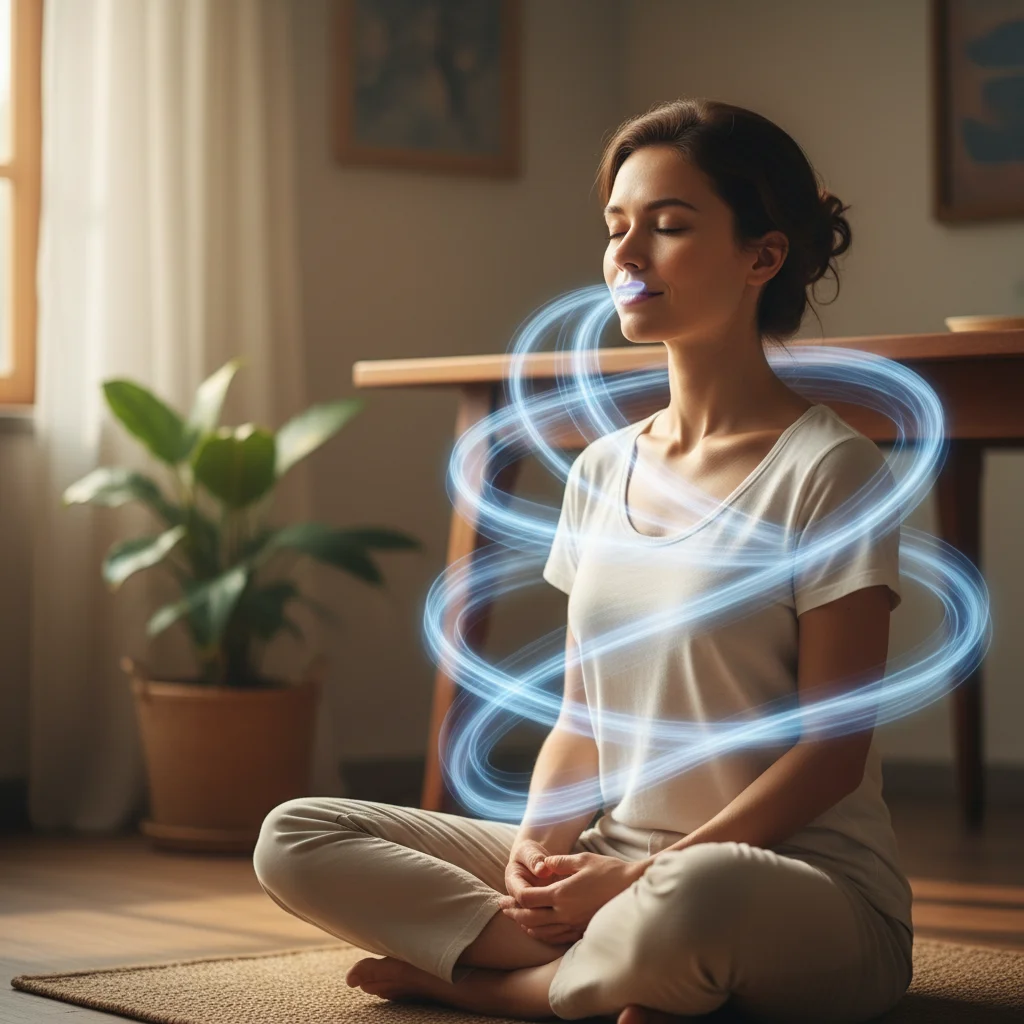
The breath is perhaps the most accessible and immediate tool for cultivating mindfulness. It’s always with us, and by consciously bringing our attention to it, we can instantly ground ourselves in the present moment. Mindful breathing is not about controlling your breath, but rather observing it as it naturally flows in and out. This simple act can disrupt the cycle of stressful thoughts and activate the parasympathetic nervous system, promoting relaxation.
How to Practice Mindful Breathing:
- Find a Comfortable Position: Sit or lie down in a way that feels relaxed yet alert.
- Close Your Eyes (Optional): If comfortable, gently close your eyes to minimize distractions.
- Focus on Your Breath: Bring your attention to the sensations of your breath. Notice the air entering and leaving your nostrils, the rise and fall of your chest or abdomen.
- Observe Without Judgment: As thoughts inevitably arise, gently acknowledge them without judgment and then guide your attention back to your breath. Don’t try to force thoughts away; simply observe them passing like clouds in the sky.
- Start Small: Begin with 2-3 minutes and gradually increase the duration as you become more comfortable.
Regular practice of mindful breathing, even for short periods, can significantly enhance your ability to manage stress responses throughout the day. It teaches you to create a pause between a stimulus and your reaction, a crucial skill for effective Mindfulness Stress Reduction.
2. Body Scan Meditation: Connecting with Your Physical Self
Our bodies often hold tension and stress without us even realizing it. A body scan meditation is a powerful practice for reconnecting with your physical self and releasing stored tension. It involves systematically bringing awareness to different parts of your body, noticing any sensations without judgment.
How to Practice a Body Scan:
- Lie Down: Lie on your back in a comfortable position, arms at your sides, palms up, and legs uncrossed.
- Deep Breaths: Take a few deep, cleansing breaths to settle in.
- Scan Your Body: Begin by bringing your attention to your toes. Notice any sensations – warmth, tingling, pressure, coolness. Don’t try to change anything, just observe.
- Move Systematically: Slowly move your attention up through your feet, ankles, lower legs, knees, thighs, hips, abdomen, lower back, upper back, chest, shoulders, arms, hands, neck, and finally your face and head.
- Release Tension: As you focus on each area, imagine your breath flowing into that part of your body, and as you exhale, imagine any tension or discomfort melting away.
- Whole Body Awareness: Conclude by resting your awareness on your entire body, feeling a sense of wholeness and relaxation.
This practice is excellent for enhancing interoception (awareness of internal bodily states) and can be particularly helpful for those who experience physical manifestations of stress. It’s a key component of holistic Mindfulness Stress Reduction.
3. Mindful Eating: Savoring Every Bite
In our busy lives, eating often becomes a rushed, unconscious activity. Mindful eating transforms this everyday act into an opportunity for presence and enjoyment. It involves paying full attention to the experience of eating – the smells, textures, flavors, and the signals of hunger and fullness from your body.
How to Practice Mindful Eating:
- Eliminate Distractions: Turn off screens, put away your phone, and focus solely on your meal.
- Observe Before Eating: Take a moment to look at your food. Notice its colors, shapes, and how it’s presented.
- Smell the Aroma: Inhale the scents of your food.
- Take Small Bites: Put a small amount of food in your mouth.
- Chew Slowly: Chew thoroughly, noticing the texture and how the flavors evolve.
- Savor the Taste: Pay attention to the taste sensations on your tongue.
- Listen to Your Body: Notice when you feel full and stop eating when you are satisfied, not just when your plate is empty.
Mindful eating not only reduces stress around meal times but can also improve digestion and foster a healthier relationship with food. It’s a simple yet profound way to integrate Mindfulness Stress Reduction into a daily ritual.
4. Walking Meditation: Movement with Awareness
Walking, an activity many of us do daily, can be transformed into a powerful mindfulness practice. Walking meditation involves paying deliberate attention to the sensations of walking, grounding you in the present moment and offering a moving form of meditation.
How to Practice Walking Meditation:
- Find a Quiet Space: Choose a path where you won’t be easily distracted. It could be indoors or outdoors.
- Slow Down: Deliberately slow your pace more than usual.
- Feel Your Feet: Bring your awareness to your feet making contact with the ground. Notice the sensation of lifting one foot, moving it forward, and placing it down.
- Observe Your Body: Pay attention to the movement of your legs, the swing of your arms, and your posture.
- Engage Your Senses (Optional): Notice the sights, sounds, and smells around you, without getting caught up in them. Just observe.
- Return to the Steps: When your mind wanders, gently bring your attention back to the physical sensations of walking.
This practice is excellent for integrating mindfulness into active parts of your day, providing a break from mental chatter and offering a refreshing perspective. It’s an active form of Mindfulness Stress Reduction that combines physical movement with mental presence.
5. The 5-4-3-2-1 Grounding Technique: A Quick Stress Reliever
When stress or anxiety feels overwhelming, the 5-4-3-2-1 technique is a rapid grounding exercise that can bring you back to the present moment by engaging your five senses. It’s an excellent tool for acute stress episodes.
How to Practice 5-4-3-2-1:
- 5 Things You Can See: Look around and name five things you can see. Notice details like colors, shapes, and textures.
- 4 Things You Can Feel: Pay attention to four things you can feel. This could be the texture of your clothes, the temperature of the air, the ground beneath your feet, or the chair you’re sitting on.
- 3 Things You Can Hear: Listen and identify three sounds around you. This could be distant traffic, birds chirping, or your own breath.
- 2 Things You Can Smell: Notice two things you can smell. This might require a deeper breath. If you can’t smell anything distinct, acknowledge that.
- 1 Thing You Can Taste: Identify one thing you can taste in your mouth. It could be the lingering taste of coffee, toothpaste, or simply the taste of your own saliva.
This technique is a powerful way to interrupt overwhelming thoughts and bring your awareness sharply into the physical world, offering immediate relief and facilitating Mindfulness Stress Reduction in moments of crisis.
6. Mindful Listening: Deepening Connections
In a world full of distractions, true listening has become a rare art. Mindful listening involves giving your full, undivided attention to sounds, whether it’s a conversation, music, or the sounds of nature. This practice enhances communication and reduces mental clutter.
How to Practice Mindful Listening:
- Focus on One Sound Source: Choose a sound, whether it’s a person speaking, a piece of music, or environmental sounds.
- Listen Actively: Pay attention to the nuances of the sound – its pitch, tone, rhythm, and volume.
- Suspend Judgment: Try not to analyze, interpret, or form opinions about the sound. Simply listen.
- Notice Your Internal Response: Observe any thoughts or emotions that arise in response to the sound, and then gently return your attention to the sound itself.
- In Conversations: When listening to another person, resist the urge to interrupt, formulate your response, or offer advice. Just listen to understand.
Mindful listening not only sharpens your auditory awareness but also fosters deeper connections in relationships and reduces the internal noise that often contributes to stress. It’s a profound way to practice Mindfulness Stress Reduction in social interactions.

7. The “STOP” Practice: A Mini-Mindfulness Break
The “STOP” practice is a short, informal mindfulness exercise that can be done anywhere, anytime, to create a brief but powerful pause in your day. It’s particularly useful when you feel overwhelmed or are transitioning between tasks.
How to Practice “STOP”:
- S – Stop: Whatever you are doing, just pause for a moment.
- T – Take a Breath: Bring your awareness to your breath. Take a few deep, conscious breaths, feeling the air enter and leave your body.
- O – Observe: Notice what is happening in your internal and external environment. What are you thinking? What are you feeling? What sensations are present in your body? What do you hear or see around you? Observe without judgment.
- P – Proceed: Continue with your activity, but with a renewed sense of awareness and intentionality.
This quick technique acts as a mental reset button, helping you to break free from autopilot and approach your next action with greater clarity and calm. Regular “STOP” moments contribute significantly to cumulative Mindfulness Stress Reduction.
8. Mindful Movement (Yoga or Tai Chi): Embodied Awareness
Practices like yoga and Tai Chi are forms of mindful movement that integrate physical postures, breath control, and meditation. They are excellent for releasing physical tension, improving flexibility, and cultivating a deep connection between mind and body.
How to Practice Mindful Movement:
- Choose a Practice: Explore gentle yoga, Tai Chi, or even simple stretching with awareness.
- Focus on Sensations: As you move, pay close attention to the sensations in your body – the stretch of muscles, the balance, the flow of movement.
- Synchronize with Breath: Coordinate your movements with your breath. Inhale as you extend, exhale as you release.
- Move with Intention: Each movement is deliberate, not rushed.
- Listen to Your Body: Respect your body’s limits. Do not push through pain.
Mindful movement practices are highly effective for reducing physical and mental stress, improving body awareness, and fostering a sense of grace and ease. They are a dynamic approach to Mindfulness Stress Reduction.
9. Cultivating Gratitude: Shifting Your Perspective
While not traditionally a “meditation” technique, cultivating gratitude is a powerful mindfulness practice that shifts your focus from what’s wrong to what’s right in your life. It’s about intentionally noticing and appreciating the positive aspects, no matter how small.
How to Practice Gratitude:
- Gratitude Journal: Keep a journal and write down 3-5 things you are grateful for each day. Be specific.
- Gratitude Walk: As you walk, intentionally notice things you are grateful for in your environment or within yourself.
- Express Gratitude: Make an effort to verbally express gratitude to others.
- Morning/Evening Reflection: Start or end your day by mentally listing things you appreciate.
Regular gratitude practice has been shown to reduce stress, improve mood, and foster resilience. It’s a profound way to reframe your perspective and significantly contribute to long-term Mindfulness Stress Reduction.
10. Mindful Self-Compassion: Be Kind to Yourself
Often, our harshest critic resides within ourselves. Mindful self-compassion involves treating yourself with the same kindness, understanding, and acceptance you would offer to a dear friend. It’s especially crucial during times of stress, failure, or perceived inadequacy.
How to Practice Mindful Self-Compassion:
- Notice Suffering: When you’re experiencing stress, pain, or difficulty, acknowledge it without judgment. Say to yourself, “This is a moment of suffering.”
- Common Humanity: Recognize that suffering is a part of the shared human experience. “Suffering is a part of life. I am not alone in this.”
- Self-Kindness: Offer yourself comfort and care. Place a hand over your heart, give yourself a gentle hug, or say kind words to yourself, such as “May I be kind to myself in this moment,” or “May I be free from suffering.”
- Guided Meditations: Explore guided self-compassion meditations available online or through apps.
Mindful self-compassion is a cornerstone of emotional well-being and a powerful counter-force to the self-criticism that often amplifies stress. It is an essential, gentle, yet incredibly potent form of Mindfulness Stress Reduction.
Integrating Mindfulness into Your Daily Life for a 15% Stress Reduction by 2026
Achieving a 15% reduction in stress by 2026 is an ambitious but entirely feasible goal. The key lies not in dedicating hours to formal meditation each day, but in consistently integrating these mindfulness techniques into the fabric of your daily life. Start small, be patient, and celebrate your progress.
Tips for Consistent Practice:
- Start with One or Two Techniques: Don’t try to implement all ten at once. Choose 1-2 that resonate most with you and practice them consistently for a few weeks before adding others.
- Set Reminders: Use your phone or a sticky note to remind yourself to take mindful breaks throughout the day.
- Mindful Moments: Transform routine activities (brushing teeth, washing dishes, commuting) into opportunities for mindfulness.
- Find a “Mindfulness Buddy”: Share your journey with a friend or family member for mutual support and accountability.
- Be Patient and Kind to Yourself: There will be days when your mind wanders, and you feel frustrated. That’s perfectly normal. Gently guide your attention back to the present moment without judgment.
- Track Your Progress: While a 15% reduction is a target, qualitative changes are also important. Keep a journal to note how you feel, your reactions to stressors, and any improvements in sleep or mood.
- Utilize Apps and Resources: Many excellent apps (e.g., Calm, Headspace, Insight Timer) offer guided meditations and structured programs to support your practice.
The cumulative effect of these small, consistent acts of mindfulness will gradually reshape your brain, your nervous system, and your overall relationship with stress. You will begin to notice moments of calm expanding, your reactions becoming more measured, and your ability to navigate challenges with greater ease. This journey of Mindfulness Stress Reduction is a lifelong one, but its benefits are immediate and profound.
Conclusion: A Calmer Tomorrow, Starting Today
The modern world presents us with unparalleled challenges, but it also offers us powerful tools to navigate them with grace and resilience. Mindfulness is not a luxury; it is an essential skill for thriving in the 21st century. By embracing these 10 techniques – from mindful breathing and body scans to mindful eating and self-compassion – you are actively investing in your mental, emotional, and physical well-being. The goal of a 15% stress reduction by 2026 is a testament to the transformative power of consistent practice and a commitment to living more mindfully.
Remember, mindfulness is not about achieving perfection, but about cultivating presence, awareness, and a kinder relationship with yourself and the world around you. Each moment of awareness you bring to your day is a step towards a calmer, more focused, and more fulfilling life. Begin your journey today, and empower yourself to meet the demands of modern life not with dread, but with a quiet strength and an unwavering sense of peace. Your calmer self awaits.