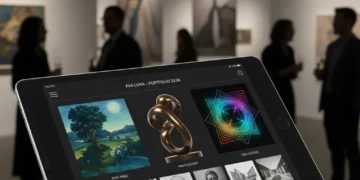
In the dynamic and ever-evolving creative industries of the United States, a compelling creative portfolio elements are not just an advantage; they are an absolute necessity. For US talent aiming to stand out in 2026 and beyond, your portfolio is your most powerful advocate, a curated window into your skills, vision, and professional capabilities. It’s more than just a collection of your best work; it’s a strategic narrative designed to captivate potential clients, employers, and collaborators. This comprehensive guide will delve into the six key creative portfolio elements that will define success for US creatives in the coming years, ensuring your work not only gets noticed but leaves a lasting, positive impression.
The landscape of creative careers is constantly shifting. With advancements in technology, new platforms emerging, and the increasing demand for specialized skills, your portfolio must evolve to reflect these changes. Gone are the days when a simple PDF or a physical book would suffice. Today, a strong creative portfolio is a multifaceted tool, optimized for digital consumption, showcasing not just what you can do, but how you think, solve problems, and contribute value. Understanding these critical creative portfolio elements is paramount for anyone looking to thrive in the competitive US market.
Whether you’re a graphic designer, photographer, writer, animator, architect, or any other creative professional, the principles of a winning portfolio remain consistent. It’s about strategic selection, impeccable presentation, and a clear articulation of your unique value proposition. Let’s explore these essential components in detail, providing actionable insights to elevate your portfolio from good to exceptional.
1. Strategic Curation: Quality Over Quantity
The first and arguably most crucial of the creative portfolio elements is strategic curation. Many creatives make the mistake of including every piece of work they’ve ever created, believing that more is better. This couldn’t be further from the truth. A cluttered portfolio overwhelms viewers and dilutes the impact of your strongest pieces. In 2026, the emphasis is firmly on quality over quantity.
Selecting Your Best Work
Think of your portfolio as a highlight reel. Each piece should be a testament to your best skills, showcasing your expertise and potential. For US talent, this means selecting projects that are not only visually impressive but also relevant to the types of opportunities you’re seeking. If you’re targeting a specific industry or role, tailor your selection to demonstrate your proficiency in those areas.
- Focus on Recent Work: While older projects might hold sentimental value, prioritize your most current and representative work. This demonstrates your evolving skills and contemporary relevance.
- Showcase Variety (Thoughtfully): If you have diverse skills, include projects that demonstrate that range, but ensure each piece is strong. Don’t include a mediocre piece just for variety’s sake.
- Consider the ‘Wow’ Factor: Which pieces consistently elicit the best reactions? These are your strongest contenders.
- Demonstrate Problem-Solving: Beyond aesthetics, can your work show how you tackled a challenge and delivered a solution? This is invaluable.
The Power of Less
Recruiters and clients often have limited time to review portfolios. Presenting a concise, impactful selection of 5-10 stellar projects is far more effective than 30 mediocre ones. Each project should earn its place. If a piece doesn’t elevate your overall presentation, it’s best to omit it. This disciplined approach to curation is a hallmark of a truly strong creative portfolio elements.
Remember, the goal is to make a powerful first impression that compels the viewer to want to see more of your capabilities, rather than sifting through an exhaustive archive. This focused approach not only respects the viewer’s time but also highlights your confidence in your strongest work.
2. Compelling Project Narratives: The Story Behind the Work
Beyond the visual appeal, the story behind each project is a critical component of effective creative portfolio elements. It’s not enough to simply display an image or a link; you need to provide context, explain your process, and articulate the impact of your work. This is where your ability to communicate shines, transforming a static image into a dynamic case study.
Structuring Your Project Descriptions
For each project, aim to answer the following questions clearly and concisely:
- The Challenge/Problem: What was the initial brief or problem you were asked to solve?
- Your Role: What specifically did you contribute to the project? Be clear if it was a team effort.
- Your Process: Briefly describe your methodology, research, ideation, and execution. This offers insight into your thinking.
- The Solution/Deliverable: What was the final outcome?
- The Impact/Results: Whenever possible, quantify the success. Did it increase engagement, sales, or brand recognition? Even qualitative results are valuable.
Use clear, professional language. Avoid jargon where possible, or explain it if necessary. The narrative should guide the viewer through your thought process, demonstrating not just your technical skills but also your strategic thinking and problem-solving abilities. This storytelling aspect elevates your portfolio from a simple gallery to a powerful demonstration of your professional value.

Showcasing Your Unique Process
In 2026, employers and clients in the US are increasingly looking for creatives who can articulate their process. They want to understand how you approach challenges, your decision-making framework, and your collaborative style. Including sketches, wireframes, mood boards, or early drafts can provide valuable insight into your creative journey. This transparency builds trust and demonstrates a thoughtful, professional approach to your craft. It’s one of the most powerful creative portfolio elements for distinguishing yourself.
3. Professional Presentation: User Experience is Key
The presentation of your portfolio is just as important as the work itself. A well-designed, easy-to-navigate portfolio reflects positively on your professionalism and attention to detail. In the digital age, user experience (UX) is paramount, making it one of the non-negotiable creative portfolio elements.
Choosing the Right Platform
There are numerous platforms available for hosting your online portfolio. Consider what best suits your needs and budget:
- Personal Website: Offers maximum customization and control. Ideal for establishing a strong personal brand. Platforms like WordPress, Squarespace, or Webflow are excellent choices.
- Behance/Dribbble: Great for visibility within creative communities and for showcasing individual projects.
- Adobe Portfolio: Integrated with Adobe Creative Cloud, offering easy synchronization for designers.
- Specialized Platforms: Depending on your niche (e.g., ArtStation for game artists, Contently for writers), consider industry-specific platforms.
Regardless of the platform, ensure it is mobile-responsive. A significant portion of portfolio views will occur on mobile devices, so a seamless experience across all screen sizes is crucial. Slow loading times or broken layouts can deter potential opportunities.
Design and Navigation
Your portfolio itself should be a testament to your design sensibilities. Keep the layout clean, intuitive, and visually appealing. Easy navigation is critical:
- Clear Menu: Simple, logical menu options (e.g., ‘Work’, ‘About’, ‘Contact’).
- Consistent Branding: Use a consistent color palette, typography, and visual style that reflects your personal brand.
- High-Quality Images/Media: Ensure all images are high-resolution and optimized for web loading speed. Videos should be embedded from reliable sources like Vimeo or YouTube.
- Accessibility: Consider accessibility best practices to ensure your portfolio is usable by everyone.
A polished, professional presentation underscores your capabilities and demonstrates that you take your craft seriously. It’s a silent yet powerful statement about your attention to detail and commitment to excellence, making it a cornerstone of effective creative portfolio elements.
4. Targeted Personalization: Know Your Audience
One size rarely fits all, especially when it comes to a strong creative portfolio elements. The most successful US creatives tailor their portfolios to specific opportunities and audiences. This doesn’t mean creating an entirely new portfolio for every application, but rather having a flexible structure that allows for targeted personalization.
Researching Your Prospects
Before submitting your portfolio, research the company, client, or agency you’re approaching. Understand their brand, their aesthetic, their values, and the type of work they typically produce. This insight will guide your selection and presentation.
- Company Culture: Does their work lean towards corporate, edgy, minimalist, or vibrant?
- Specific Needs: Are they looking for a UI designer, a brand strategist, or an illustrator?
- Past Projects: What kind of projects have they done recently? Can you show work that aligns?
Tailoring Your Portfolio
While your core portfolio remains consistent, consider creating specialized versions or sections for different types of applications. For example, a graphic designer might have a section for ‘Brand Identity Projects’ and another for ‘Digital Marketing Campaigns’.
- Highlight Relevant Projects: Reorder your projects so the most relevant ones appear first.
- Customize Your ‘About’ Section: Briefly adjust your bio to highlight experiences or skills particularly pertinent to the opportunity.
- Personalized Cover Letter/Email: Always accompany your portfolio with a personalized message that references specific work in your portfolio and explains why you’re a good fit.
This targeted approach demonstrates initiative, attention to detail, and a genuine interest in the opportunity, significantly increasing your chances of success. It transforms your portfolio from a generic display into a highly relevant and persuasive tool, making it a critical aspect of effective creative portfolio elements.
5. Clear Contact Information and Call to Action
It might seem obvious, but easily accessible contact information and a clear call to action are frequently overlooked creative portfolio elements. All your hard work in showcasing your talent is wasted if potential clients or employers can’t easily get in touch with you.
Making it Easy to Connect
Ensure your contact information is prominently displayed and easy to find. This typically includes:
- Email Address: A professional email address (e.g., [email protected]).
- Phone Number (Optional but Recommended): If you’re comfortable receiving calls.
- LinkedIn Profile: A link to your professional networking profile.
- Other Relevant Social Media: Links to professional platforms like Dribbble, Behance, or Instagram if they showcase your work.
- Contact Form: A simple, functional contact form on your website.
Place this information in your website’s footer, in a dedicated ‘Contact’ page, and potentially in your ‘About’ section. The goal is to remove any friction for someone who wants to reach out.
The Power of a Call to Action (CTA)
Don’t just wait for people to contact you; invite them to. A clear call to action guides the viewer on what to do next. Examples include:
- “Let’s discuss your next project.”
- “Interested in collaborating? Get in touch!”
- “View my resume.”
- “Schedule a free consultation.”
A well-placed CTA encourages engagement and transforms passive viewing into active inquiry, solidifying its place as a crucial element among the essential creative portfolio elements.
6. Continuous Evolution and Feedback Integration
The creative world is constantly evolving, and so too should your portfolio. The final, but ongoing, of the creative portfolio elements is the commitment to continuous evolution and the intelligent integration of feedback. Your portfolio should be a living document, not a static archive.
Regular Updates and Refreshers
Make it a habit to review and update your portfolio regularly. Aim for at least quarterly reviews, or whenever you complete a significant new project. This ensures your portfolio always reflects your current skill set and the latest trends in your industry. Remove outdated work, add fresh projects, and refine existing descriptions.
- Keep it Current: Outdated work can suggest your skills are not current.
- New Skills, New Projects: As you learn new software or techniques, showcase them.
- Industry Trends: Ensure your work aligns with contemporary industry standards and aesthetics.

Seeking and Applying Feedback
One of the most valuable resources for portfolio improvement is constructive feedback. Don’t be afraid to ask trusted mentors, peers, or even potential clients for their honest opinions. They might spot weaknesses or areas for improvement that you, being too close to your own work, might overlook.
- Peer Reviews: Exchange portfolios with other creatives.
- Mentor Guidance: Seek advice from experienced professionals in your field.
- Target Audience Feedback: If possible, get feedback from someone who represents your ideal client or employer.
When receiving feedback, listen actively and consider the suggestions objectively. You don’t have to implement every piece of advice, but use it to critically evaluate your portfolio’s effectiveness. This iterative process of refinement is what transforms a good portfolio into a truly exceptional one, ensuring your creative portfolio elements remain sharp and relevant in 2026 and beyond.
Beyond the 6 Elements: Standing Out in the US Market
While these six creative portfolio elements form the bedrock of a strong presentation, there are additional considerations for US talent looking to truly distinguish themselves in 2026. The competitive nature of the American creative industries demands an extra edge.
Personal Branding and Voice
Your portfolio is an extension of your personal brand. What unique perspective or voice do you bring to your work? Ensure this comes through in your project narratives, your ‘About Me’ section, and the overall aesthetic of your site. Authenticity resonates deeply with clients and employers, especially in a market saturated with talent.
Networking and Visibility
A stellar portfolio is only effective if people see it. Actively network within your industry, both online and offline. Attend virtual and in-person events, engage on professional platforms, and participate in creative communities. Share your portfolio strategically and be open to collaborations. Visibility amplifies the impact of your well-crafted creative portfolio elements.
Adaptability and Future-Proofing
The creative landscape is constantly evolving with new technologies like AI-driven design tools, immersive experiences, and new forms of digital content. Demonstrate your adaptability by showcasing projects that incorporate emerging technologies or by expressing your willingness to learn and grow. A forward-thinking approach makes you a more valuable asset in the long run.
Demonstrating Soft Skills
While your portfolio primarily showcases your technical and creative skills, the project narratives and ‘About Me’ section are opportunities to subtly highlight crucial soft skills. Communication, collaboration, problem-solving under pressure, time management, and client relations are all highly valued in the US job market. Frame your project stories to reflect these competencies, adding another layer of depth to the creative portfolio elements.
Conclusion: Your Portfolio, Your Future
Building a strong creative portfolio elements is an ongoing journey, not a one-time task. For US talent in 2026, it’s about meticulously curating your best work, crafting compelling narratives, presenting it professionally, tailoring it for specific audiences, ensuring easy contact, and committing to continuous improvement. Your portfolio is more than just a collection of past projects; it’s a dynamic, persuasive tool that communicates your potential, passion, and professional value.
By focusing on these six key creative portfolio elements, you’re not just showcasing your work; you’re building a powerful case for why you are the ideal creative partner or employee. Invest the time and effort into perfecting your portfolio, and watch as it opens doors to exciting opportunities and propels your creative career forward in the competitive US market. Your future success depends on how effectively you tell your story through your work – make every element count.