Hyper-Personalized AI Retail: 5 US Consumer Shifts by 2026

The retail landscape is in a constant state of flux, driven by technological advancements and evolving consumer expectations. Among the most potent forces shaping this evolution is Artificial Intelligence (AI), particularly its hyper-personalized application. By 2026, the impact of Hyper-Personalized AI Retail on US consumers will be nothing short of revolutionary, redefining how we discover, purchase, and interact with brands. This isn’t merely about recommending products based on past purchases; it’s about creating an individual journey so tailored it feels intuitive, anticipatory, and deeply personal. As AI models become more sophisticated, capable of processing vast amounts of data—from browsing history and social media activity to biometric data and even emotional responses—retailers will possess an unprecedented ability to understand and cater to each consumer’s unique needs and desires. This deep dive explores the five pivotal shifts US consumers can expect as Hyper-Personalized AI Retail takes center stage.
The promise of Hyper-Personalized AI Retail extends beyond mere convenience; it envisions a shopping experience that is proactively curated, anticipating needs before they are even articulated. Imagine a world where your refrigerator automatically reorders groceries based on your consumption patterns, dietary preferences, and even your weekly meal plan, all while optimizing for freshness and budget. Or a fashion app that not only suggests outfits but designs custom pieces that perfectly fit your body, style, and upcoming events. This level of personalization, powered by advanced AI, is no longer the stuff of science fiction. It’s rapidly becoming a tangible reality, and US consumers are on the cusp of experiencing its full transformative power.
However, this transformation isn’t without its complexities. While the benefits of an effortlessly tailored shopping experience are clear, questions around data privacy, algorithmic bias, and the very nature of consumer autonomy will undoubtedly come to the forefront. Understanding these shifts is crucial for both consumers, who will navigate this new retail frontier, and businesses, who must adapt to remain competitive and relevant in an increasingly AI-driven marketplace. Let’s delve into the five key shifts that will define the era of Hyper-Personalized AI Retail for US consumers by 2026.
1. The Era of Anticipatory Shopping Experiences
One of the most profound shifts brought about by Hyper-Personalized AI Retail will be the move from reactive to anticipatory shopping experiences. Traditional retail has largely been about consumers actively searching for products or responding to broad marketing campaigns. In the AI-driven future, the shopping journey will begin long before the consumer consciously decides to make a purchase. AI algorithms, leveraging predictive analytics and machine learning, will analyze a multitude of data points—purchase history, browsing behavior, social media interactions, location data, real-time context (weather, events), and even biometric feedback from wearables—to anticipate needs and desires. This means products and services will be presented to consumers precisely when they are most likely to need or want them, often before they even realize it themselves.
Consider the implications for everyday shopping. Instead of creating a grocery list, your smart refrigerator, connected to your health tracking apps and family calendar, might suggest a personalized weekly meal plan and automatically populate your online cart with the necessary ingredients, factoring in current sales and your dietary restrictions. For fashion, AI could recommend an entire outfit for an upcoming event listed on your calendar, complete with accessories and complementary items, all tailored to your exact measurements and style preferences. This level of foresight will transform shopping from a task into a seamless, almost invisible process, significantly enhancing convenience and saving valuable time for consumers. The challenge for retailers will be to strike the right balance between helpful anticipation and intrusive prediction, ensuring that personalization feels empowering rather than uncanny. The success of Hyper-Personalized AI Retail hinges on this delicate balance, building trust with consumers through genuinely valuable and timely suggestions.
Furthermore, anticipatory shopping will extend to services. Imagine your car’s AI system recommending a nearby auto service center for a scheduled oil change, pre-booking an appointment based on your availability, and even suggesting a loaner car, all before you’ve noticed the service light. Or a travel platform suggesting a weekend getaway package, complete with flight, hotel, and activity recommendations, based on your recent searches, social media interests, and even real-time weather forecasts for various destinations. This proactive approach will reduce decision fatigue and friction points in numerous consumer touchpoints, making life significantly easier. The shift is not just about showing the right product; it’s about understanding the entire context of a consumer’s life and seamlessly integrating solutions into it.
2. The Rise of the ‘Personal Shopping Assistant’ AI
The second major shift involves the widespread adoption of advanced AI-powered personal shopping assistants. These are not merely chatbots; they are sophisticated conversational AI systems capable of understanding complex queries, learning individual preferences over time, and offering highly nuanced recommendations. These AI assistants will operate across multiple channels—voice assistants, messaging apps, in-store kiosks, and augmented reality (AR) interfaces—providing a unified and consistent shopping experience. Think of them as always-on, infinitely patient, and supremely knowledgeable personal shoppers, available 24/7.
These AI assistants will go beyond simple product searches. They will be able to engage in natural language conversations, understanding context, nuance, and even emotional cues. For example, a consumer might say, “I need a gift for my sister who loves hiking and sustainable brands, but I’m on a tight budget this month.” The AI assistant would then be able to scour thousands of products, filter by brand values, price points, and suitability for hiking, and present a curated list of options, perhaps even explaining why each item is a good fit. This level of interaction mimics a human personal shopper but with the added benefit of instantaneous access to vast databases of product information, customer reviews, and market trends.
Moreover, these AI assistants will evolve with the consumer. As they gather more data about preferences, dislikes, past purchases, and even return reasons, their recommendations will become increasingly accurate and relevant. They will learn not just what a consumer buys, but *why* they buy it, and *how* they prefer to shop. This continuous learning loop is central to Hyper-Personalized AI Retail. It means that the longer a consumer interacts with an AI assistant, the better and more indispensable it becomes. This will foster a new level of brand loyalty, not just to the products, but to the seamless and intelligent service provided by the AI. Brands that successfully implement these sophisticated AI assistants will gain a significant competitive edge, turning casual browsers into loyal customers through unparalleled service.
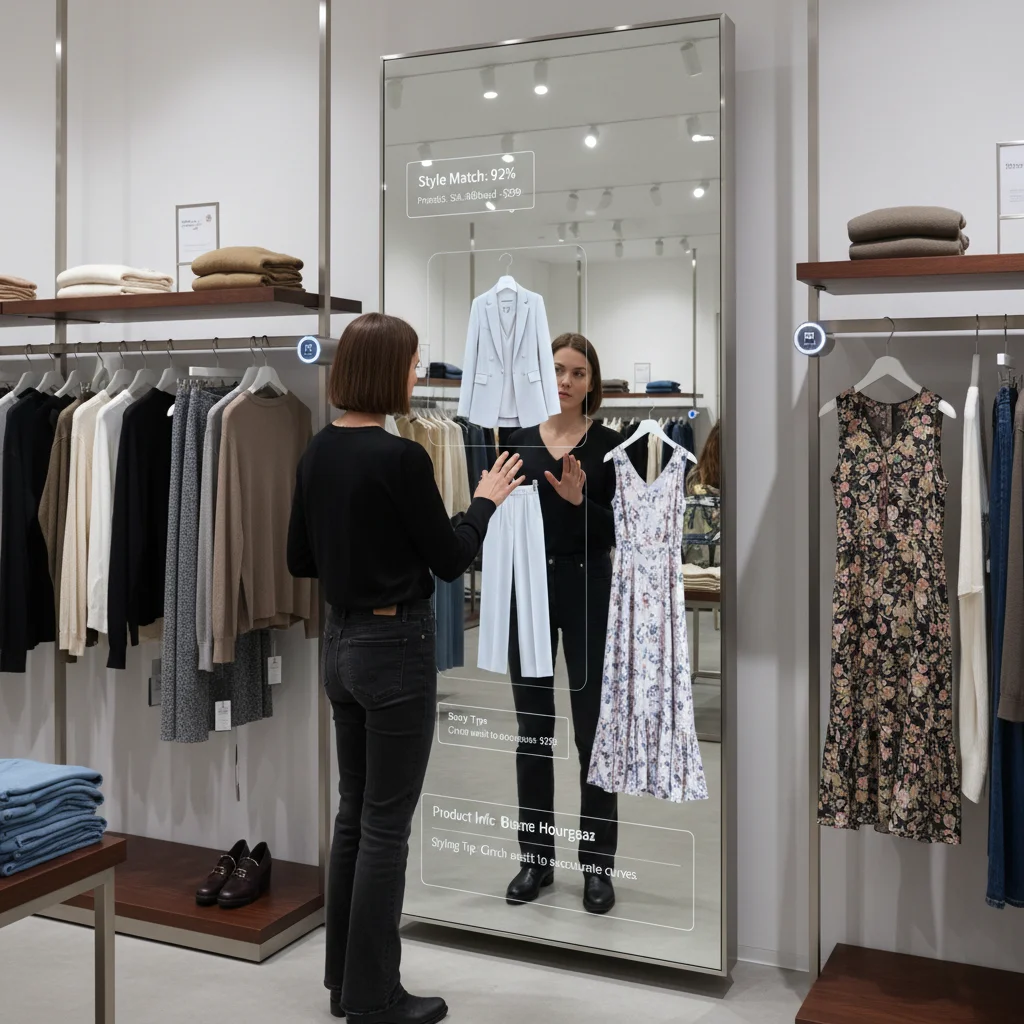
The integration of these AI personal shopping assistants will also transform in-store experiences. Imagine walking into a store and your AI assistant, through an AR overlay on your smartphone or smart glasses, highlights products relevant to your immediate needs, provides real-time information, and even navigates you to specific aisles. It could offer styling advice in a clothing store, suggest complementary items, or even alert you to exclusive in-store promotions tailored just for you. This blending of the digital and physical realms, mediated by AI, will create a truly immersive and efficient shopping journey.
3. Dynamic Pricing and Personalized Promotions
The third significant shift in Hyper-Personalized AI Retail by 2026 will be the widespread implementation of dynamic pricing and hyper-personalized promotions. Gone are the days of static prices and generic sales flyers. AI will enable retailers to offer individual consumers unique pricing and promotional offers based on a complex array of factors, including their purchasing history, browsing behavior, loyalty status, location, time of day, current demand, and even competitor pricing in real-time. This isn’t about price gouging; it’s about optimizing value for both the consumer and the retailer.
For consumers, this could manifest as personalized discounts on items they frequently purchase, special offers on complementary products based on recent acquisitions, or even tiered pricing structures that reward brand loyalty with better deals. Imagine receiving a notification for a 15% discount on your favorite coffee beans just as you’re running low, or an exclusive offer on a new smartphone model because your current device’s contract is nearing its end. These promotions will feel highly relevant and timely, increasing the likelihood of conversion and fostering a sense of being valued by the brand. The challenge will be for consumers to understand and trust these dynamic pricing models, ensuring transparency and fairness.
Retailers, armed with AI-driven dynamic pricing, can optimize inventory, reduce waste, and maximize revenue. They can identify price elasticity for individual customers and adjust offers accordingly, ensuring they don’t leave money on the table while still providing competitive value. This granular level of pricing optimization is a game-changer, moving beyond broad segmentation to truly individual offers. For example, a customer who rarely buys a specific premium product might receive a deep discount to entice a first-time purchase, while a loyal customer who consistently buys it might receive a smaller, but still appreciated, loyalty discount. The sophistication of these AI models allows for complex strategies that were previously impossible to implement at scale.
However, this shift raises important ethical considerations. Consumers will need to understand how their data is being used to determine pricing, and retailers will need to ensure that dynamic pricing does not lead to discriminatory practices or erode trust. Transparency and clear communication about personalized offers will be paramount. The success of Hyper-Personalized AI Retail in this domain will depend on building consumer confidence that these dynamic offers are genuinely beneficial and not simply a mechanism for extracting maximum value from each individual. Regulations around data privacy and algorithmic fairness will likely evolve rapidly to keep pace with these technological advancements, shaping how dynamic pricing is implemented in practice.
4. Evolving Privacy Concerns and Data Governance
As Hyper-Personalized AI Retail becomes ubiquitous, the collection and utilization of vast amounts of personal data will inevitably bring evolving privacy concerns and necessitate robust data governance frameworks. To deliver truly hyper-personalized experiences, AI systems require access to an unprecedented breadth and depth of consumer information. This includes not only explicit data (what you tell a brand) but also implicit data (what your behavior reveals), and inferred data (what AI deduces about you). While consumers appreciate convenience and tailored experiences, there’s a growing awareness and concern about how their personal data is being collected, stored, analyzed, and shared.
By 2026, US consumers will likely be more educated and proactive about their digital privacy. They will demand greater transparency from retailers regarding data practices, clearer consent mechanisms, and more control over their personal information. This could lead to a shift where consumers actively manage their data permissions, opting in or out of specific data-sharing agreements based on the perceived value exchange. Retailers who prioritize privacy-by-design principles, offering clear data policies and empowering consumers with robust privacy controls, will build greater trust and loyalty. Conversely, brands that are perceived as opaque or negligent with consumer data risk significant backlash and reputational damage.
The regulatory landscape will also play a crucial role. Existing privacy laws (like CCPA and emerging state-level regulations) will likely be strengthened and expanded to address the specific challenges posed by Hyper-Personalized AI Retail. New regulations might focus on algorithmic transparency, requiring companies to explain how AI decisions (like personalized pricing or recommendations) are made. There could also be increased scrutiny on data anonymization techniques and the ethical use of AI to prevent bias and discrimination. Consumers will expect retailers to not only comply with these regulations but to go beyond, demonstrating a genuine commitment to ethical data stewardship.
Furthermore, the concept of data ownership might evolve. Consumers may gain more explicit rights to their data, potentially even being compensated for its use in certain contexts. This shift would fundamentally alter the relationship between consumers and retailers, turning data into a more explicitly valued asset. Retailers will need to invest heavily in cybersecurity measures to protect this sensitive data from breaches, as the consequences of such incidents will become even more severe in a hyper-personalized world. The future of Hyper-Personalized AI Retail hinges on a delicate balance between leveraging data for enhanced experiences and safeguarding consumer privacy, requiring continuous adaptation and innovation in data governance.

5. Redefinition of Brand Loyalty and Ethical AI Consumption
The fifth and perhaps most transformative shift for US consumers in the age of Hyper-Personalized AI Retail will be the redefinition of brand loyalty and the emergence of ethical AI consumption. Traditional brand loyalty was often built on consistent quality, competitive pricing, and effective marketing. While these factors will remain important, the AI era will add a new dimension: trust in a brand’s AI-driven experiences and its ethical use of technology.
Consumers will develop loyalty to brands that consistently deliver superior, seamless, and genuinely helpful personalized experiences, without feeling intrusive or exploitative. This means loyalty will be earned not just through products, but through the intelligence and integrity of the AI systems that power the customer journey. Brands that use AI to simplify life, offer real value, and demonstrate respect for consumer privacy will thrive. Conversely, brands that employ AI in ways that are perceived as manipulative, biased, or overly intrusive will quickly lose consumer trust, regardless of their product quality or pricing.
The concept of ‘ethical AI consumption’ will gain traction. Consumers will increasingly consider a brand’s AI ethics as part of their purchasing decision. This includes questions like: Is the AI transparent about how it uses my data? Does it avoid algorithmic bias? Is it used to genuinely improve my experience or just to extract more money? This emerging consumer consciousness will push retailers to adopt and communicate clear ethical guidelines for their AI deployments. Brands that can articulate a compelling story around their commitment to ethical AI will resonate strongly with a growing segment of mindful consumers.
Furthermore, loyalty might shift from specific products to AI-powered platforms or ecosystems. For example, a consumer might become loyal to an AI-driven personal wellness platform that integrates seamlessly with various health products, grocery services, and fitness apps, rather than to individual brands within those categories. This creates both opportunities and challenges for traditional brands, forcing them to consider how their offerings can integrate into these broader AI-driven ecosystems to maintain relevance.
In essence, Hyper-Personalized AI Retail will move beyond transactional relationships to foster symbiotic ones, where consumers feel their individual needs are truly understood and respected. The brands that master this delicate balance, leveraging AI to create deeply personal, ethical, and valuable experiences, will be the ones that capture the hearts and wallets of US consumers by 2026 and beyond. This calls for a fundamental rethinking of marketing, customer service, and product development, placing ethical AI at the very core of brand strategy.
Conclusion: Navigating the Future of Hyper-Personalized AI Retail
The trajectory of retail is unmistakably towards a future dominated by Hyper-Personalized AI Retail. By 2026, US consumers will be immersed in a shopping environment profoundly shaped by anticipatory experiences, sophisticated AI personal shopping assistants, dynamic pricing, and a heightened awareness of data privacy. These five shifts represent not just technological advancements, but a fundamental re-evaluation of the consumer-brand relationship.
For consumers, this future promises unparalleled convenience, highly relevant product discovery, and greater value tailored to individual needs. The days of sifting through irrelevant options or receiving generic advertisements will increasingly become a relic of the past. Instead, shopping will feel more intuitive, efficient, and, in many ways, more enjoyable. However, this ease comes with the responsibility of understanding the implications for personal data and actively engaging with privacy settings and ethical considerations. Empowered consumers will be those who are well-informed about how AI is being used and who choose to engage with brands that align with their values.
For retailers, the race is on to adapt. Success in the era of Hyper-Personalized AI Retail will depend on a strategic blend of technological innovation, robust data governance, and a deep commitment to ethical practices. Investing in advanced AI infrastructure, developing transparent data policies, and training teams to manage and leverage AI effectively will be crucial. Brands that embrace these changes, focusing on building trust through valuable and respectful personalization, will forge stronger, more enduring relationships with their customers. Those that fail to adapt risk being left behind in a rapidly evolving marketplace where personalization is no longer a luxury, but an expectation.
The journey towards 2026 and beyond will be one of continuous learning and adaptation. As AI technology matures, so too will consumer expectations and regulatory frameworks. The ultimate goal of Hyper-Personalized AI Retail is to create a retail ecosystem that is more responsive, efficient, and ultimately, more human-centric, even as it is driven by machines. The brands and consumers who navigate these shifts wisely will be the ones to define the next chapter of commerce.