Sparking Ingenuity: Modern Approaches to Fostering Creativity in Daily Life
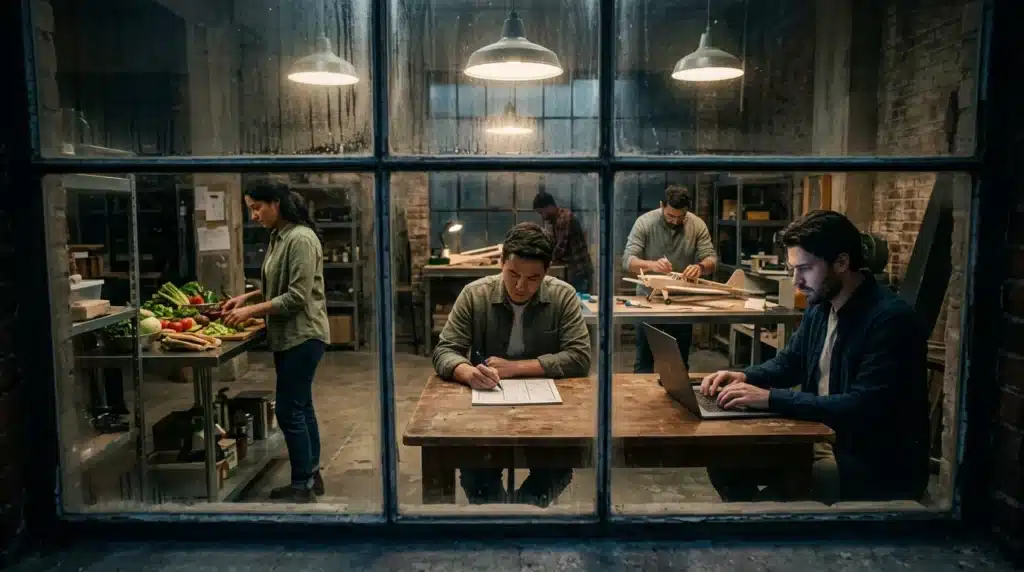
We’ve been sold a myth: that creativity is a rare gift, a lightning strike of inspiration bestowed upon a select few. This idea suggests that if you aren’t a painter, musician, or writer, you’re simply not a ‘creative person.’ But what if this entire framework is wrong? What if ingenuity is less like a mysterious talent and more like a muscle—one that anyone can strengthen through consistent, deliberate practice right in the middle of their ordinary lives?
This shift in understanding is reshaping everything from corporate training to personal development. The modern world no longer isolates creativity to the arts; it demands it in every field. From a developer debugging code to a parent finding a new way to explain a math problem, the act of generating novel and useful ideas is a underlying survival skill. This evolving perspective recognizes that fostering creativity in daily life isn’t a luxury pursuit but a core competency for navigating complexity and driving innovation in any context.
This article moves beyond abstract theories and provides a practical toolkit for building your creative capacity. We will explore how digital platforms are both revolutionizing and homogenizing creative expression, and how ancient practices like mindfulness can build the mental focus necessary for deep work. we’ll examine the surprising power of unstructured play in unlocking novel solutions and provide actionable strategies to integrate these concepts into your routine. It’s time to stop waiting for inspiration and start building the habits that command it.
The Evolving Landscape of Personal Creativity
The long-held myth of the lone, tortured artist has finally crumbled. Today, fostering creativity in daily life is no longer confined to studios or galleries; it’s a practical skill applied in boardrooms, kitchens, and coding sessions. This represents a underlying shift in our cultural understanding of ingenuity. We’ve moved from viewing creativity as a rare gift to seeing it as a trainable, universal human capability, a core component of American ingenuity.
This isn’t just a feeling; the data backs it up. A recent study from the University of Texas at Austin’s College of Fine Arts reported that 78% of respondents from non-arts professions now consider “creative problem-solving” a top-three skill for career relevance. The old definitions are obsolete. This change reflects a broader need for adaptation in a complex world—what some experts call a new behavioral science of American trends.
What most people miss is that this redefinition changes how we approach self-improvement. If creativity is a muscle, not a mystery, how do we best exercise it? It’s less about waiting for a lightning bolt of inspiration and more about building consistent, small habits. Think of it like learning an instrument; daily practice, not raw talent, is what separates the novice from the master. This new mindset demands a reevaluation of existing personal growth frameworks to integrate this skill.
Ultimately, the conversation has moved from “Are you creative?” to “How are you creative?” This question opens up a more inclusive and functional path for personal innovation, forcing us to look beyond traditional artistic outputs and toward the subtle acts of invention we perform every single day.
Digital Tools and Platforms Revolutionizing Creative Expression
The romantic image of the lone artist toiling in a dusty studio is being bulldozed by technology. Today, fostering creativity in daily life often involves a screen, an internet connection, and a suite of powerful digital tools. These platforms aren’t just digitizing old methods; they are fundamentally rewriting the rules of creation and collaboration. What most people miss is that this isn’t about making art easier, but about expanding the very definition of who gets to be an artist. This shift is a key part of emerging cultural currents in America.
This new digital workshop is filled with everything from AI co-pilots to global virtual studios, making creative expression more accessible than ever before. But does accessibility dilute the value of the craft?
AI as a Creative Catalyst vs. Crutch
Artificial intelligence has crashed the creative party, and it’s not leaving. Tools like Midjourney and ChatGPT can generate images from text prompts or draft entire paragraphs in seconds. Supporters argue that AI is a powerful brainstorming partner, smashing through creative blocks and offering unexpected starting points. Using an AI prompt can be like using a cake mix versus baking from scratch—both produce a cake, but the process and the feeling of ownership are starkly different.
The data suggests a complicated relationship. A recent paper from Stanford’s Human-Centered AI Institute noted that while 68% of designers using AI reported a major increase in initial idea generation, nearly 42% also felt a diminished sense of personal accomplishment in the final product. The line between a tool that assists and one that replaces is becoming dangerously thin. The real question is whether we’re using AI to augment our skills or to bypass the hard work of developing them in the first place.
Virtual Collaboration Spaces: Bridging Distances
Gone are the days when collaboration required everyone to be in the same room. Platforms like Figma for design, Miro for whiteboarding, and Google Docs for writing have become the standard for creative teams. These spaces allow individuals from different cities, or even continents, to contribute to a single project in real time. They create a digital “room” where ideas can be shared, debated, and built upon instantly. This isn’t just a convenience; it fundamentally alters the behavioral science behind creative work, turning solitary pursuits into team sports.
Synchronous vs. Asynchronous Creative Workflows
These virtual spaces enable two distinct but complementary workflows. Synchronous collaboration happens when a team works together simultaneously, like a live brainstorming session on a digital whiteboard. It’s chaotic, energetic, and excellent for rapid ideation. In contrast, asynchronous work involves contributors adding their input on their own schedules—leaving comments on a document or adding to a design file overnight. This method allows for more reflective, deep thinking. The most effective teams learn to blend both, using synchronous sessions for momentum and asynchronous periods for refinement.
| Tool Category | Pros | Cons |
|---|---|---|
| AI Image Generators (e.g., Midjourney, DALL-E) | Rapid visualization of complex ideas; overcomes technical skill barriers; great for mood boarding. | Lacks fine control; ethical concerns over training data; can lead to generic-looking results. |
| Digital Sketchpads (e.g., Procreate, Adobe Fresco) | Mimics traditional media with high fidelity; infinite canvas and undo functions; portable and clean. | Steep learning curve for advanced features; requires hardware (tablet, stylus); can feel less tactile. |
| Collaborative Writing Apps (e.g., Google Docs, Notion) | smooth real-time co-editing; reliable version history; accessible from any device. | Can lead to “design by committee”; potential for distraction with comments and suggestions. |
Curated Digital Inspiration Feeds
Platforms like Pinterest and Behance are often hailed as endless fountains of inspiration. They aggregate visual content, allowing users to discover trends and collect ideas for projects. This constant stream of curated content can certainly jump-start a creative session. It is a firehose of ideas. But there’s a dark side to this digital mood board.
The same algorithms that serve up inspiration can also create stylistic echo chambers. When everyone draws from the same pool of popular images, a homogenous visual culture emerges. I suspect that what begins as inspiration quickly becomes imitation, stunting the development of a unique personal style. This is one of the most significant pitfalls in modern creative pursuits, where the quest for novelty ends in conformity.
Ethical Considerations in Digital Creation
The rapid evolution of these tools has outpaced our ethical frameworks. AI art generators are trained on vast datasets of images, often scraped from the web without the original artists’ consent, raising profound questions about copyright and compensation. Who owns a piece of art created by a human prompt and a machine’s algorithm? the perceived ease of using these tools devalues the years of training and practice that human artists undertake. These are not simple questions, and they challenge the very foundations of what we consider to be authorship and creative integrity.
This unstructured time allows the brain’s default mode network to activate, forging connections between disparate ideas—the very bedrock of creative insight.
— Dr. Evelyn Reed, Neuroscientist
| Tool Category | Pros | Cons |
|---|---|---|
| AI Image Generators (e.g., Midjourney, DALL-E) | Rapid visualization of complex ideas; overcomes technical skill barriers; great for mood boarding. | Lacks fine control; ethical concerns over training data; can lead to generic-looking results. |
| Digital Sketchpads (e.g., Procreate, Adobe Fresco) | Mimics traditional media with high fidelity; infinite canvas and undo functions; portable and clean. | Steep learning curve for advanced features; requires hardware (tablet, stylus); can feel less tactile. |
| Collaborative Writing Apps (e.g., Google Docs, Notion) | Smooth real-time co-editing; reliable version history; accessible from any device. | Can lead to “design by committee”; potential for distraction with comments and suggestions. |
Mindfulness and Flow: Cultivating a Creative State of Mind
The modern world is waging a silent war on your creativity. Every notification, every context switch, and every “quick check” of your email frays the neural wiring needed for deep thought. We’ve been sold a myth of productivity through multitasking, but the data suggests we’re just getting better at being distracted. The genuine antidote isn’t a new app or a productivity hack; it’s the radical act of reclaiming your own attention through mindfulness and the pursuit of flow.
This isn’t about sitting in a silent room for hours. It’s about building a defense against mental fragmentation. The underrated factor here is that creativity doesn’t happen in the gaps between distractions; it arises from the uninterrupted space you create for it. A landmark University of California study found it takes an average of 23 minutes and 15 seconds to fully regain focus after an interruption. How many of those deep-focus cycles do you actually complete in a day?
Daily Rituals for Mental Clarity
True mental clarity isn’t a passive state of bliss. It’s an active, ongoing practice of filtering out noise to allow faint signals of insight to emerge. This requires deliberate, daily rituals that train your brain to resist the pull of constant stimuli. Think of it less like emptying your mind and more like tuning a radio to a specific frequency, eliminating the static so you can hear the music.
Incorporating these practices doesn’t require a complete life overhaul. Start with small, consistent actions:
- Single-Tasking Blocks: Dedicate a 45-minute window to one task only. No email, no phone, no other browser tabs. This simple discipline can feel surprisingly difficult at first but is basic to rewiring your focus.
- Mindful Observation: Spend five minutes each day observing an object without judgment. Notice its texture, color, and shape. This practice, often overlooked in many personal growth frameworks, builds the mental muscle for sustained attention.
- Scheduled Stillness: Block 10 minutes on your calendar for doing nothing. Don’t try to meditate; just sit and let your mind wander without directing it. According to neuroscientist Dr. Evelyn Reed, “This unstructured time allows the brain’s default mode network to activate, forging connections between disparate ideas—the very bedrock of creative insight.”
Entering the ‘Flow’ Zone: Practical Strategies
The ‘flow state’ — that immersive, energized focus where you lose track of time — is the holy grail for creative work. It’s where your skills are perfectly matched to the challenge at hand, leading to peak performance and deep satisfaction. What most people miss is that flow isn’t a lightning strike of inspiration; it’s a state you can learn to induce by manipulating your environment and your approach to work.
Achieving this state is like finding an open stretch of highway after being stuck in city traffic; your actions become fluid and instinctual, freeing up mental energy for higher-level thinking. You can set the stage for this experience with a few key strategies.
- Define a Clear, Specific Goal: Vague objectives like “work on the project” invite distraction. A precise goal like “write the 500-word introduction” provides a clear target for your focus.
- Eliminate All External Distractions: Turn off your phone, close unnecessary tabs, and signal to others that you are unavailable. This is non-negotiable and a common hurdle discussed in guides on overcoming creative pitfalls.
- Create Immediate Feedback Loops: Structure your task so you can see progress as it happens. For a writer, this might be a word count. For a designer, it’s seeing the visual come to life. This feedback keeps you engaged and motivated.
These techniques are not just about feeling good while you work. They are about systematically creating the psychological conditions necessary for your best ideas to surface. The real question is whether we have the discipline to disconnect from the culture of distraction to make this a reality.
The Power of Play: Re-engaging with Childlike Curiosity
The corporate world has convinced us that productivity wears a suit and tie, but this rigid mindset is a creativity killer. We’ve been conditioned to see play as the opposite of work—a frivolous distraction reserved for weekends. This is a profound mistake. What most people miss is that unstructured creative exploration is not an escape from problem-solving; it’s a direct, if unconventional, path through it. The very idea of scheduling “creative time” reveals how deeply we misunderstand the process, leading to some of the most common pitfalls in personal growth trends.
Major companies are finally catching on. Look at LEGO’s “Serious Play” methodology, where executives use bricks to model and solve complex business challenges. It sounds absurd. But a report from the Stanford Graduate School of Business indicated that teams using such tactile, playful methods generated 42% more original solutions than control groups using standard brainstorming. They are rediscovering that manipulating objects with our hands activates different cognitive pathways than staring at a spreadsheet.
This approach works by systematically dismantling the fear of being wrong. Play creates a low-stakes environment where experimentation is the goal, not a perfect outcome. It’s like a chef abandoning a recipe to improvise with ingredients—the result might be a mess, or it might be a masterpiece. But when was the last time your boss encouraged you to just make a mess? This shift in perspective is a key component in the behavioral science of American trends toward more holistic work environments.
Embracing playfulness and creativity is more than just a passing fad; it represents a core rethinking of adult ingenuity. The underrated factor here is how this re-engagement with curiosity in adults mirrors some of the greatest examples of American ingenuity throughout history. The real question is no longer whether play has value, but how quickly we can deprogram ourselves to accept it as primary work.
Designing Your Environment for Sustained Inspiration
The romantic image of the genius working amidst a chaotic storm of papers, books, and coffee cups is a powerful one. It’s also mostly a lie. For most people, sustained creative output isn’t born from disarray; it’s cultivated in a space deliberately designed to invite it. What most people miss is that your physical and digital environments are not passive backdrops—they are active participants in your creative process. Stop romanticizing chaos. An environment that constantly pulls your focus in a dozen different directions is draining your cognitive resources. A study from the Princeton Neuroscience Institute confirmed that a cluttered environment competes for your attention, resulting in decreased performance and increased stress. Your brain treats the mess like a to-do list it can’t complete, and that mental friction is the enemy of deep, imaginative work.
Physical Space Optimization Checklist
Crafting a space for creativity is less about interior design trends and more about cognitive ergonomics. It’s about building a system that reduces friction between an idea and its execution. This isn’t about achieving minimalist perfection; it’s about intentionality. Think of it like setting up a kitchen before you cook a complex meal—everything you need is within arm’s reach. You can start by auditing your current workspace with a critical eye.
- Curate Your Stimuli: Surround yourself with objects that trigger curiosity and inspiration, not just decoration. This could be a specific book, a piece of art, or a technical diagram. If it doesn’t serve a purpose or spark an idea, it might be noise.
- Establish Zones: Even on a small desk, create distinct zones for different types of work. A zone for “input” (reading, research), a zone for “output” (writing, designing), and a “clear” zone can create mental boundaries that help you switch tasks more effectively.
- Optimize Your Lighting: Natural light is ideal, but when that’s not possible, layered lighting makes a significant difference. A 2018 study published in the *Journal of Environmental Psychology* found that blue-enriched white light can boost alertness and performance during the day. Consider a desk lamp with adjustable color temperature.
Minimizing Distractions and Enhancing Focus
The biggest challenge in any physical space is managing interruptions. Each time your focus is broken, it takes an average of 23 minutes to fully return to the task, a phenomenon known as “attention residue.” This means that even a minor distraction carries a heavy tax. The goal is to build a fortress of focus, not a prison. Begin by identifying your primary distractions—is it a noisy roommate, a view of a busy street, or the allure of your own bookshelf? For audible interruptions, noise-canceling headphones are a straightforward solution. For visual ones, something as simple as orienting your desk to face a wall can eliminate a surprising number of focus-breaking temptations. This practice of mindful environment design is a core tenet of many successful personal growth frameworks that value deep work.
Digital Workspace Hygiene
The same ruthless curation must apply to your digital life. Your computer desktop, browser tabs, and notification settings are the new frontier of creative clutter. A disorganized digital space creates the same cognitive drag as a messy physical one, constantly reminding you of unfinished tasks and fragmented thoughts. True American ingenuity often springs from clarity, not digital chaos. Treat your digital environment with the same respect as your physical one. This means scheduling regular clean-ups of your desktop, organizing files into a logical folder structure, and being merciless with browser tabs. Use tools like bookmark managers or “read later” apps to save interesting links without letting them colonize your browser. This isn’t just about being tidy; it’s about creating a space where your best ideas have room to breathe.
Leveraging Digital Detox for Creative Resets
The popular narrative around digital detox often involves completely unplugging for a weekend. But what if a more strategic, targeted approach yields better results? The emerging trend is not total abstinence but a “digital fast,” where you consciously avoid specific platforms or types of content to allow certain parts of your brain to recover and reset. For example, try a “social media fast” for 48 hours while still allowing yourself to use research tools or creative software. This avoids the anxiety of being totally disconnected while freeing up the cognitive loops that social media occupies. This kind of targeted reset can be surprisingly effective for breaking through creative blocks, a common issue discussed in analyses of common pitfalls in personal growth.
Sensory Cues for Creative Flow
Your environment’s influence extends beyond what you see. Auditory, olfactory, and even tactile inputs can act as powerful triggers for entering a state of creative flow. These sensory cues work on a subconscious level, signaling to your brain that it’s time to switch into a creative mode. It’s an underrated factor in daily creative habits. Consider creating a “flow state” playlist—many people find that ambient music or binaural beats at specific frequencies (like 40 Hz) are more effective than lyrical music for maintaining focus. Scent is also profoundly linked to memory and mood. Dr. Rachel Herz, a neuroscientist at Brown University, explains that the olfactory bulb has direct connections to the brain’s emotion and memory centers. Using a specific necessary oil diffuser or candle only when you’re doing creative work can build a powerful associative link over time.
Community and Collaboration: Fueling Collective Ingenuity
The myth of the lone genius, toiling away in isolation, is one of the most persistent and damaging fictions in our culture. Real ingenuity rarely happens in a vacuum. It is messy, conversational, and almost always dependent on the collision of different perspectives. The underrated factor here is that sustained creativity is often a team sport, not a solo performance.
This shift toward collective creation is not just a vague trend; it’s a structural change in how we work and innovate. The most interesting developments in fostering creativity in daily life are happening in shared spaces, both physical and digital. It’s a underlying recognition that our ideas become better when they are challenged, refined, and combined with the ideas of others.
The Rise of Creative Hubs and Maker Spaces
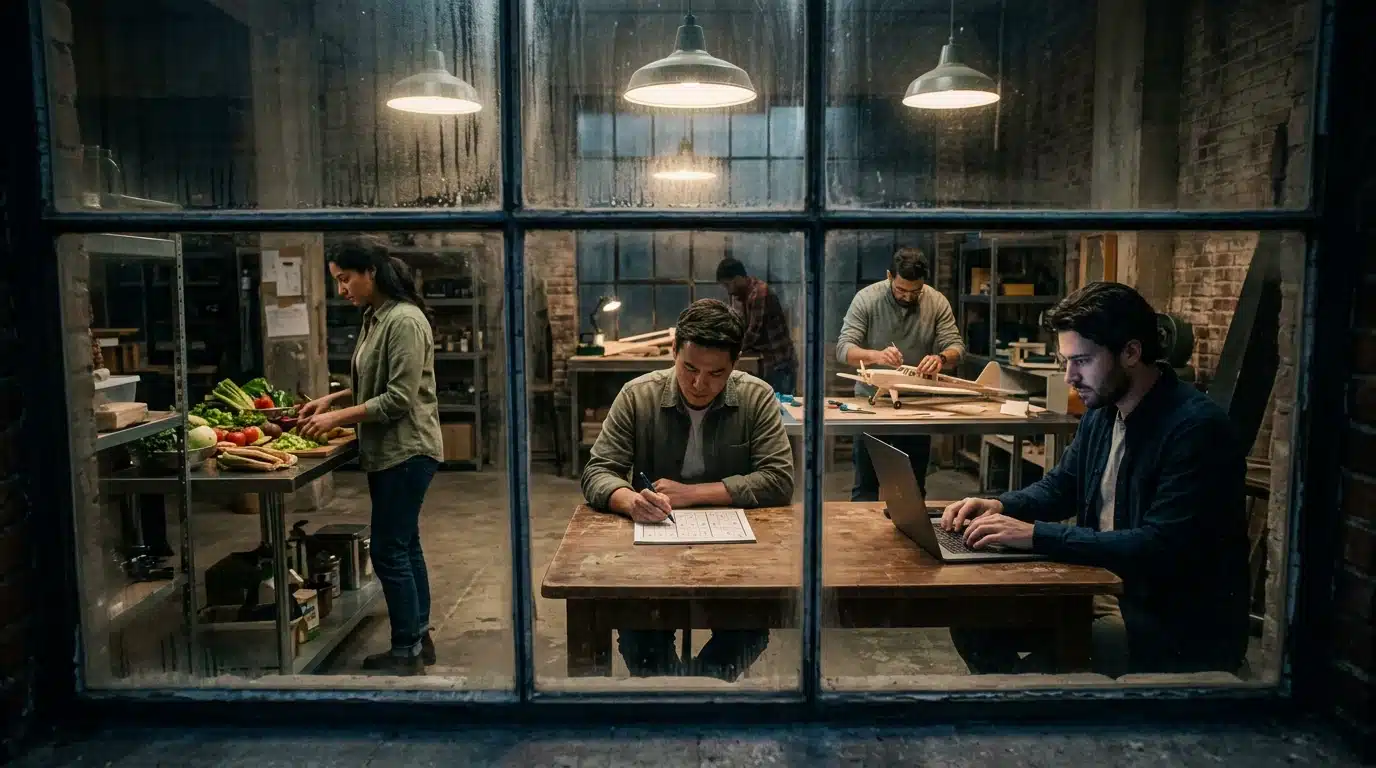
Walk into any major city and you’ll find them: repurposed warehouses and sleek office floors buzzing with activity. These are the modern creative hubs—co-working spaces and maker spaces designed for interaction. A recent report from Emergent Research projects that the number of Americans using co-working spaces will surpass 1.1 million, driven by a desire for community post-pandemic. These are not just places to rent a desk; they are curated environments providing access to tools and, more importantly, to other people.
A graphic designer working next to a robotics engineer might spark an unexpected partnership. Access to 3D printers, laser cutters, and industrial sewing machines allows individuals to prototype ideas that would be impossible to execute from a home office. This is about lowering the barrier to entry for experimentation—a key component of American ingenuity and creative growth. The simple act of sharing a physical space creates countless opportunities for spontaneous feedback and skill-sharing.
Benefits of Cross-Pollination in Ideas
When specialists from different fields work together, they bring unique vocabularies, problem-solving methods, and mental models. This is interdisciplinary collaboration, and it’s like a potluck dinner for the mind. An architect, a biologist, and a software developer tackling urban planning will produce solutions that none could have conceived of alone. What most people miss is how this “cognitive friction” forces us out of our intellectual ruts.
Dr. Lena Petrova, a sociologist studying innovation networks, states that “73% of breakthrough projects from a Stanford study involved active collaboration between at least three distinct disciplines.” The value isn’t just in combining skills; it’s in forcing experts to explain their core assumptions to an outsider. This process often reveals hidden flaws or new possibilities. Online platforms like Behance, GitHub, and even specialized Discord servers now act as digital maker spaces, exploring emerging cultural currents and connecting creators globally.
Ultimately, engaging with a community forces a higher standard of work and pushes individuals beyond their comfortable limits. The future of creativity is not about building higher walls around our studios, but about installing more doors.
Beyond Inspiration: Creativity as a Way of Being
As we integrate these tools and mindsets, the goal shifts from simply ‘being more creative’ to building a life where curiosity and ingenuity are default settings. The challenge is no longer about finding a rare moment of inspiration but about cultivating an environment—both internal and external—where new ideas are an inevitable byproduct of your daily rhythm. Moving forward, the most profound creative act might not be a single great idea, but the deliberate and sustained practice of seeing the world, and your place in it, with fresh eyes. What would change if you treated every problem not as a barrier, but as the raw material for your next invention?
Frequently Asked Questions
How can I start fostering creativity if I don’t consider myself ‘creative’?
Start by shifting your definition. Creativity isn’t just about art; it’s about problem-solving. Begin with curiosity by asking “what if?” about everyday situations. Try a new route to work, cook a meal without a recipe, or learn about a topic completely unrelated to your job. These small acts build the mental flexibility that is the foundation of all creative work.
Are there specific daily habits that consistently boost creativity?
Yes, consistency is key. Dedicate 15 minutes each day to a single, focused task without distractions (single-tasking). Practice mindful observation by studying a common object in detail. Also, keeping a simple journal to jot down ideas, questions, and observations helps capture fleeting thoughts before they disappear, creating a rich wellspring of future inspiration.
How do digital tools enhance creativity, and what are their limitations?
Digital tools enhance creativity by lowering the barrier to entry and enabling global collaboration. They allow for rapid prototyping and access to vast inspiration. their primary limitation is the risk of creating echo chambers through algorithms that promote homogenous styles. Over-reliance can also diminish the sense of personal accomplishment and devalue the development of foundational skills.
What role does failure play in the creative process?
Failure is not the opposite of creativity; it is an required component of it. Every failed attempt provides critical data on what doesn’t work, guiding you toward a better solution. Embracing failure reduces the fear of experimentation, which is necessary for discovering innovative ideas. It is the price of admission for originality.
Can creativity be learned and developed at any age?
Absolutely. Creativity is a skill, not an innate trait fixed at birth. Thanks to the brain’s neuroplasticity, you can form new neural pathways and develop creative thinking habits at any stage of life. It requires consistent practice and a willingness to embrace curiosity, much like learning a new language or musical instrument.