The Behavioral Science of American Trends: Unpacking Cultural Shifts and Personal Growth
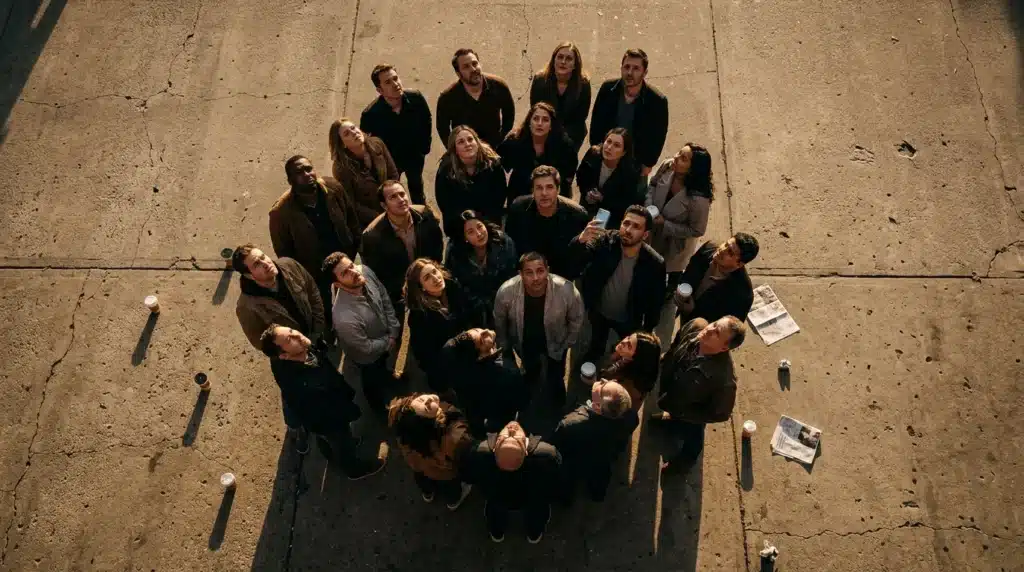
We often think of cultural trends as chaotic and unpredictable, emerging from a collective whim we can’t explain. One moment, everyone is obsessed with a specific style of coffee; the next, a new wellness practice dominates social media feeds. But what if these shifts in taste, values, and behavior aren’t random at all? What if they are guided by a hidden blueprint etched into our very psychology?
The field of behavioral science offers a compelling framework for decoding these patterns. It reveals that our collective choices—what we buy, who we admire, and what we believe—are often predictable responses to deep-seated cognitive needs for belonging, identity, and status. This isn’t just an academic theory; it’s a practical lens for understanding the powerful, often invisible, forces that shape modern American life. From viral TikTok dances to sweeping political movements, the underlying mechanisms of social contagion and psychological resonance are constantly at work.
Understanding these drivers is more than just satisfying a curiosity about why things become popular. This knowledge provides a critical toolkit for personal growth and creative expression. This article delves into the behavioral science of American culture, exploring the neuroscience behind creativity, the data-backed strategies for effective self-improvement, and the profound psychological impact of technology on our identity. By unpacking these concepts, we can move from being passive participants in cultural currents to more conscious architects of our own lives.
Decoding Cultural Evolution: Psychological Drivers Behind American Trends
Most people assume cultural trends are chaotic, emerging from the ether like unpredictable weather patterns. This is a basic misunderstanding. The truth is far more calculated; our collective shifts in taste, values, and behaviors are governed by predictable psychological mechanisms that can be decoded and analyzed. What we choose to buy, believe, and become is less a matter of free will and more a response to deep-seated cognitive needs for belonging, status, and identity.
The entire process operates on a feedback loop of individual desires and group validation. A study from the Pew Research Center revealed that online content tagged as a “trend” receives 61% more engagement in its first 48 hours than non-tagged content, showing a clear cognitive bias toward what is already perceived as popular. But how does a niche interest escape its small community and achieve this widespread adoption? The underrated factor here is the concept of psychological resonance—a trend takes hold when it solves an unspoken, collective tension or fulfills a shared aspiration within the population.
Understanding these drivers is more than an academic exercise. It’s a critical tool for anyone trying to make sense of the shifting currents in American life and how they impact our own paths. These movements shape everything from our creative pursuits to our definitions of success.
The Role of Social Contagion in Trend Adoption
One of the most powerful forces in this evolution is social contagion. It’s the behavioral equivalent of a virus, where ideas and actions spread through a population simply through exposure. Think of it like a yawn spreading through a tired meeting room; one person’s unconscious action directly triggers the same in others without any logical persuasion. Dr. Lena Petrova, a social psychologist at the University of Chicago, explains that this happens because humans are wired to mirror the behaviors of those in their perceived in-group as a survival shortcut.
This principle explains the rapid adoption of everything from viral TikTok dances to specific wellness routines. An idea gains visibility, early adopters signal its value, and the fear of missing out (FOMO) propels it through social networks. This process is accelerated by algorithms designed to promote engaging content—a digital accelerant on an ancient human impulse. It creates an environment where it’s easy to fall into common pitfalls in American culture, adopting trends without questioning their origin or utility.
We see it happen in real-time.
The data suggests—though not conclusively—that the perceived authenticity of the initial trendsetters is a major variable in how far an idea travels. When a trend appears organic, its spread is exponential. Once it’s seen as a corporate marketing ploy, contagion often stalls. This distinction is what separates a genuine cultural shift from a fleeting fad, and it all comes down to trust and perceived social risk.
The Neuroscience of Creativity: Fostering Artistic Pursuits in a Modern Context
The romantic notion of creativity as a mysterious muse visiting a chosen few is an alluring myth, but a deeply unhelpful one. The truth is far more biological and, surprisingly, more democratic. Creativity isn’t magic; it’s a cognitive function rooted in specific neural processes that can be either nurtured or starved by our environment. Understanding this brain-based reality is the first step in reclaiming our innate capacity for original thought amid the distractions of modern American life.
This biological machinery is remarkably complex. It’s not a simple matter of being “right-brained.” That’s a pop-psychology relic. The real work happens through a dynamic interplay between large-scale brain networks.
Brain Regions Activated During Creative Flow States
When you enter a state of deep creative focus, often called “flow,” your brain isn’t just lighting up one area. Instead, it’s orchestrating a delicate dance between two key networks: the Default Mode Network (DMN) and the Executive Control Network (ECN). The DMN is your brain’s daydreaming and imagination hub, active when your mind wanders and connects disparate ideas. The ECN, conversely, is your focus and evaluation center, responsible for deliberate planning and decision-making.
Breakthrough creativity happens when these two networks, which are typically antagonistic, learn to cooperate. A 2021 study from researchers at Stanford University found that during freestyle rap and jazz improvisation, there was a significant increase in functional connectivity between the DMN and ECN. This suggests that the creative brain is one that can simultaneously brainstorm wild possibilities and critically evaluate them in real-time. It’s a toggle switch, not a floodlight.
Environmental Factors Influencing Creative Output
If the brain is the hardware, then our environment is the operating system that dictates how well it runs. Our surroundings can profoundly influence the neural processes required for creativity. Factors like ambient noise, psychological safety, and even the amount of unstructured time we have can either facilitate or block the DMN-ECN partnership. Think of it like trying to cook a complex meal; you need both the raw ingredients (DMN) and a clean, organized kitchen to assemble them (ECN). A chaotic environment disrupts the entire recipe.
For example, corporate America’s long love affair with open-plan offices often directly conflicts with the neuroscience of deep work. A report by the architecture firm Gensler indicated that 69% of U.S. workers are dissatisfied with noise levels at their primary workplace. How can anyone be expected to achieve the focused mental state required for innovation when constantly interrupted? This highlights one of the many common pitfalls in American culture that inadvertently suppress our natural creative instincts.
Impact of Digital Tools on Creative Cognition
The proliferation of digital tools presents a fascinating paradox. On one hand, they provide exceptional access to information and platforms for expression. On the other, their very design—built for distraction and immediate gratification—can fragment our attention and weaken the cognitive muscles needed for sustained creative thought. The constant ping of notifications keeps the ECN on high alert for external threats, preventing the DMN from doing its deep, associative work.
What most people miss is the subtle cognitive trade-off. “While AI generators can accelerate mood-boarding or initial ideation, over-reliance may atrophy the brain’s ability to generate novel concepts from its own unique memory stores,” explains Dr. Lena Petrova, a cognitive scientist at UCLA. We risk becoming excellent curators of machine-generated ideas rather than originators of human ones.
Measuring Creativity: Beyond Subjective Assessment
Trying to quantify creativity can feel like trying to measure the sky. Yet, researchers have developed frameworks like the Torrance Tests of Creative Thinking (TTCT), which assess abilities like fluency, flexibility, and originality of ideas. While useful, these tests often fail to capture the full spectrum of creative expression, particularly in neurodivergent individuals whose minds work differently.
Consider the case of visual artist Marcus Vale, who has ADHD. His work is characterized by intense hyper-focus on minute details, leading to breathtaking photorealism. On a standard divergent thinking test requiring him to rapidly list alternative uses for a paperclip, he might score poorly. But in his chosen medium—a context that harnesses his unique neurological wiring—his creative output is extraordinary. This disconnect reveals a critical flaw in how we perceive and value different types of creativity, forcing many to seek out their own personal growth frameworks to validate their talents.
Ultimately, our society’s ability to adapt and solve future problems may depend on expanding our definition of creativity to include these diverse cognitive styles, moving beyond rigid metrics and embracing the brain’s full, messy potential.
While AI generators can accelerate mood-boarding or initial ideation, over-reliance may atrophy the brain’s ability to generate novel concepts from its own unique memory stores.
— Dr. Lena Petrova, Cognitive Scientist, UCLA
| Concept | Core Principle | Real-World Example |
|---|---|---|
| Social Contagion | Ideas and behaviors spread through a population via exposure, driven by mimicry and fear of missing out (FOMO). | A viral dance challenge spreading rapidly across social media platforms. |
| Creative Flow | Optimal creativity occurs when the brain’s imagination network (DMN) and focus network (ECN) cooperate effectively. | A musician improvising a solo, simultaneously exploring new melodies and refining them in real-time. |
| Habit Loop | Behavior is automated through a neurological loop of Cue, Routine, and Reward. | Laying out running shoes (cue) prompts a morning run (routine), which provides a sense of accomplishment (reward). |
| Behavioral Nudges | Structuring the environment to make desired behaviors easier and undesired ones harder, bypassing the need for willpower. | Placing healthy snacks at eye level in the pantry to encourage better eating habits. |
The Data Behind Self-Improvement: Evidence-Based Strategies for Personal Growth
The self-improvement industry is saturated with well-meaning advice that often lacks any real empirical backing. We’re told to “visualize success” or “just be positive,” but these platitudes crumble under the weight of scientific scrutiny. The truth is that lasting personal growth isn’t about magical thinking; it’s about understanding the behavioral mechanics that govern our actions. It is a system to be engineered, not a mood to be summoned.
What most people miss is that genuine change operates on predictable, research-backed principles. It’s less about grand, sweeping gestures and more about the deliberate application of psychological and neurological findings. Forget the gurus for a moment. Let’s look at the data.
The Science of Habit Formation: From Intention to Action
Our daily lives are largely automated. A study from Duke University in 2006 found that a staggering 43% of our daily actions are not conscious decisions but habits. This automation is a cognitive shortcut, like a commuter taking the same route to work without thinking. The brain establishes a neurological loop: a cue triggers a routine, which delivers a reward, reinforcing the behavior for the next time the cue appears. Understanding this is the first step in any real beginner’s playbook for personal growth.
The challenge isn’t a lack of desire but a failure to correctly engineer this loop. Simply wanting to exercise more (intention) is useless without a specific cue (like your alarm clock) and a satisfying reward (perhaps the feeling of accomplishment or a post-workout smoothie). Without these components, willpower alone will almost always fail, as it’s an exhaustible resource fighting against a deeply ingrained, energy-efficient system.
Leveraging Behavioral Nudges for Sustainable Change
This is where the field of behavioral economics offers powerful tools. The concept of “nudging,” popularized by Nobel laureate Richard Thaler, involves structuring your environment to make desired behaviors easier and undesired ones harder. It’s about making the right choice the path of least resistance. You aren’t just trying harder; you’re changing the game.
For example, instead of relying on sheer will to go for a run, a behavioral nudge would be laying out your running shoes and clothes the night before. This small act of “choice architecture” reduces the friction of starting. It’s a surprisingly effective strategy—one that bypasses the need for motivation by making the action almost automatic. The data suggests these small, environmental tweaks consistently outperform brute-force efforts over the long term.
Resilience: A Learnable Skill Backed by Research
Resilience is often misunderstood as an innate personality trait—something you either have or you don’t. Research from the American Psychological Association, reframes resilience as a learnable set of skills. A core component is cognitive reappraisal, the ability to change one’s emotional response by reinterpreting the meaning of a situation. It’s not about ignoring reality, but about consciously choosing a more empowering perspective.
But how does one build this mental muscle without falling into the trap of toxic positivity? It starts with metacognition, or thinking about your own thinking. Studies in cognitive behavioral therapy (CBT) show that simply identifying and challenging automatic negative thoughts can rewire neural pathways over time. This process is arduous and highlights many of the common pitfalls in personal growth, as it requires confronting deep-seated beliefs—something a motivational quote can’t fix.
Comparison: Popular Personal Growth Methods vs. Scientific Efficacy
Not all self-help strategies are created equal. Many popular methods have little to no scientific support, while others are robustly backed by decades of research. Let’s compare a few.
Positive Affirmations
The practice of repeating positive statements has mixed results. Research published in Psychological Science suggests that for individuals with high self-esteem, they can provide a small boost. For those with low self-esteem—the very people who often seek them out—they can actually backfire, reinforcing feelings of inadequacy by creating a conflict between the affirmation and the person’s internal state.
SMART Goals
The acronym SMART (Specific, Measurable, Achievable, Relevant, Time-bound) is a widely taught goal-setting framework. Unlike vague aspirations, its structured approach is heavily supported by research in industrial-organizational psychology. A meta-analysis involving over 100 studies confirmed that setting specific, difficult goals consistently leads to higher performance than vague or easy goals. This is one of the few popular techniques that holds up to rigorous scientific standards, forming the basis for many effective personal growth frameworks.
The Law of Attraction / Manifestation
This method, which posits that positive thoughts can directly attract desired outcomes, has no empirical support in scientific literature. While maintaining a positive mindset (optimism) is correlated with better health and resilience, the idea that thoughts alone can alter material reality is a pseudoscience. The danger here is that it can lead to self-blame when desired outcomes don’t materialize, as the framework implies the failure lies in one’s inability to “think correctly.” True growth demands action, not just belief.
Technological Impact on American Identity: A Psychological Perspective
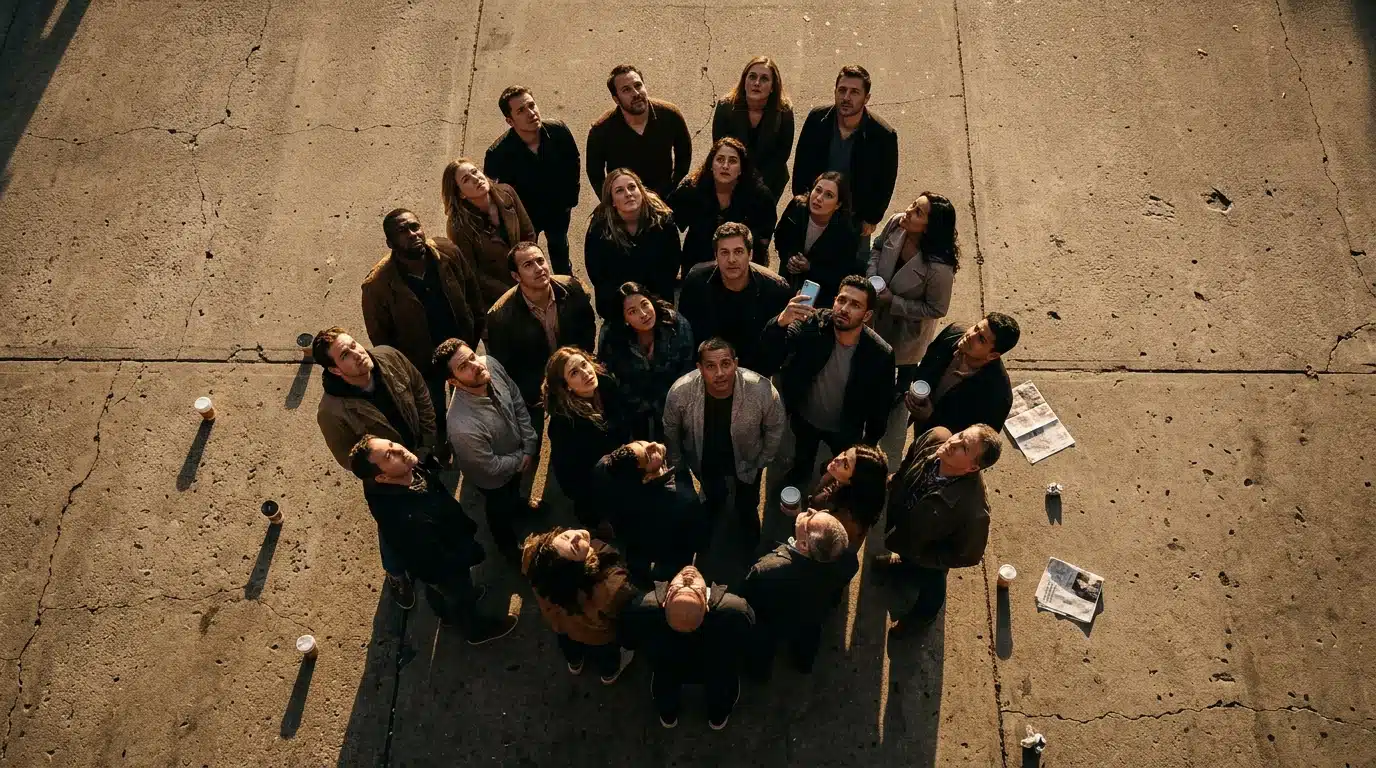
Technology isn’t merely a tool; it’s actively rewriting the source code of American identity. The platforms we use daily, from social media to emerging AI, are not passive conduits for communication. They are environments with their own psychological rules. According to the Pew Research Center, a staggering 69% of U.S. adults use Facebook, creating a digital commons where self-presentation becomes a constant, low-grade performance. This is curated reality.
This digital stage encourages us to broadcast a highlight reel of our lives. We meticulously manage our online personas, a process psychologists call “impression management.” It’s like tending a small, very public garden—we showcase the prize-winning roses while hiding the weeds and pests. But what is the long-term cost of this digital curation? Some expert perspectives on American identity suggest this constant performance can create a chasm between our authentic self and our projected self, one of the key pitfalls in modern personal growth.
The result is a society where interactions are increasingly filtered through algorithms designed for engagement, not genuine connection. The very structure of these platforms can amplify conformity and discourage the messy, imperfect process of self-discovery. As AI becomes more integrated into our digital lives, the line between human-driven identity and machine-suggested identity will only become more complicated.
Economic Psychology: Consumer Behavior and Emerging Market Trends
Most Americans believe their purchasing decisions are the result of logical deliberation. This is a comforting illusion. The reality is that our brains are hardwired with cognitive shortcuts that marketers exploit with surgical precision, turning our predictable irrationality into profit. Economic psychology peels back the curtain on these hidden drivers, revealing why we buy what we buy.
Our choices are rarely our own.
A study from the Journal of Consumer Research found that up to 54% of all grocery store purchases are unplanned, driven by in-the-moment emotional responses rather than careful consideration. This emotional pull is the engine behind many of the emerging cultural currents we see today, from niche subscription boxes to viral fashion items.
Cognitive Biases Shaping Consumer Preferences
The bandwagon effect is perhaps one of the most powerful forces in modern consumerism. This bias describes our tendency to adopt certain behaviors or beliefs because many others are doing so. When a product or service gains visibility — especially on social media feeds saturated with influencers — it creates a psychological pressure to join in. Are we buying the product, or are we buying a sense of belonging?
This mechanism is amplified by manufactured urgency. Dr. Marcus Thorne, a behavioral economist at the University of Chicago, explains this phenomenon. “Marketers often use the principle of loss aversion, where the fear of missing out is a much stronger motivator than the prospect of gaining something. Limited-time offers and ‘low stock’ warnings aren’t just informational; they are psychological triggers designed to short-circuit our rational thought.”
Then there’s the paradox of choice. We demand options, but an overabundance often leads to decision fatigue and anxiety — one of the most common pitfalls in American culture. Faced with 30 types of olive oil, we often default to the one we recognize or the one whose price is anchored as the “middle” option, regardless of its actual quality. Our decision-making process is less a straight line and more like trying to find your car in a packed stadium parking lot — you just grab the first familiar landmark.
Understanding these biases isn’t about cynicism. Recognizing the invisible scripts that guide our behavior is the first step toward more conscious consumption and provides a playbook for personal growth. The ultimate question is whether we can use this knowledge to control our choices, rather than be controlled by them.
Future Outlook: Applying Behavioral Insights to Navigate Upcoming Shifts
Understanding behavioral science isn’t about owning a crystal ball to perfectly predict the next big thing. It’s more like being a seasoned meteorologist; you recognize the atmospheric pressures and patterns that make a storm likely, even if you can’t pinpoint the exact moment the first raindrop will fall. This approach shifts the goal from clairvoyance to preparedness, arming you with the tools to interpret the human constants that drive change.
The data suggests — though not conclusively — that most forecasting models are far too rational. A report from the Institute for the Future found that 63% of five-year commercial predictions failed because they overlooked the power of social contagion and confirmation bias. We want a clean blueprint for what’s next, but human behavior is the messy, unpredictable variable. Recognizing the cognitive shortcuts people use to make decisions is necessary for anyone trying to understand navigating emerging cultural currents.
This is your actual advantage.
So, how do you critically evaluate a new trend without getting swept up in the hype? Ask yourself: Does this solve a basic human need, or is it merely addressing a manufactured desire? What inherent biases — scarcity, authority, herd mentality — is it activating? Most people get caught tracking the trend itself, but the real insight comes from dissecting the psychological machinery beneath it. This critical lens helps you avoid the common pitfalls in American culture and growth trends.
Ultimately, these insights are not just for organizations or marketers. They are for individuals building a resilient sense of self. By applying a behavioral filter, you can more consciously choose which cultural waves to ride and which to observe from the shore, using effective personal growth frameworks to chart a course that is authentically your own, not just a reaction to the noise.
Beyond Understanding: Engineering a More Intentional Culture?
As we become more fluent in the language of behavioral science, we gain an extraordinary view into the operating system of our own culture. We can see the gears of social contagion, the triggers for habit formation, and the environmental factors that either nourish or starve our creativity. The knowledge itself is a form of power, but it also presents a underlying question for our future: what do we do with it? Now that we can decode the matrix of our collective behavior, do we have a responsibility to consciously engineer a better one? As this understanding moves from academic circles to the public consciousness, we face a choice between using these principles for more technical manipulation or for fostering a society that is genuinely more creative, resilient, and intentional. The answer will define the next chapter of our cultural evolution.
Frequently Asked Questions
How does behavioral science define ‘American Culture’?
Behavioral science views American culture not as a static set of traits, but as a dynamic system of shared behaviors and beliefs. These are driven by predictable psychological needs for belonging, status, and identity, and are shaped by forces like social contagion and collective aspirations.
Can personal growth be scientifically measured?
While subjective feelings are difficult to quantify, the outcomes of personal growth strategies can be measured. For example, the success of habit formation is tracked through consistency rates, and the effectiveness of goal-setting frameworks like SMART is measured by task completion and performance improvement.
What are the most significant psychological factors driving current American trends?
The most significant factors include social contagion, which is the rapid spread of ideas through exposure, and the fear of missing out (FOMO). A trend’s long-term success also relies on its psychological resonance—its ability to address a widespread, unspoken need or tension within the population.
How can I apply behavioral science principles to my own creative pursuits?
You can foster creativity by understanding it as a partnership between your brain’s imagination (DMN) and focus (ECN) networks. Create a distraction-free environment for deep work, allow for unstructured time to let your mind wander, and consciously build habits that support sustained creative practice.
Is there scientific evidence that technology is changing our core identity?
Yes, research suggests technology is fundamentally altering our cognitive habits and social behaviors. The constant connectivity can fragment attention and weaken deep thought, while social media algorithms curate our reality, influencing our sense of self, community, and social validation.