AI Personalization 2026: Boost Engagement & Sales for Consumer Brands

The landscape of consumer engagement is undergoing a revolutionary transformation, driven by the relentless march of artificial intelligence. As we hurtle towards 2026, the brands that thrive will be those that master the art and science of AI Personalization 2026. This isn’t merely about addressing customers by their first name in an email; it’s about crafting deeply resonant, hyper-individualized experiences that anticipate needs, solve problems, and foster unwavering loyalty. For consumer brands, the opportunity to achieve a significant 15% engagement boost, alongside substantial sales growth, hinges on adopting cutting-edge AI strategies now. This comprehensive guide delves into the insider knowledge required to navigate this exciting future, offering actionable insights and a roadmap for success.
In an era of unprecedented digital noise and fierce competition, consumers are no longer satisfied with generic marketing messages. They demand relevance, value, and a sense of being truly understood. This expectation is precisely where AI personalization steps in, offering a powerful toolkit to move beyond broad segmentation to micro-segmentation and, ultimately, to one-to-one marketing at scale. The ability of AI to analyze vast datasets, identify subtle patterns, and predict future behaviors is unparalleled, providing brands with an almost clairvoyant understanding of their audience.
The stakes are incredibly high. Brands that fail to embrace AI Personalization 2026 risk being left behind, struggling to capture attention and build meaningful connections in a crowded marketplace. Conversely, early adopters stand to gain a significant competitive advantage, cultivating a loyal customer base that feels seen, heard, and valued. This isn’t just about technology; it’s about a fundamental shift in how brands interact with their customers, moving from transactional relationships to deeply personal, ongoing dialogues.
This article will explore three pivotal strategies that consumer brands must implement to harness the full potential of AI personalization by 2026. These strategies are not theoretical; they are grounded in current technological advancements and future projections, designed to deliver tangible results in enhanced customer engagement, satisfaction, and ultimately, profitability. Prepare to unlock the secrets to a future where every customer interaction is a personalized masterpiece, driving unprecedented growth for your brand.
Understanding the Core of AI Personalization in 2026
Before diving into specific strategies, it’s crucial to establish a clear understanding of what AI Personalization 2026 truly entails. It’s far more sophisticated than rule-based systems of the past. Modern AI personalization leverages machine learning (ML), natural language processing (NLP), and computer vision to process and interpret complex data from various sources. This includes browsing history, purchase patterns, social media activity, customer service interactions, demographic information, and even real-time behavioral cues.
The goal is to create a dynamic, evolving profile for each individual customer, enabling brands to deliver highly relevant content, product recommendations, offers, and communications across all touchpoints. This isn’t a static profile; it learns and adapts with every new interaction, becoming more precise and effective over time. Imagine a customer browsing your website, and based on their previous purchases, items they’ve viewed, and even the time of day they’re shopping, the site dynamically rearranges itself to highlight products most likely to appeal to them. This is the power of AI at play.
The Evolution from Segmentation to Hyper-Personalization
Historically, personalization efforts relied on broad segmentation – grouping customers based on demographics or general purchase behavior. While a step up from mass marketing, this approach often missed the nuances of individual preferences. AI Personalization 2026 moves beyond this, enabling hyper-personalization. This means treating each customer as an individual segment of one, understanding their unique journey and tailoring every interaction accordingly.
Consider the difference: traditional segmentation might target ‘women aged 25-35 interested in fashion.’ Hyper-personalization, powered by AI, would recognize ‘Sarah, 30, loves sustainable fashion brands, prefers minimalist styles, frequently buys dresses for work, and is currently browsing for a specific type of recycled fabric handbag.’ This level of detail allows for incredibly precise and effective marketing, leading to higher engagement rates and improved conversion.
Key Technologies Powering AI Personalization
Several advanced AI technologies are at the heart of effective AI Personalization 2026:
- Machine Learning (ML): Algorithms that learn from data without explicit programming. ML is crucial for identifying patterns, predicting behavior, and optimizing recommendations.
- Natural Language Processing (NLP): Allows AI to understand, interpret, and generate human language. This is vital for analyzing customer feedback, powering chatbots, and personalizing content.
- Computer Vision: Enables AI to ‘see’ and interpret images and videos. Useful for visual product recommendations, analyzing user-generated content, and even understanding customer reactions in physical retail environments (with appropriate privacy considerations).
- Reinforcement Learning: A type of ML where an AI agent learns to make decisions by trying different actions and receiving rewards or penalties. This is particularly effective for optimizing dynamic pricing, personalized offers, and real-time content adjustments.
- Predictive Analytics: Using historical data to forecast future outcomes. AI-driven predictive analytics can anticipate customer churn, identify potential high-value customers, and predict product demand with remarkable accuracy.
The integration of these technologies allows for a holistic view of the customer, transforming raw data into actionable insights that drive personalized experiences. The brands that invest in building robust AI infrastructure and data pipelines will be the ones that win the customer loyalty race by 2026.
Strategy 1: Unleashing Hyper-Personalized Product Discovery and Recommendations
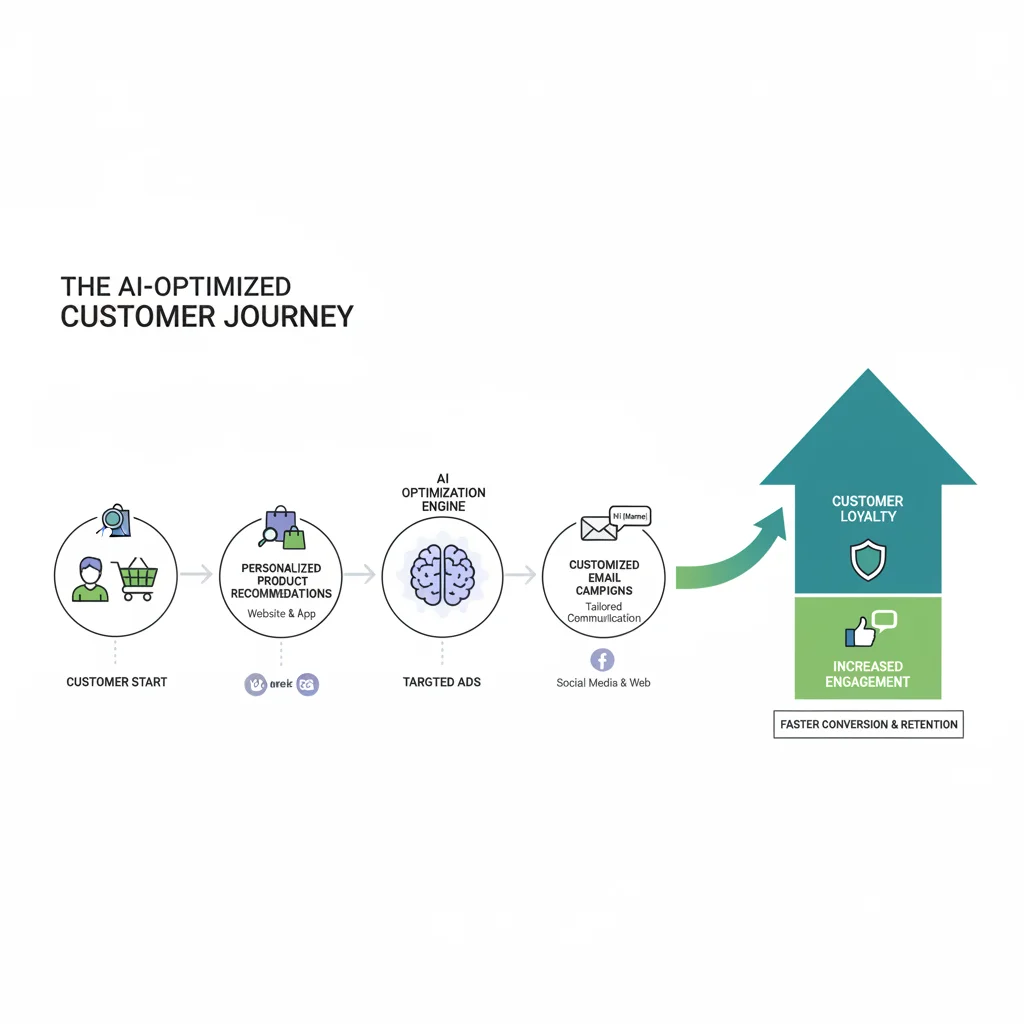
One of the most immediate and impactful applications of AI Personalization 2026 is in revolutionizing product discovery and recommendations. Gone are the days of generic ‘customers who bought this also bought…’ suggestions. AI takes this to an entirely new level, creating a truly bespoke shopping journey for every individual.
Dynamic Product Feeds and Homepage Customization
Imagine a customer visiting your e-commerce site. Instead of a static homepage, AI instantly analyzes their profile – past purchases, browsing history, items added to cart, even demographic data – and dynamically customizes the entire page. Featured products, banners, and promotional offers are all tailored to their unique preferences. This dynamic approach significantly increases the likelihood of engagement and conversion.
For example, if a customer frequently buys organic skincare products, the homepage might prominently display new organic product lines, articles about sustainable beauty, and personalized promotions for their preferred brands. This level of relevance makes the customer feel understood and valued, fostering a deeper connection with the brand.
AI-Powered Recommendation Engines Going Beyond the Obvious
Advanced AI recommendation engines utilize sophisticated algorithms to suggest products far beyond simple co-purchase patterns. They can identify subtle correlations, infer latent preferences, and even predict future needs. This might involve:
- Collaborative Filtering: Recommending items based on the preferences of similar users.
- Content-Based Filtering: Suggesting items similar to those a user has liked in the past.
- Hybrid Models: Combining both collaborative and content-based approaches for more robust recommendations.
- Session-Based Recommendations: Analyzing real-time browsing behavior to offer immediate, relevant suggestions during a single session.
- Next Best Action (NBA) Recommendations: Predicting the next most likely action a customer will take and recommending products or content that aligns with that predicted action.
The result is a highly intuitive and helpful shopping experience. Customers discover products they genuinely love, often before they even knew they needed them, leading to increased average order value and customer satisfaction. This intelligent guidance is a hallmark of effective AI Personalization 2026.

Personalized Search Results and Navigation
Even search functionality can be personalized by AI. When a customer types a query, the search results are not just based on keywords but also on their individual preferences and past interactions. If a customer frequently searches for ‘vegan protein powder,’ even a broad search for ‘supplements’ might prioritize vegan options for them.
Similarly, AI can optimize website navigation, highlighting categories or filters that are most relevant to a specific user. This reduces friction in the customer journey, making it easier and faster for them to find what they’re looking for, which directly contributes to a 15% engagement boost and higher conversion rates.
Strategy 2: Crafting Intelligent, Contextual Customer Communications
The second crucial strategy for AI Personalization 2026 is to leverage AI to create intelligent, contextual, and timely customer communications across all channels. This moves beyond mass email blasts to truly personalized messaging that resonates with individual customers at the right moment.
AI-Driven Email and SMS Campaigns
Email and SMS remain powerful communication channels, but their effectiveness is exponentially amplified with AI personalization. AI can:
- Segment Audiences Dynamically: Moving beyond static lists, AI constantly updates customer segments based on real-time behavior and preferences.
- Personalize Content: Not just names, but entire email layouts, product showcases, and even calls to action can be tailored to individual preferences.
- Optimize Send Times: AI analyzes when each individual customer is most likely to open and engage with an email or SMS, maximizing open and click-through rates.
- Trigger Automated Workflows: Based on specific actions (e.g., abandoned cart, product view, milestone events), AI can trigger personalized follow-up sequences.
For instance, an abandoned cart email isn’t just a generic reminder; it might include personalized recommendations for complementary products, a limited-time offer on the specific item left in the cart, or even a link to customer reviews for that product – all dynamically generated by AI based on the individual’s profile.
Conversational AI: Chatbots and Virtual Assistants
Chatbots and virtual assistants are no longer just for basic FAQs. Powered by advanced NLP and machine learning, they are becoming sophisticated customer service agents and personalized shopping assistants. By 2026, these conversational AI tools will be able to:
- Provide Instant, Personalized Support: Addressing complex queries, troubleshooting issues, and even processing returns with a human-like understanding.
- Offer Guided Shopping Experiences: Helping customers discover products based on their verbal descriptions, preferences, and budget, much like a personal shopper.
- Proactively Engage: Identifying customers who might need assistance based on their browsing behavior and offering help before they even ask.
- Collect Richer Data: Every interaction with a conversational AI tool provides valuable data points that further refine the customer’s personalized profile.
The key here is seamless integration with the customer’s personalized profile, ensuring that the chatbot knows their history, preferences, and current context, making every interaction feel genuinely helpful and personal. This is a cornerstone of effective AI Personalization 2026.
Personalized Content Delivery and Storytelling
Beyond product recommendations, AI can personalize content delivery. This means tailoring blog posts, videos, articles, and social media content to align with individual interests and stages in the customer journey. If a customer is new to a product category, they might receive educational content. A loyal customer might see behind-the-scenes glimpses or exclusive access to new product launches.
AI enables brands to become master storytellers, crafting narratives that resonate deeply with each individual, fostering emotional connections and reinforcing brand loyalty. This approach moves beyond selling products to building relationships, a critical factor for achieving that 15% engagement boost.
Strategy 3: Leveraging AI for Predictive Analytics and Proactive Engagement
The third and perhaps most advanced strategy for AI Personalization 2026 involves moving from reactive to proactive engagement through sophisticated predictive analytics. This is where AI truly shines, anticipating customer needs and behaviors before they even manifest.
Predicting Customer Lifetime Value (CLTV) and Churn Risk
AI algorithms can analyze a myriad of data points to predict which customers are likely to become high-value assets and which are at risk of churning. This foresight is invaluable:
- High CLTV Customers: Brands can proactively offer exclusive perks, personalized loyalty programs, and VIP experiences to nurture these valuable relationships.
- Churn Risk Customers: AI can trigger targeted re-engagement campaigns, special offers, or personalized outreach from customer service to prevent defection.
By understanding the future potential and risks associated with each customer, brands can allocate resources more effectively and implement retention strategies that are both timely and highly personalized, significantly impacting that 15% engagement boost.
Anticipating Product Needs and Replenishment
For consumable goods, AI can predict when a customer is likely to run out of a product based on their past purchase frequency and usage patterns. This allows brands to send timely, personalized replenishment reminders or even offer subscription services tailored to individual consumption rates. Imagine your coffee brand knowing exactly when you’re about to run out and sending a reminder with a one-click reorder option – that’s convenience powered by AI Personalization 2026.
Similarly, for non-consumables, AI can predict interest in complementary products or upgrades based on the lifecycle of previously purchased items. For example, if a customer bought a smartphone two years ago, AI might predict their readiness for an upgrade and present them with personalized offers for the latest model.
Optimizing Pricing and Promotions in Real-Time
AI can analyze market demand, competitor pricing, and individual customer price sensitivity to dynamically optimize pricing and promotional offers. This means a customer might see a slightly different price or a unique bundle offer based on their purchasing history, loyalty status, and perceived value. This dynamic pricing, when ethically implemented, can maximize revenue while still providing perceived value to the customer.
Furthermore, AI can identify the most effective types of promotions for different customer segments – whether it’s a percentage discount, a free gift, or free shipping – ensuring that promotional efforts yield the highest possible engagement and conversion rates, directly contributing to the 15% engagement boost.
Implementing AI Personalization: Key Considerations for Consumer Brands
While the benefits of AI Personalization 2026 are clear, successful implementation requires careful planning and execution. Here are some critical considerations for consumer brands:
Data Collection and Quality are Paramount
AI is only as good as the data it’s fed. Brands must focus on collecting comprehensive, accurate, and ethically sourced customer data from all touchpoints – online, offline, and third-party sources. Investing in a robust Customer Data Platform (CDP) is crucial for consolidating and activating this data. Data quality initiatives, including cleansing and enrichment, are non-negotiable.
Prioritizing Privacy and Transparency
As personalization becomes more advanced, consumer privacy concerns also grow. Brands must operate with utmost transparency, clearly communicating how customer data is used to enhance their experience. Adhering to regulations like GDPR and CCPA, and offering customers clear control over their data, is not just a legal requirement but a fundamental building block for trust. Ethical AI practices are essential for long-term success in AI Personalization 2026.
Building the Right Team and Technology Stack
Implementing AI personalization requires a multi-disciplinary team, including data scientists, AI engineers, marketing strategists, and UX designers. Brands need to invest in the right technology stack, which may include AI platforms, machine learning tools, analytics software, and integration capabilities to connect various systems seamlessly.
Starting Small and Iterating
The journey to full AI Personalization 2026 doesn’t have to be an all-at-once overhaul. Brands can start with smaller, manageable projects, such as optimizing product recommendations on a specific page or personalizing email subject lines. Learning from these initial implementations, iterating, and scaling up over time is a more practical and effective approach.
Measuring Impact and ROI
It’s vital to establish clear KPIs and continually measure the impact of AI personalization efforts. This includes tracking engagement rates, conversion rates, customer lifetime value, average order value, and customer satisfaction scores. Demonstrating a clear ROI will secure continued investment and support for AI initiatives.
The Future is Personalized: Embracing AI for Sustainable Growth
The shift towards AI Personalization 2026 is not a fleeting trend; it’s a fundamental paradigm shift in how consumer brands will engage with their audience. The brands that proactively adopt these strategies will not only achieve a significant 15% engagement boost but will also build deeper customer loyalty, drive sustainable revenue growth, and establish themselves as leaders in a hyper-competitive market.
The technology is here, the data is available, and consumer expectations are clear. The time for consumer brands to act is now. By focusing on hyper-personalized product discovery, intelligent contextual communications, and proactive engagement through predictive analytics, brands can unlock unprecedented levels of customer satisfaction and business success. This isn’t just about applying technology; it’s about reimagining the customer experience from the ground up, placing the individual at the very center of every interaction. The future of consumer brand engagement is personalized, intelligent, and driven by AI.
Embrace the power of AI Personalization 2026, and prepare to transform your customer relationships and achieve remarkable growth in the years to come. The insider knowledge shared here provides a robust framework; the next step is implementation. Your customers are waiting for an experience truly tailored to them – are you ready to deliver?