American Patriotism Evolving: New Cultural Expressions in 2026

The concept of patriotism, deeply embedded in the fabric of any nation, is rarely static. It is a living, breathing ideal, constantly shaped and reshaped by societal shifts, historical events, and the collective consciousness of its people. In the United States, a nation built on a complex tapestry of ideals and diverse experiences, evolving American patriotism is a particularly dynamic phenomenon. As we navigate the mid-2020s, specifically looking at 2026, we observe significant transformations in how Americans express their love for their country, their civic duties, and their national identity. These new cultural expressions are not just superficial changes; they reflect deeper societal currents, technological advancements, and a re-evaluation of what it truly means to belong to and champion the United States.
For generations, patriotism was often equated with overt displays: flag waving, military service, and unwavering loyalty to established institutions. While these forms of expression remain vital for many, a more nuanced and multifaceted understanding of patriotism has emerged. This article delves into these shifting sands, exploring the recent updates and novel ways in which American patriotism is manifesting in 2026. We will examine the influence of digital platforms, the rise of localized civic engagement, the role of diverse voices, and the redefinition of national narratives. Understanding these changes is crucial for anyone seeking to grasp the contemporary American spirit and the future trajectory of its national identity.
The Digital Frontier: Patriotism in the Age of Connectivity
One of the most profound arenas for evolving American patriotism in 2026 is undoubtedly the digital realm. The internet, social media platforms, and online communities have become fertile ground for new forms of civic engagement and expressions of national sentiment. Traditional media outlets once held a near monopoly on shaping public discourse, but now, every individual with an internet connection has the potential to contribute to, and even lead, patriotic movements.
Digital activism has become a cornerstone of modern patriotism. Whether it’s organizing online petitions for policy changes, sharing educational content about American history and civics, or participating in virtual town halls with elected officials, citizens are leveraging technology to make their voices heard. Hashtag campaigns centered around national values, awareness campaigns for social justice issues, and online fundraising for causes aligned with American ideals are commonplace. This digital participation often transcends geographical boundaries, allowing for a broader and more inclusive dialogue about the nation’s challenges and aspirations.
However, the digital landscape also presents complexities. The spread of misinformation and disinformation, often amplified by algorithms, can distort patriotic narratives and fuel division. The challenge for evolving American patriotism in this space is to foster critical thinking and promote constructive dialogue, ensuring that digital platforms serve as tools for unity and progress rather than fragmentation. In 2026, we see a growing emphasis on digital literacy and media discernment as essential components of responsible online citizenship.
Furthermore, digital patriotism extends beyond activism. Online communities dedicated to celebrating American culture, history, and achievements are thriving. From forums discussing local historical landmarks to virtual events commemorating national holidays, these spaces allow individuals to connect and share their appreciation for the country in novel ways. Gaming communities, for instance, often incorporate elements of American history or themes of national pride into their narratives, engaging a younger demographic in patriotic discourse through interactive experiences.
Reclaiming Narratives: Diverse Voices and Inclusive Patriotism
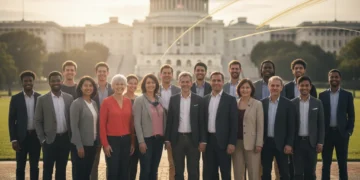
The United States has always been a nation of immigrants, a melting pot of cultures, traditions, and perspectives. In 2026, the ongoing effort to ensure that all voices are heard and represented in the national narrative is a critical aspect of evolving American patriotism. This involves a conscious move away from a singular, often monolithic, view of American history and identity towards one that embraces the rich diversity of its people.
This inclusive approach to patriotism is evident in various cultural expressions. Educational institutions are increasingly incorporating diverse historical perspectives into their curricula, ensuring that the contributions and struggles of all ethnic, racial, and social groups are acknowledged. Museums and cultural centers are curating exhibitions that highlight the multifaceted nature of the American experience, offering a more complete and nuanced understanding of the nation’s past and present.
Art and media play a pivotal role in this reclamation of narratives. Film, television, literature, and music are increasingly featuring stories that reflect the breadth of American identities, challenging stereotypes and fostering empathy. Artists from marginalized communities are using their platforms to express their love for the country while also advocating for social justice and equality, demonstrating that patriotism can coexist with critique and a desire for improvement. This form of patriotism is not blind allegiance but a commitment to the nation’s ideals, even when those ideals are not yet fully realized for all its citizens.
The push for inclusive patriotism also manifests in public discourse. Conversations around national symbols, holidays, and historical figures are becoming more complex and reflective, acknowledging the differing meanings these elements hold for various communities. This willingness to engage in difficult conversations, to confront historical injustices, and to work towards a more equitable future is, for many, the truest form of patriotism – a commitment to making the nation live up to its foundational promises for everyone.
Localism and Community: The Grassroots of Patriotism
While digital expressions and national dialogues are significant, a powerful current of evolving American patriotism in 2026 can be found at the local and community levels. For many, patriotism is not an abstract concept but a tangible commitment to their immediate surroundings, their neighbors, and the well-being of their local community.

This grassroots patriotism often takes the form of active civic engagement. Volunteering for local charities, participating in neighborhood clean-up initiatives, supporting local businesses, and attending town council meetings are all expressions of a deep-seated love for one’s community, which in turn contributes to the strength of the nation. These actions demonstrate a belief in the power of collective action and a commitment to improving the quality of life for all residents, embodying the American spirit of self-reliance and community support.
The COVID-19 pandemic, followed by various economic and social challenges, underscored the importance of local resilience and mutual aid. In 2026, we continue to see communities organizing themselves to address local issues, from food insecurity to environmental concerns. This localized patriotism is often less about grand gestures and more about consistent, dedicated effort, building stronger social fabrics from the ground up. It’s a recognition that a strong nation is composed of strong communities.
Furthermore, local cultural events and traditions play a vital role in fostering this sense of belonging and patriotism. Community festivals, farmers’ markets, local sports leagues, and historical reenactments all contribute to a shared identity and a collective appreciation for the unique character of a particular place. These gatherings reinforce a sense of pride in one’s locale and, by extension, in the broader national identity. This emphasis on local engagement demonstrates that patriotism is not solely a top-down mandate but also a bottom-up movement of active citizenship.
Environmental Stewardship: A New Pillar of Patriotism
As the urgency of climate change and environmental degradation becomes increasingly apparent, environmental stewardship has emerged as a significant component of evolving American patriotism in 2026. For a growing number of Americans, protecting the nation’s natural resources, preserving its biodiversity, and mitigating the impacts of climate change are seen not just as environmental issues, but as patriotic duties.
This perspective posits that a healthy environment is fundamental to the nation’s long-term prosperity, security, and the well-being of its citizens. Expressions of environmental patriotism include advocating for sustainable policies, participating in conservation efforts, adopting eco-friendly practices in daily life, and supporting businesses committed to environmental responsibility. The majestic national parks, diverse ecosystems, and vast natural landscapes of the United States are often viewed as integral parts of the national heritage, deserving of protection for future generations.
Younger generations, in particular, are at the forefront of this movement, viewing environmental action as a critical form of civic engagement. They actively participate in climate strikes, advocate for renewable energy, and push for greater governmental accountability on environmental issues. Their patriotism is rooted in a desire to safeguard the physical beauty and ecological health of the nation, ensuring that America remains a vibrant and sustainable home for all.
The connection between environmental health and national security is also gaining traction. Recognizing that climate change can exacerbate resource scarcity, fuel migration, and create instability, many see environmental protection as a strategic imperative. This holistic view integrates ecological responsibility into the broader definition of national defense and well-being, further cementing environmental stewardship as a key aspect of contemporary patriotism.
The Role of Education and Critical Thinking
Underpinning all these new cultural expressions of evolving American patriotism is a growing emphasis on education and critical thinking. A truly informed and engaged citizenry is essential for a healthy democracy, and in 2026, there is a renewed focus on civic education that goes beyond rote memorization of facts.
Modern civic education aims to equip individuals with the skills to analyze complex issues, engage in respectful debate, understand different perspectives, and participate meaningfully in democratic processes. This includes teaching about the historical context of American institutions, the rights and responsibilities of citizens, and the ongoing challenges and opportunities facing the nation. It fosters a patriotism that is not uncritical but rather thoughtful and committed to continuous improvement.
The ability to discern credible information from misinformation, especially in the digital age, is also a crucial skill being emphasized. Media literacy programs are becoming more prevalent, helping citizens navigate the vast and often contradictory information landscape. This critical engagement with information empowers individuals to form their own informed opinions and contribute constructively to public discourse, rather than simply accepting narratives without question.
Furthermore, education about global citizenship is increasingly seen as complementary to national patriotism. Understanding America’s role in the world, its interconnectedness with other nations, and its responsibilities on the global stage helps to cultivate a more expansive and enlightened form of patriotism. It encourages a sense of pride in American values while also recognizing the importance of international cooperation and shared human values.
Challenges and the Path Forward for American Patriotism
While evolving American patriotism presents many hopeful and inclusive trends, it is not without its challenges. Political polarization, societal divisions, and the persistent struggle for equality continue to test the nation’s unity. The definition of patriotism itself can become a battleground, with different groups holding conflicting views on what constitutes true loyalty and love for the country.

Overcoming these challenges requires a commitment to dialogue, empathy, and a shared vision for the future. It necessitates finding common ground amidst diversity and recognizing that legitimate disagreements can exist within a framework of national unity. The strength of American patriotism has always been its ability to adapt and evolve, to incorporate new voices and ideas, and to strive towards a more perfect union.
Looking ahead to 2026 and beyond, the future of American patriotism will likely continue to be shaped by several key factors. The ongoing impact of technological advancements, particularly in artificial intelligence and virtual reality, could create even more immersive and personalized forms of patriotic expression. Demographic shifts will continue to diversify the American population, leading to further re-evaluations of national identity and cultural norms. Global events, from geopolitical conflicts to shared challenges like pandemics, will also influence how Americans perceive their nation’s role and their collective responsibilities.
Ultimately, the health of evolving American patriotism depends on the willingness of its citizens to engage actively, respectfully, and critically with their nation’s past, present, and future. It’s about more than just symbols; it’s about the everyday actions that contribute to a more just, equitable, and prosperous society for all. The new cultural expressions emerging in 2026 signal a vibrant, albeit complex, landscape where patriotism is being continually redefined, reflecting the dynamic spirit of a nation always in motion.
Conclusion: A Dynamic and Resilient Spirit
The year 2026 reveals a compelling portrait of evolving American patriotism. Far from being a static relic of the past, patriotism in America is demonstrating remarkable resilience and adaptability. It is a concept being redefined by digital connectivity, enriched by diverse voices, grounded in local community action, and expanded to include environmental stewardship. These new cultural expressions collectively paint a picture of a nation grappling with its identity, learning from its history, and striving to live up to its foundational ideals in an ever-changing world.
The transition from traditional, often monolithic, expressions of national pride to a more inclusive, critical, and actively engaged form of patriotism is a testament to the ongoing American experiment. It signifies a deeper understanding that true love for one’s country involves not just celebration, but also critique, a commitment to justice, and a willingness to work towards a better future for all its inhabitants. As we move forward, the continued evolution of American patriotism will undoubtedly remain a fascinating and crucial indicator of the nation’s health and its capacity for self-renewal.