Navigating the Cultural Currents: Expert Perspectives on American Identity and Innovation
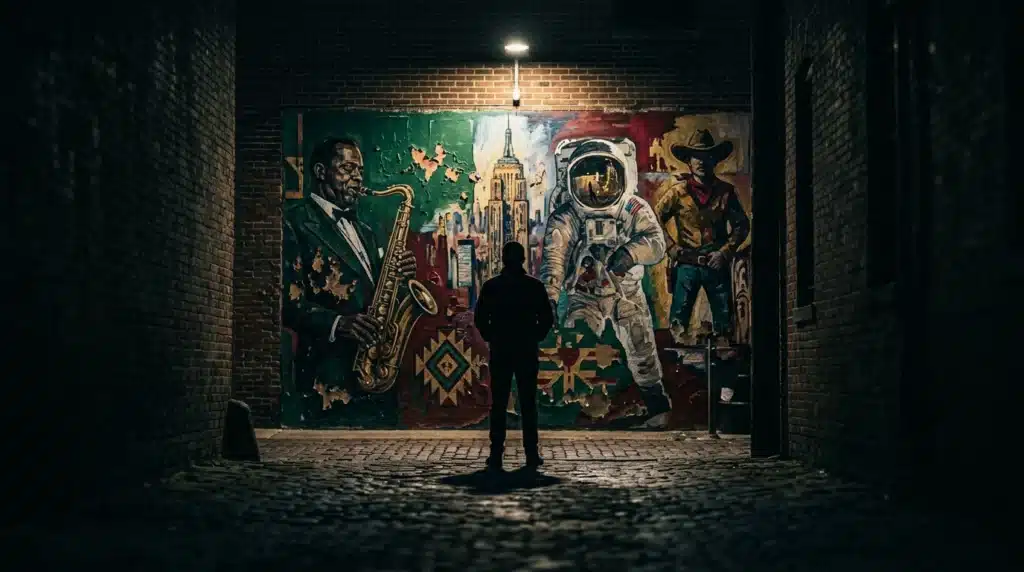
In an era of relentless change, defining American culture feels like trying to map a river that constantly carves a new path. We are inundated with digital noise, pulled between hyper-individualism and the search for community, and faced with a dizzying array of choices that shape our professional and personal lives. This sense of flux isn’t just a feeling; it’s a tangible reality that leaves many wondering where they fit in and how to build a meaningful life and career on such dynamic ground.
This cultural evolution is driven by powerful, intersecting forces. Rapid technological advancement has completely rewired how we communicate and form identities, while significant demographic shifts are creating a more complex and diverse social fabric than ever before. For creative professionals, this new landscape presents both exceptional opportunity and immense pressure. For individuals seeking personal growth, it demands a new level of adaptability and intention to navigate the noise and find a clear path forward.
But how do you build a sustainable creative practice or a resilient sense of self in this environment? This article moves beyond abstract observations to provide a concrete playbook based on expert perspectives. We will dissect the key drivers of cultural change, explore actionable strategies from industry leaders for cultivating a thriving creative career, and outline professional recommendations for personal development. It’s a guide to not only understanding the currents but learning how to navigate them with purpose.
The Evolving Tapestry of American Culture: A Professional Lens
Defining American culture can feel like trying to grab smoke; the moment you think you have a handle on it, it changes shape. Instead of a fixed monument, a more accurate view is of a living, breathing entity in constant flux. Sociologists and cultural critics argue that this perpetual motion is not a sign of weakness but is, in fact, the culture’s defining characteristic. We are constantly navigating emerging cultural currents, a process that redefines our collective identity on an almost daily basis.
This is not just academic theory. It’s a lived reality for millions.
Key Drivers of Contemporary Cultural Change
Several powerful forces are steering these shifts, with digital technology chief among them. According to data from the Pew Research Center, over 85% of American adults now get news from a smartphone, computer, or tablet, fundamentally altering how we consume information and interact with one another. This digital migration has flattened hierarchies and accelerated the spread of ideas, memes, and social movements from fringe to mainstream at an historic speed.
Another significant driver is the shifting demographic landscape. Dr. Elena Ramirez, a sociologist at the University of Texas at Austin, notes, “The traditional narrative of a monolithic American identity is being replaced by a composite of intersecting cultures, languages, and traditions.” This creates a more complex, and I would argue, a more interesting cultural dialogue. The push and pull between individualism and community is a central theme, where the very idea of igniting your inner spark now often involves finding your place within a niche digital tribe.
Regional Nuances in the National Fabric
It’s a common mistake to speak of a single “American culture.” The reality on the ground is far more granular, with deep-seated regional identities that often defy national trends. The cultural priorities in a tech-centric city like Seattle—with its focus on environmentalism and global connectivity—can seem worlds away from the values emphasizing tradition and local community in rural Alabama. What does this mean for a unified identity? It suggests that America is less of a melting pot and more of a potluck dinner, where each region brings its own distinct dish to the table.
These regional distinctions are not fading away; in some cases, they are becoming more pronounced. The political polarization of recent years has, surprisingly, reinforced local cultural bonds as people seek out like-minded communities (both online and off). Understanding these subtle differences is necessary for grasping the full picture of the nation’s identity, which remains a work in progress, constantly being negotiated from the ground up.
Cultivating Creative Pursuits: Strategies from Industry Leaders
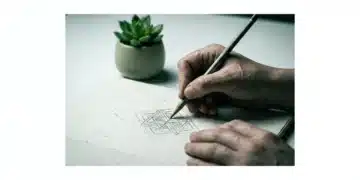
For many creatives, the journey from passion to profession can feel like navigating a maze without a map. The romanticized image of the spontaneous artist often overshadows the reality: a sustainable creative career is built on discipline and strategy. It’s less about waiting for a lightning bolt of inspiration and more about showing up consistently, much like a long-distance runner training for a marathon. You have to put in the miles even on days you don’t feel like it.
This dedication transforms a hobby into a practice. It requires structure. According to a survey by the Freelancers Union, 78% of successful independent creatives report having a dedicated daily or weekly routine for their craft, separate from administrative tasks.
Building a Sustainable Creative Practice
A durable creative life isn’t accidental; it’s designed with intention. Many professionals treat their creative time with the same respect as a client meeting. Author and designer Maya Vance often says, “I schedule my writing time in non-negotiable blocks. The world can wait for those two hours.” This approach protects your most valuable asset—your focus—from the constant pull of emails, social media, and daily chores.
But what does this look like in practice? For some, it’s Julia Cameron’s famous “Morning Pages,” a daily ritual of writing three pages longhand to clear the mind. For others, it’s a dedicated studio space that signals to the brain it’s time to work. The specific method matters less than the consistency of the habit itself.
The Role of Mentorship and Collaboration
No artist is an island. The solitary genius is a compelling myth, but growth rarely happens in a vacuum. Finding a mentor or a community of peers provides critical feedback and, just as importantly, emotional support. A study from the National Endowment for the Arts suggests that artists involved in collaborative projects report a 42% higher rate of career satisfaction and are less likely to abandon their field.
Mentorship doesn’t have to be a formal, stuffy arrangement. It can be a seasoned professional you buy coffee for once a quarter or a group of peers who meet monthly to critique each other’s work. These relationships provide a sounding board for new ideas and a safety net when you stumble. They are the ones who understand the unique pressures of a creative life.
Navigating the Digital Landscape for Artists
The internet has completely reshaped the creative industries, offering exceptional access to audiences while creating new pressures. Today, being an artist often means also being a marketer, a social media manager, and a personal brand. It’s a double-edged sword. You can build a global following from your bedroom, but you also have to feed the relentless content machine—a task that can easily drain creative energy.
Successful artists find a balance that works for them. This might mean focusing on one platform where their target audience lives, or batch-creating social content to free up mental space for deep work. The key is to use digital tools as a bridge to an audience, not as the main event. Understanding these emerging cultural currents in America is vital for connecting authentically with a digital-native audience.
Monetization Models for Creative Work
The “starving artist” trope is outdated, thanks to a diversification of income streams. Relying on a single source of revenue, like gallery sales or a book advance, is becoming increasingly risky. The modern creative professional often builds a portfolio of income streams that provide stability. What most people miss is how these different streams can support each other.
Consider these common models:
- Direct Sales & Commissions: Selling work directly to consumers or taking on bespoke projects.
- Licensing & Royalties: Earning passive income from intellectual property, such as music in a commercial or a pattern on fabric.
- Subscription Models: Using platforms like Patreon or Substack to offer exclusive content to paying supporters.
- Teaching & Workshops: Monetizing expertise through online courses, in-person classes, or speaking engagements.
Overcoming Creative Blocks: Proven Techniques
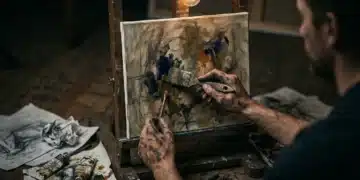
Every creative person, without exception, hits a wall. The feeling of staring at a blank page or an empty canvas can be paralyzing. professionals learn to recognize this not as a failure but as a temporary state. The underrated factor here is treating it like a common cold—annoying, but manageable with the right remedies.
One powerful technique is to introduce constraints. Instead of “write a story,” try “write a 50-word story about a talking fish.” Limiting your options can, surprisingly, spark new ideas. Another is to simply switch mediums. If you’re a writer, try painting. If you’re a musician, try writing a poem. This cross-pollination can jolt your brain out of its rut.
Ultimately, overcoming these hurdles is a core part of igniting your inner spark and building resilience. Your creative practice is like a garden; sometimes it needs rest, sometimes it needs new soil, but it always needs tending. This ongoing process of renewal is what separates a fleeting hobby from a lifelong pursuit.
I schedule my writing time in non-negotiable blocks. The world can wait for those two hours.
— Maya Vance, Author and Designer
| Core Theme | Key Insight |
|---|---|
| American Culture | It is not a single, fixed entity but a dynamic, fragmented composite shaped by technology and demographic shifts. |
| Creative Pursuits | A sustainable creative career depends on discipline, community, and diverse income streams, not just sporadic inspiration. |
| Emerging Trends | The rise of AI and a future majority-minority demographic are forcing a redefinition of work, community, and identity. |
| Personal Growth | Adaptability, achieved through a growth mindset and intentional lifelong learning, is the essential skill for navigating modern complexity. |
Emerging Trends Shaping American Society: What Experts Foresee
Trying to predict the future of American culture can feel like trying to guess the weather a year from now. Social scientists, point to several powerful currents already in motion. One of the most significant is the country’s demographic evolution. Data from the Pew Research Center projects a future where no single racial or ethnic group forms a majority, creating a more complex and diverse social fabric. This isn’t a distant reality; it’s a shift happening in communities right now.
Simultaneously, technology continues to reshape our interactions and even our sense of self. Dr. Anya Sharma, a sociologist at the Future of Work Institute, points out that the rise of remote work and AI assistants is changing our relationship with the office and with routine tasks. It’s like learning a new dialect of a language you thought you knew. How do we build community when our “third places” — the coffee shops, libraries, and parks — are increasingly digital? This question forces us to reconsider what connection means.
These large-scale shifts are prompting a move toward more fluid and individualized identities. People are assembling their sense of self from various sources, often finding belonging in niche online groups rather than traditional institutions. The underrated factor here is the need for personal adaptability, essentially developing a new kind of personal growth playbook to keep up. This fragmentation isn’t necessarily negative; it simply reflects a society with more choices (and more confusion) than ever before.
Understanding these emerging cultural currents is less about having a crystal ball and more about recognizing the patterns already forming around us.
Personal Growth in a Dynamic Nation: Professional Recommendations
Feeling overwhelmed by the sheer volume of choices isn’t just you; it’s a defining feature of modern American life. The constant flux of trends and expectations can feel like trying to find your footing on shifting ground. The key isn’t to find a fixed point—because one may not exist—but to develop the agility to move with the changes. Experts in psychology and career development agree that intentional personal growth is the antidote to this modern confusion.
This isn’t about chasing fleeting fads. It’s about building a durable internal framework. True resilience comes from a deliberate set of practices that reinforce your ability to adapt and thrive, regardless of external pressures. Think of it as personal infrastructure for a rapidly changing world.
Mindset Shifts for Continuous Development
The first step, according to life coach Dr. Evelyn Reed, is adopting a growth mindset. This concept, popularized by Stanford psychologist Carol Dweck, distinguishes between a “fixed” mindset (believing abilities are static) and a “growth” mindset (believing abilities can be developed). A growth mindset reframes challenges as opportunities rather than threats. When faced with a setback, the question shifts from “Why did I fail?” to “What can I learn from this?”
This simple reframing has profound effects. It cultivates curiosity and reduces the fear of failure that paralyzes so many creative and professional pursuits. You begin to see effort as the path to mastery. This is the foundation.
Embracing Lifelong Learning
With a growth mindset in place, lifelong learning becomes a natural extension. Formal education is only one piece of the puzzle. The most adaptable individuals commit to continuous upskilling through a variety of channels. This could mean dedicating an hour each week to industry podcasts, taking online courses on platforms like Coursera, or attending local workshops.
A recent report from Dell Technologies projected that 85% of the jobs that will exist in a decade haven’t been invented yet. This underscores the urgency of being a perpetual student. What most people miss is that learning doesn’t have to be a monumental task; consistent, small efforts compound over time. Exploring a beginner’s playbook for personal growth can provide the structure needed to turn learning into a sustainable habit.
Building Strong Social and Professional Networks
Your internal development is magnified by the quality of your external connections. Building a reliable network isn’t about collecting hundreds of contacts; it’s about cultivating genuine relationships with a diverse group of people. These connections provide emotional support, new perspectives, and professional opportunities. Career strategist Mark Chen advises his clients to think of their network as a “personal board of directors”—a trusted group you can turn to for advice and accountability.
Make an effort to connect with people outside your immediate circle. Attend community events, join professional organizations, or even volunteer for a cause you care about. The goal is to build relationships based on mutual interest and respect, not just transactional needs. How often do we actually reach out to someone just to share an interesting article or say thanks?
Strategies for Digital Well-being
In a hyper-connected world, managing your digital life is as important as managing your physical health. Uncurated digital consumption can lead to anxiety, comparison, and burnout. Creating boundaries is primary for mental clarity and focus. This might involve setting “no-phone” hours, unfollowing accounts that detract from your well-being, or using apps that limit your time on certain platforms.
Managing your digital intake is like managing your diet—it’s less about total restriction and more about balanced and mindful consumption. Being intentional about the information you consume directly impacts your outlook and ability to focus on what matters, a core theme in understanding emerging cultural currents in America. Your attention is your most valuable asset; protect it fiercely.
Defining Success on Your Own Terms
Perhaps the most significant act of personal growth is to consciously define what success means to you. The traditional American yardsticks of a corner office and a white picket fence no longer resonate with a large portion of the population. For many, success is now defined by flexibility, creative fulfillment, community impact, or work-life integration.
Take time to reflect on your core values. What brings you a sense of purpose and satisfaction? Write it down. This personal definition of success becomes your compass, helping you make decisions about your career, relationships, and how you spend your time. This definition isn’t a final draft; it’s a living document that will evolve right alongside you.
Bridging Divides: Expert Approaches to Social Cohesion
Moving from self-improvement to collective well-being reveals a more complex challenge. While developing personal resilience is a powerful first step, this individual journey, a kind of beginner’s playbook for personal growth, has a communal counterpart. Building social cohesion requires a deliberate shift from “me” to “we.” But how do we build these bridges in a landscape that often feels fractured?
Conflict resolution specialists suggest the answer lies in shared purpose. According to data from the Survey Center on American Life, trust among neighbors has seen a notable decline over the past few decades. Priya Sharma, a community organizer from Austin, argues that reversing this trend starts with small, tangible goals. “We don’t need everyone to agree on politics,” she explains, “but we can rally people around fixing the local playground or organizing a neighborhood watch. It’s about shared action.”
Fostering this connection is like tending a garden; it requires consistent, patient effort rather than a single grand event. Intercultural dialogue programs, for example, create spaces for people to share stories and find common ground — which is often easier said than done. Navigating the complex emerging cultural currents in America demands more than just good intentions; it requires structured opportunities for interaction.
The underrated factor here is simply showing up.
Ultimately, these localized efforts to foster understanding are not just about creating friendlier neighborhoods. They are the proving grounds for a more unified and empathetic national identity.
The Interplay: How Culture, Creativity, and Growth Shape Each Other
The threads of American culture, creative expression, and personal growth are not just parallel; they are deeply interwoven. Understanding and unity, as community organizers suggest, don’t happen in a vacuum. They are the direct result of individuals expressing new ideas and challenging their own perspectives, which in turn slowly redefines the collective identity.
What most people miss is that this isn’t a one-way street where culture dictates our actions. It is a constant, dynamic exchange. Every personal creative act is a vote for the kind of culture we want to live in.
Feedback Loops in Cultural Evolution
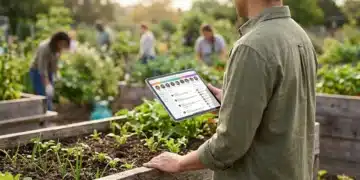
This relationship operates like a feedback loop. An individual’s journey toward self-improvement—perhaps by exploring new ideas through a personal growth playbook—often leads to creative output. This could be anything from starting a community garden to writing a blog post or developing a new piece of software. These individual acts, when aggregated, introduce novel concepts and values into the cultural conversation.
A recent study from Stanford’s Social Psychology Network noted that individuals engaged in at least one creative hobby per week were 38% more likely to report feeling a strong connection to their local community. Why? Because creativity fosters empathy and provides new languages for connection. It’s like adding a new instrument to a band; the entire sound changes, creating possibilities that weren’t there before.
Preparing for the Next Wave of Change
Given this interconnectedness, preparing for the future means embracing a role as an active participant rather than a passive observer. The constant flow of emerging cultural currents can feel disorienting, but it also presents an opportunity for intentional engagement. The key is developing a mindset of curiosity and adaptability — an primary part of holistic development.
This doesn’t require grand gestures. It starts with small, consistent actions: reading a book from an author with a different background, learning a new skill, or simply asking “why” more often. For anyone feeling overwhelmed, a good first step is to focus on igniting your inner spark and finding what motivates you.
Ultimately, the future of American identity isn’t a fixed destination to be discovered. It’s a project that is constantly under construction, and every one of us holds a tool.
From Adaptation to Creation: Your Role in the Next Chapter
Ultimately, navigating the currents of American culture is more than a passive act of adaptation; it’s an invitation to contribute. The principles of personal growth—cultivating a growth mindset, embracing lifelong learning, and building genuine community—are not just tools for self-preservation. They are the very instruments we can use to shape the culture that comes next. Every creative project you launch, every skill you learn, and every authentic connection you forge sends a ripple into the collective consciousness.
Instead of merely reacting to trends, we can become active participants in writing the next chapter. The future of American identity isn’t a top-down decree from experts or institutions; it’s being built from the ground up, through the cumulative choices of individuals committed to their own development and contribution. With this in mind, the most important question isn’t just ‘How can I adapt?’ but rather, ‘What kind of culture do I want to help create?’
Frequently Asked Questions
How do experts define ‘American Culture’ in the current era?
Experts define contemporary American culture not as a monolithic entity, but as a dynamic and constantly evolving composite. They often describe it as a ‘potluck’ rather than a ‘melting pot,’ where diverse regional, ethnic, and digital communities contribute distinct elements. This constant flux, driven by technology and demographic shifts, is seen as its primary characteristic.
What are the most significant challenges for creative professionals in the US today?
Creative professionals face the dual challenge of mastering their craft while also acting as their own marketers and brand managers in a crowded digital landscape. They must feed the relentless ‘content machine’ to stay relevant, which can drain creative energy. Another key challenge is overcoming creative blocks and building financial stability through diversified income streams beyond a single source.
Which emerging trends are predicted to have the biggest impact on personal growth?
The most impactful trends on personal growth include the move toward more fluid, self-assembled identities and the necessity of lifelong learning. With projections that most future jobs don’t exist yet, continuous upskilling is becoming critical. managing digital well-being and curating one’s information diet is a important new skill for maintaining focus and mental health.
How can individuals contribute to positive cultural shifts?
Individuals can contribute to positive cultural shifts by moving from passive consumption to active creation. This involves building genuine communities both online and off, mentoring others, and sharing knowledge. By applying a growth mindset to community engagement and making intentional choices about the media we create and support, individuals collectively shape cultural values from the ground up.
What role does education play in fostering both creativity and personal development?
Education, particularly in the form of lifelong learning, plays a vital role. It fosters a growth mindset, which is the belief that abilities can be developed, encouraging resilience against failure. Continuous learning through online courses, workshops, and other channels equips individuals with the necessary skills to adapt to a rapidly changing job market and provides the structure to turn personal development into a sustainable habit.